

 Adventurous
 Pumori (7145 m) Expedition
PriceOn request
Book Now 
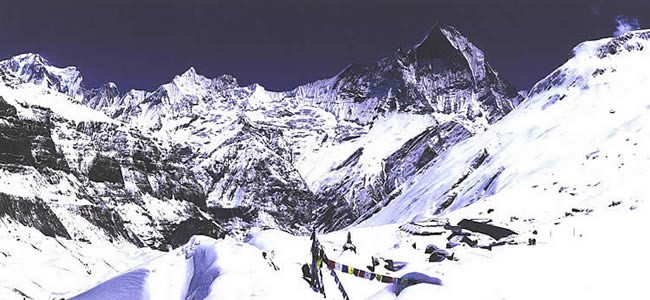
Annapurna IV, located in the Annapurna mountain range of Nepal, is one of the classic peaks for high-altitude climbing enthusiasts. Standing at an elevation of 7,525 meters (24,688 feet), it offers an exhilarating challenge and breathtaking views of the Annapurna and Manaslu ranges. This expedition is ideal for climbers with experience in technical climbing and previous high-altitude expeditions. The climb involves sections of steep ice and rock, demanding good physical fitness, acclimatization, and technical skills. Annapurna IV is popular due to its accessibility and comparatively lower objective hazards compared to some of Nepal's other major peaks.
Expedition Highlights
Duration: Approximately 25–30 days
International flight
Arrive in Kathmandu and transfer to the hotel. After settling in, meet with the expedition team for a briefing on logistics, safety, and the overall climbing plan. Prepare equipment and make any last-minute purchases. Overnight in Kathmandu.
Drive through scenic landscapes, villages, and terraced fields to Besisahar, the starting point of the trek. Overnight in Besisahar.
A rugged drive from Besisahar to Chame. The journey offers beautiful views of waterfalls, lush forests, and glimpses of the Annapurna range. Overnight in Chame.
Start trekking towards Pisang, passing through forests of pine and rhododendron. This is an acclimatization trek, allowing the body to adjust to the altitude. Overnight in Pisang.
Continue trekking with increasing elevation, reaching Yak Kharka. The landscape transitions into alpine terrain. Overnight in Yak Kharka.
Spend the day acclimatizing and resting in Yak Kharka. Explore the surrounding areas with short hikes, preparing the body for higher altitudes. Overnight in Yak Kharka.
Begin the trek to Annapurna IV Base Camp. Set up a base camp for acclimatization and preparation for higher camps. Overnight at Base Camp.
After a successful summit and dismantling the base camp, begin the descent to Yak Kharka. Overnight in Yak Kharka.
Continue descending through alpine terrain back to Pisang, retracing the trek. Overnight in Pisang.
Trek back to Chame, completing the trek's loop. Overnight in Chame.
Drive back to Besisahar and then transfer to Kathmandu. Check in to the hotel and relax. Overnight in Kathmandu.
Enjoy a rest day in Kathmandu. You can visit cultural sites, explore markets, or celebrate with the team. Overnight in Kathmandu.
Transfer to Tribhuvan International Airport for the final departure, marking the end of the Annapurna IV Expedition.
This period is dedicated to setting up higher camps and acclimatizing, with Camp I at around 5,800 meters, Camp II at approximately 6,400 meters, and Camp III at around 6,800 meters. The route consists of steep snow slopes, ice walls, and mixed climbing sections. Proper acclimatization, rope fixing, and rotation of higher camps will be essential. On a favorable weather window, attempt the summit of Annapurna IV, enjoying panoramic views before descending.
Annapurna IV is a technical 7000m peak, and climbers should have previous experience in high-altitude mountaineering, ideally having summited peaks over 6000m. Technical skills in ice and rock climbing are essential, as the route includes challenging sections with steep snow, ice walls, and mixed terrains. Good physical fitness and endurance for sustained climbs are also necessary.
The best climbing seasons for Annapurna IV are in spring (April-May) and autumn (September-October). These months offer stable weather, clearer skies, and milder temperatures, making conditions safer and more predictable for climbing. Monsoon season (June-August) is typically avoided due to heavy rain and landslides, while winter (November-February) is colder and more challenging due to snow and extreme winds.
The Annapurna IV expedition usually takes around 25–30 days from arrival in Kathmandu to departure. This includes time for acclimatization, setting up base and high camps, and waiting for a favorable weather window for the summit attempt. The actual climbing period from base camp to the summit and back generally takes about 12–15 days.
Climbers need several permits for the Annapurna IV Expedition, including a climbing permit issued by the Nepal Mountaineering Association (NMA), an Annapurna Conservation Area Project (ACAP) permit, and a TIMS (Trekkers’ Information Management System) card. These permits are arranged through the expedition operator, and fees vary depending on the season and the number of climbers in the group.
The support team typically includes experienced climbing guides, porters, cooks, and base camp staff. Sherpas often play a critical role in helping with route preparation, fixing ropes, and carrying supplies to higher camps. Having an experienced support team is essential for safety, logistical support, and efficient camp management throughout the expedition.

 Adventurous
  Adventurous Save $2,000
  Adventurous