Mountaineering Training in Nepal
7th Feb, 2024
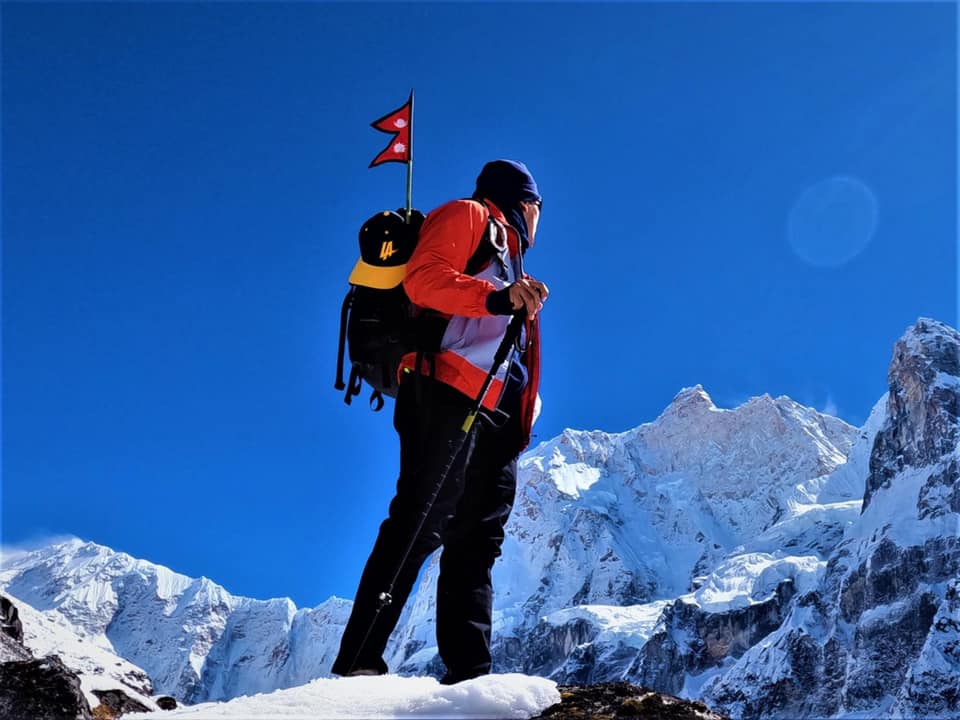
Mountaineering Training: A Brief History and Structure Welcome to the webpage on Mountaineering Training, provided by the Nepal Mountaineering Association. Here, we will explore the rich history and structures of mountaineering training, with a particular focus on Nepal.
Table of Contents
Mountaineering History in Nepal, Nepal has a fascinating mountaineering history, with the first attempt to climb Mount Everest, the world's highest peak, made by the British Mount Everest Reconnaissance Expedition in 1921 AD. However, it wasn't until 1950 that successful summits started to be recorded.
Since ancient times, the Sherpas, a Himalayan community, have been actively involved in mountain climbing activities. They have provided invaluable support to foreigners attempting to conquer the Nepalese mountains. In recognition of their contributions, the term "Sherpa" has become synonymous with the qualifications and designation in the mountain climbing profession in Nepal. Even individuals from other ethnic groups who possess the necessary skills can be revered as "Sherpas."
A significant milestone in Nepalese mountaineering was achieved on June 3, 1950, when French mountaineers Morris Herzog and Luis Lachine successfully scaled Mt. Annapurna-1, marking the first summit above 8000 meters in Nepal. This achievement fueled a rapid increase in mountain climbing activities in the country.
The period of 1950-1960 is often referred to as the golden age of mountain climbing in Nepal. On May 29, 1953, a historic moment was etched into the annals of mountaineering history as Mr. Tenzing Norge and Sir Edmund Hillary successfully reached the summit of Mt. Everest, standing proudly atop the highest point on Earth at 8,848 meters. This monumental achievement not only solidified Nepal's position as a premier destination for mountaineering but also served as a global rallying cry, sparking a surge of interest and participation in mountaineering activities.
Join us as we delve further into the fascinating world of mountaineering training in Nepal. Discover the structures, techniques, and experiences that have shaped this adventurous pursuit, and learn how to embark on your own mountaineering journey in the majestic Himalayan landscape.
Following is the successful expedition records of the 14 mountain peaks above 8,000.M.:
| SN | NAME | COUNTRY | ALTITUDE(M) |
|---|---|---|---|
| 1 | Mt. Everest | Nepal | 8848 |
| 2 | Kanchenjungha | Nepal | 8586 |
| 3 | Lhotse | Nepal | 8516 |
| 4 | Yalung Khang | Nepal | 8505 |
| 5 | Kanchenjungha South | Nepal-India Border | 8476 |
| 6 | Kanchenjungha Central | Nepal | 8476 |
| 7 | Makalu | Nepal | 8463 |
| 8 | Lhotse Middle | Nepal-China Border | 8413 |
| 9 | Lhotse Sar | Nepal-China Border | 8400 |
| 10 | Cho-Oyu | Nepal | 8201 |
| 11 | Dhaulagiri I | Nepal | 8167 |
| 12 | Manaslu | Nepal | 8163 |
| 13 | Annapurna I | Nepal | 8091 |
| 14 | Yalung Khang West | Nepal | 8077 |
Establishment of Nepal Mountaineering Association (NMA).
Formation of the Nepal Mountaineering Association (NMA) was necessitated by the burgeoning mountaineering activities, aiming to safeguard the mountain environment, communities, and boost mountaineering tourism through policy formulation and regulation. Established as a non-profit entity on November 1, 1973, the NMA has been instrumental in shaping the landscape of mountaineering in Nepal.
Recognizing the inherent risks associated with mountain climbing, particularly the crucial role of skilled support staff and Sherpas, NMA initiated Basic Mountaineering Training (BMT) in 1979, initially with the assistance of the Yugoslavia Alpine Club. Transitioning to self-conducted training sessions after 2000, Nepalese instructors have played a pivotal role in shaping mountaineering education. Nepal has since become the second-largest producer of internationally accredited mountain guides affiliated with the International Federation of Mountain Guide Associations (IFMGA), with NMA having trained 60 such guides.
History of Mountaineering Training
Over the years, NMA has provided BMT to 1,304 individuals and Advanced Mountaineering Training (AMT) to 392 individuals until 2017, with BMT conducted annually in July and AMT in November. BMT equips individuals with skills suitable for lower altitude climbing, enabling them to support climbers and mitigate risks, while AMT focuses on high-altitude climbing, preparing professionals to lead national and international expeditions. Graduates of AMT are adept at leading expedition groups, while BMT-trained professionals serve as essential support staff in expeditions led by AMT graduates.
Apart from BMT and AMT, NMA provides following trainings:
Introductory Rock Climbing Course
Level-1 Rock Climbing Course
Pre- Basic Mountaineering Course
High Mountain Rescue Training (HMRT)
Female Outdoor Leadership Training
Instructors' Upgrade Refreshment Course
Mountain Leader Course
Aspirant Guide Course
Mountain Guide Training
Ice Climbing Training, Level-1
Wilderness 1st Aid, high altitude sickness training
Hill walking & Mountain Navigation Course
Environment Awareness Training (EAT)
Recent Posts

3rd Dec, 2025

19th Nov, 2025
19th Nov, 2025
27th Oct, 2025


28th Aug, 2025


.jpeg)