
 Moderate Save $100
 Everest Base Camp with Gokyo Lakes Trek with Chola Pass
From $1,900 $1,800 pp
Book Now 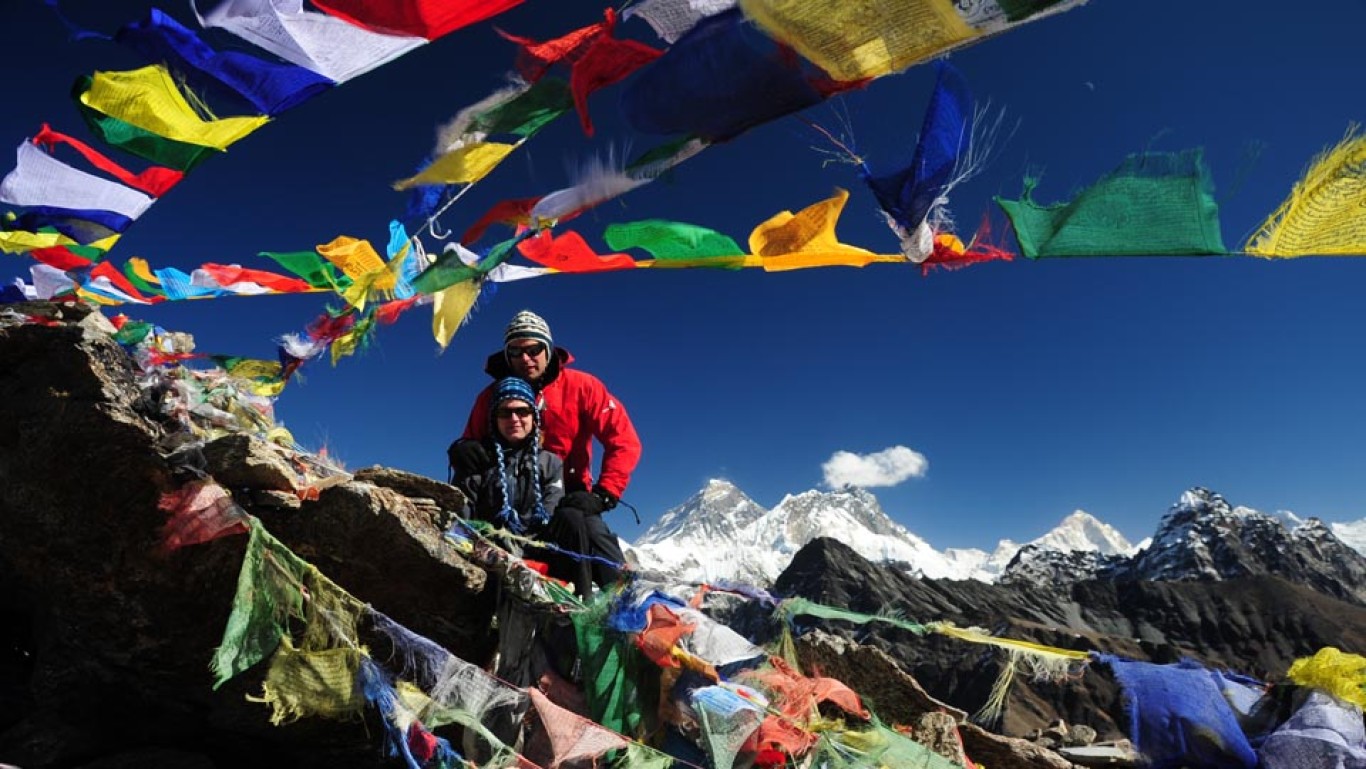
Everest view trek is one of the shortest treks in Everest region. Everest view trekking is not so difficult trekking as other. It is especially for those who have a dream to see the top of the world and have less time or too old or who cannot walk much distance. Everest view trek is available for all 12 month but the best time is from March – May and September – November.
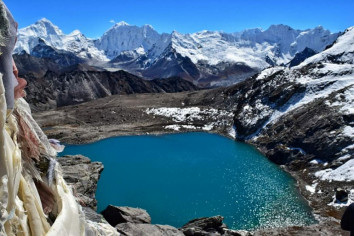
Everest view trek itself says that you can get chance to see a beautiful view of the top of the world. Here you can enjoy in the combination of spiritual, cultural and natural beauty of the Everest region of Nepal. Everest View Trek Begins from the Lukla which is at 2828m/9278 feet above sea level and you will pass through the several Sherpa villages like Namche bazaar, Phakding, Khunde village, khumjung village, Phortse village and many other small villages. There are many helpful and caring Sherpa villages. Then you can also have an absolutely thrilling and stunning view of others mountains like Lhotse, Amadablam, Nuptse , Thamserku, Kangtega, Kusum Kangaru, Malanphulan, Ombigaichan, Tawoche and many more… in the morning time.
WHY BOOK WITH WITH ACTUAL ADVENTURE
• 10 Years of Experience
• Over 170 Travel offer in different country
• 50% Repeat Customers every years
• Guaranteed Departures trip
• Experience working team / destinations Experts
• Best Prices guaranteed
• Up to 10% Discounts
• Best Customer care/feedback
• Local tour operator
• No hidden & additional cost
• Fixed departure and tailor made trip
• Sustainability, Integrity, Environment, Social Responsibility company
• Family environmental
• Customer Satisfaction, safety, Financial securities
• Accuracy in offer , quality in service
Responsible tourism
We run all our trips in as responsible manner as possible, socially, culturally, economically and environmentally. For further details of our Responsible Tourism page.
Quality
We don’t aim to be the most luxurious or the cheapest, but we do aim to give the best value. We don’t cut corners and we pay our overseas partners a fair rate for their services.
Satisfaction
We rely very heavily on word of mouth and repeat custom for our bookings, consequently it is imperative that we give our clients the best holidays possible. We believe that over 30 years of operation and a more extensive programme than anyone else in our corner of the travel industry illustrates our success.
Financial security
We provide complete financial security for all our clients and adhere to all government regulations concerning the safety of our clients’ money.
Feedback
At the end of every trip, we provide our clients with a questionnaire that we urge you to fill in. We rely very heavily on our clients’ feedback to maintain and improve the quality of our holidays.
Accuracy
We do our utmost to make sure that the information provided in our brochures and on our website is accurate. However things can and do change due to circumstances beyond our control and also please remember, no one is perfect.
Destination is not only the part of travelling, but also how you get there. The pleasure of making that initial research and paying your deposit, through to the trip itself and even after you return home, every stage is a part of your journey. Here at Actual Adventure, we are dedicated to doing everything we can, to make this journey as enjoyable as possible and we have launched our Customer Charter to help us achieve this, which defines what you can expect from Actual Adventure and sets out what we aim for each time you trek with us.
While Booking
| Before You Travel
|
Your Holiday We promise to… | After your Holidays
|
This is our Promise and our endeavors, if you don’t feel we are fulfilling our 'Charter’ and make you enjoying please let me know. We will always try to improve ourselves. I know all our staff and leaders are proud to work for Actual Adventure and enjoy their jobs. I hope you will get a sense of this your trek and tour, dealings with you.
• Reading/writing material
• First-aid kit; should contain lip salve, Aspirin, Band Aids, anti-histamine, Imodium or similar tablets for mild cases of diarrhea
• Re-hydration powder, extra prescription drugs you may be taking if any particular
• Wet wipes for cleaning can be purchased in Kathmandu.
• Health requirements arranged
• Money: cash/credit card
• Down Sleeping bag provided by Mountain Mart Trek in Kathmandu
• Light weight Towel
• Day pack (25-30 liter) to carry your personal needs during the day
• Torch/flashlight - headlamp style is ideal
• Insect repellent, sunscreen and lip balm
• Refillable water bottle - Min 1 Liter Aluminum or Nalgene polypropylene are best
• Warm Hat
• Sunhat/bandana
• Sunglasses
• Gloves - wool or fleeced and gore tex
• Scarf
• Bag Liners to waterproof your bags (A duffel bag is provided to each trekker for trekking by MMT in Kathmandu)
• Sewing Kit
• Wind and waterproof Jacket & Pants
• Comfortable and sturdy walking shoes (worn frequently prior to departure)
• Socks: thick wool blend and thin cotton to be worn in combination - ensure boots fit such combination
• Running shoes or sandals for evening
• Wool jumper/sweater/fleece. Lightweight during summer, 1 heavyweight or 2 lightweights during winter months.
• T Shirts 2 or 3
• Shirt - Long Sleeved
• Pants - lightweight long trousers (jeans are unsuitable)
• Thermals upper and lower
• Extra warm clothing during winter (December to March) layered clothing - thermals.
Nepal is a developing country, Outside of major cities area electricity on trekking can be scares. You should have to pay 100-800 NRs per hour to charge goods on many lodges and also many tea-house treks, including in Annapurna base camp trek, Everest Base camp trek and many others treks also. Chargers often won't work on low power solar systems you find right up in the mountains so u can buy alternative bayonet light to electricity power plug converter, which will only works in low voltage is highlow. The standard Nepalese electrical outlet is a three-pronged triangle so bring three-pronged triangle chargers.
Nepal is a landlocked country which lies in Hindu Kush Himalayan region. Nepal has monsoonal climate having four main seasons: spring, summer, monsoon, autumn and winter.
Below is a general guide to conditions at different seasons:
January to March (winter): In this season temperature will decrease at often 0°C (32°F) at night, with extreme cold at high elevations. It is possible to trek in places like the Everest region during the winter but due to extreme cold weather and heavy snow fall it may be quite difficult than as usual.
April to June (summer): In these months it is quite warm and dry weather. There is an abundance of blooming flowers in the Himalayas at this time, with rhododendrons, in particular, adding a splash of color to the landscape. This season is the best time to undertake mountain expeditions.
June to September (Monsoon): There will be heavy monsoonal rainfall in this season. Rains are generally lighter in high Himalayan reasons. In this season the mountain ranges are not often visible due to the clouds.
October to December (autumn): These months are cool and clear which is due to the end of monsoon, there is little dust in the air so this is the best season to visit the hilly and mountainous regions.
Visa in Nepal can be acquired on arrival at Tribhuwan International Airport, Kathmandu and also at the border entry points in Kakadvitta, Birgunj, Bhairahawa, Nepalgunj, Gaddachowki border of Nepal - India and Kodari on Nepal-China border. Visa can also acquire at the nearest Nepal Embassy. For visa renewal purpose you can contact at Department of Immigration, Kalikasthan at Kathmandu. A valid passport and one passport -size photo with a light background is required. Visa can be obtained only through payment of cash in the following currency: Euro, Swiss Franc, Pound Sterling, US Dollar, Australian Dollar, Canadian Dollar, Hong Kong Dollar, Singapore Dollar and Japanese Yen. Credit card, Indian currency and Nepali currency are not accepted as payment of visa fee.
Visa Facility Duration Fee
Multiple entry 15 days US$ 25 or equivalent convertible currency
Multiple entry 30 days US$ 40 or equivalent convertible currency
Multiple entry 90 days US$ 100 or equivalent convertible currency
In Nepal, “Namaste” or “Namaskar” is said to an older or high-status person with palms together, figure up. It is used to greet a person in place of goodbye or hello. There is no limitation how many times you say “Namaste” but, it is better if you say once per person, per day. If You want to say “Thank You” then you can say “Dhanyabaad /'ðɅnjɅbɑ:d/ (Dhan-ya-baad)”
Moderate Save $100  Moderate Save $200
  Moderate