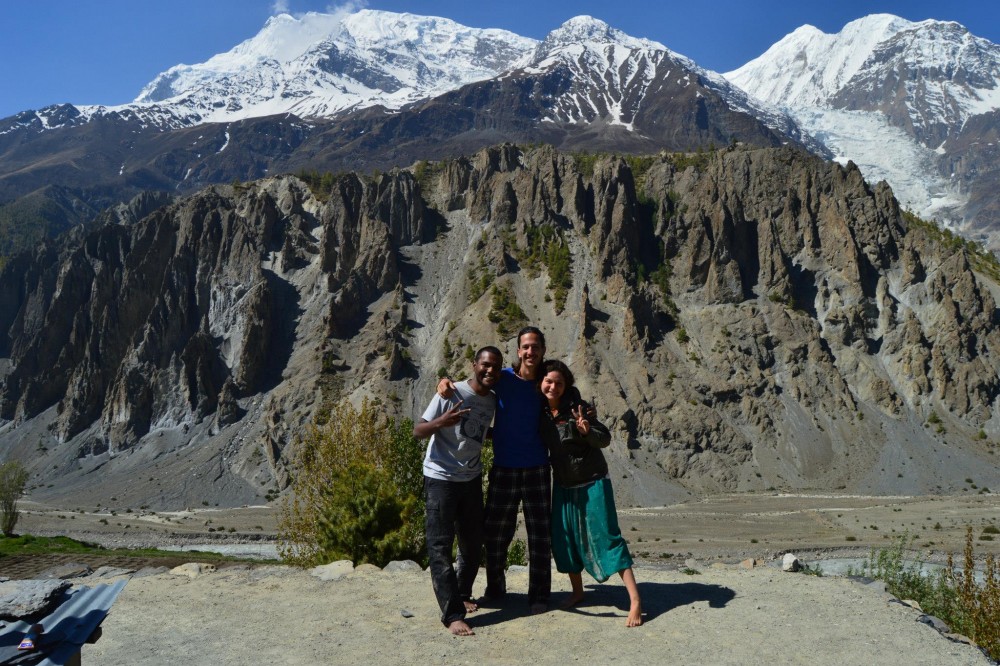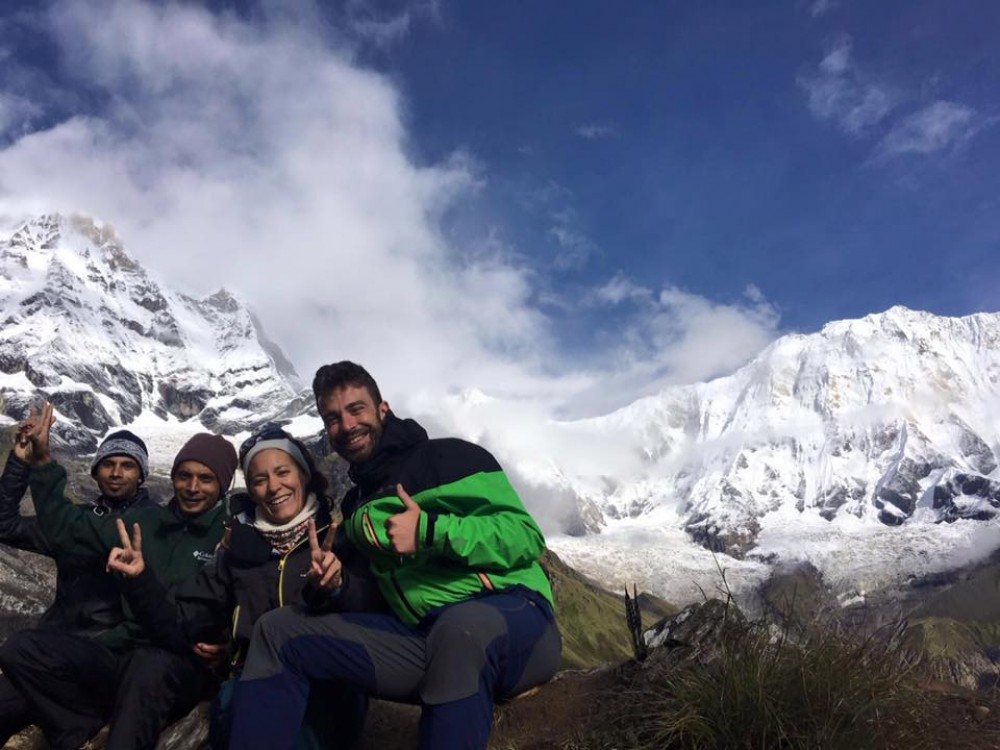
This area was not totally spoilt until 2002 because it was closed to trekkers. Now this has been a great trek that combines high peaks and passes, remote villages, narrow canyons, lovely forests, glaciers, amazing rock formations, yaks, gompas and unique Himalayan cultures. We can visit the most interesting world of Tibetan Buddhist and can get blessing from the Rimpoche. After spending the plenty of time there we can see the sights of high alpine valley Phu and cross Kang La pass from Nar to Ngwal on the Pisang route leading back into the Annapurna circuit.
This area was not totally spoilt until 2002 because it was closed to trekkers. Now this has been a great trek that combines high peaks and passes, remote villages, narrow canyons, lovely forests, glaciers, amazing rock formations, yaks, gompas and unique Himalayan cultures. We can visit the most interesting world of Tibetan Buddhist and can get blessing from the Rimpoche. After spending the plenty of time there we can see the sights of high alpine valley Phu and cross Kang La pass from Nar to Ngwal on the Pisang route leading back into the Annapurna circuit.
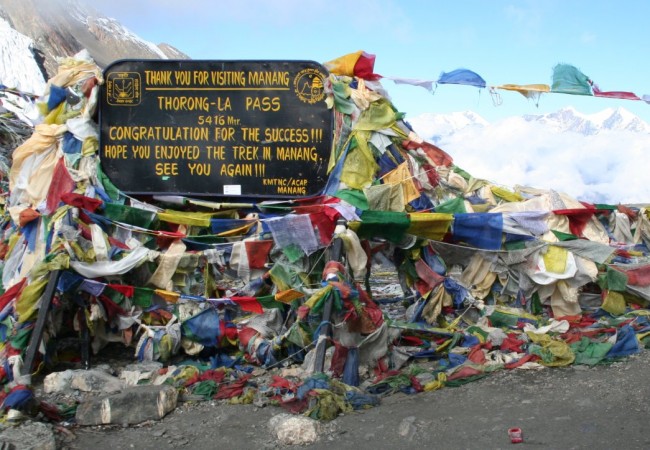
We walk a head to spend the few days over the Thorang La pass (5416 m.) and down through lower Mustang before heading to Jomsom cause just passing 5315 m. is not enough. Finally we will back to Pokhara, the most beautiful place of Nepal. Then we fly toward Kathmandu.
Meeting upon arrival at Kathmandu International Airport (1350meter) by our representative, transfer to hotel.
Stay at Kathmandu for the official procedure, overnight at hotel.
Sight seeing around Kathmandu valley, overnight at hotel.
Drive to Khudi (800meter), 6hrs drive, overnight at Lodge.
Trek to Bahundanda (1310meter), overnight at tented camp.
Trek to Chamje (1430meter), overnight at tented camp.
Trek to Dharapani (1920meter), overnight at tented camp.
Trek to Koto (2600meter), overnight at tented camp.
Trek to Dharmasala (3230meter), overnight at tented camp.
Trek to Kayang (3740meter), overnight at tented camp.
Trek to Phu Village (4050meter), overnight at tented camp.
Excursion around Phu valley, overnight at tented camp.
Trek to Junam (3550meter), overnight at tented camp.
Trek to Nar Village (4150meter), overnight at tented camp.
Explore Nar Village, overnight at tented camp.
Trek to Ngwal (3675meter) after crossing Kang La pass (5315meter), overnight at tented camp.
Trek to Manang (3550meter), overnight at tented camp.
Nepal is a developing country, Outside of major cities area electricity on trekking can be scares. You should have to pay 100-800 NRs per hour to charge goods on many lodges and also many tea-house treks, including in Annapurna base camp trek, Everest Base camp trek and many others treks also. Chargers often won't work on low power solar systems you find right up in the mountains so u can buy alternative bayonet light to electricity power plug converter, which will only works in low voltage is high\low. The standard Nepalese electrical outlet is a three-pronged triangle so bring three-pronged triangle chargers.
Nepal is a landlocked country which lies in Hindu Kush Himalayan region. Nepal has monsoonal climate having four main seasons: spring, summer, monsoon, autumn and winter.
Below is a general guide to conditions at different seasons:
January to March (winter): In this season temperature will decrease at often 0°C (32°F) at night, with extreme cold at high elevations. It is possible to trek in places like the Everest region during the winter but due to extreme cold weather and heavy snow fall it may be quite difficult than as usual.
April to June (summer): In these months it is quite warm and dry weather. There is an abundance of blooming flowers in the Himalayas at this time, with rhododendrons, in particular, adding a splash of color to the landscape. This season is the best time to undertake mountain expeditions.
June to September (Monsoon): There will be heavy monsoonal rainfall in this season. Rains are generally lighter in high Himalayan reasons. In this season the mountain ranges are not often visible due to the clouds.
October to December (autumn): These months are cool and clear which is due to the end of monsoon, there is little dust in the air so this is the best season to visit the hilly and mountainous regions.
Visa in Nepal can be acquired on arrival at Tribhuwan International Airport, Kathmandu and also at the border entry points in Kakadvitta, Birgunj, Bhairahawa, Nepalgunj, Gaddachowki border of Nepal - India and Kodari on Nepal-China border. Visa can also acquire at the nearest Nepal Embassy. For visa renewal purpose you can contact at Department of Immigration, Kalikasthan at Kathmandu. A valid passport and one passport -size photo with a light background is required. Visa can be obtained only through payment of cash in the following currency: Euro, Swiss Franc, Pound Sterling, US Dollar, Australian Dollar, Canadian Dollar, Hong Kong Dollar, Singapore Dollar and Japanese Yen. Credit card, Indian currency and Nepali currency are not accepted as payment of visa fee.
Visa Facility Duration Fee
Multiple entry 15 days US$ 25 or equivalent convertible currency
Multiple entry 30 days US$ 40 or equivalent convertible currency
Multiple entry 90 days US$ 100 or equivalent convertible currency
In Nepal, “Namaste” or “Namaskar” is said to an older or high-status person with palms together, figure up. It is used to greet a person in place of goodbye or hello. There is no limitation how many times you say “Namaste” but, it is better if you say once per person, per day. If You want to say “Thank You” then you can say “Dhanyabaad /'ðɅnjɅbɑ:d/ (Dhan-ya-baad)
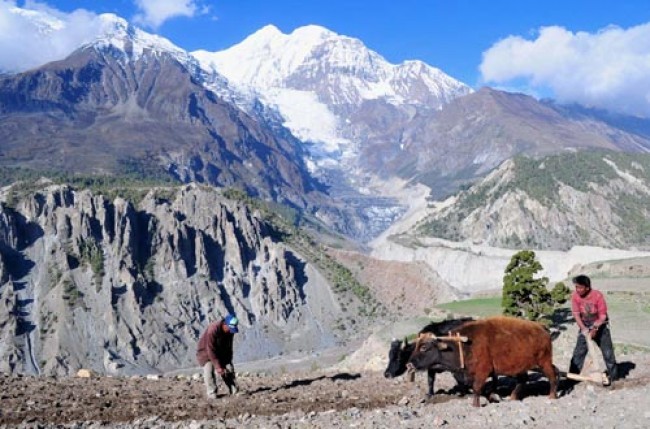


Enjoy the popular trekking and tour packages in Nepal Himalayas.










© Copyright 2010 - 2026 Actual Adventure Pvt Ltd Developed By: Xenatech Nepal