Mount Everest Live Updates 2026: Record Crowds, New Challenges & Historic Climbs
 Kedar Neupane
29th May, 2026
Kedar Neupane
29th May, 2026
Kedar Neupane
I am Kedar Neupane, a passionate traveler, entrepreneur, mentor, and social contributor, born and raised in a village near the Nepal-China border in Sindhupalchok, Nepal. With a Master’s degree in Business from Tribhuvan University and Level 2 proficiency in the German language, I have dedicated my life to tourism, trade, mentorship, and holistic well-being.
🌍 A Global Explorer with a Vision
Having explored 26+ countries, I have gained profound insights into diverse cultures, business landscapes, and global tourism. My travels have taken me to:
🇹🇭 Thailand | 🇧🇹 Bhutan | 🇲🇾 Malaysia | 🇸🇬 Singapore | 🇨🇳 China | 🇭🇰 Hong Kong | 🇩🇪 Germany | 🇵🇱 Poland | 🇦🇹 Austria | 🇨🇭 Switzerland | 🇭🇺 Hungary | 🇳🇱 Netherlands | 🇧🇪 Belgium | 🇫🇷 France | 🇦🇪 UAE | 🇬🇧 UK | 🇺🇸 USA | 🇹🇷 Turkey | 🇶🇦 Qatar | 🇮🇳 India | 🇮🇩 Indonesia | 🇨🇦 Canada
Through my journeys, I have developed a deep appreciation for cultural exchange, adventure tourism, and sustainable business practices.
🏔️ Entrepreneurial & Professional Journey
I am actively involved in tourism, trade, and mentorship, leading multiple ventures that promote sustainable travel, adventure tourism, and business development:
✔ Founder & MD – Actual Adventure Pvt. Ltd. (A leading adventure travel company in Nepal)
✔ CEO – Himalayas Destination Management Company (Creating premium travel experiences)
✔ MD – Nepal Export & Import Pvt. Ltd. (Promoting Nepalese products globally)
✔ MD – Actual Mentor Pvt. Ltd. (Empowering entrepreneurs and professionals)
✔ Chairman – World Expedition Nepal (Focusing on high-altitude expeditions and trekking)
Through my entrepreneurial journey, social contributions, global explorations, and commitment to lifelong learning, I strive to inspire others to pursue their passions while making a meaningful difference. My dream is to build a world where travel, business, and holistic well-being come together, fostering growth, sustainability, and happiness for all.
The Spring 2026 Mount Everest expedition season is officially approaching its final phase as the traditional rope-fixing teams prepare to remove ladders and safety equipment from the challenging Khumbu Icefall. With climbers completing their summit attempts, the world’s highest peak once again witnessed a remarkable and historic climbing season.
Table of Contents
This year, Nepal issued nearly 500 Everest climbing permits, attracting mountaineers from across the globe. Favorable weather conditions during key summit windows contributed to an estimated 900 successful ascents from both the Nepali and Tibetan sides of the mountain.
The 2026 season was also marked by several historic achievements and inspiring moments. Among the most celebrated was the record-setting ascent by a Russian climber without legs, demonstrating extraordinary determination and resilience on the world’s tallest mountain.
Throughout the season, expedition operators, Sherpa guides, and support teams played a critical role in ensuring climber safety and successful summit rotations. The Khumbu Icefall route, one of the most dangerous sections of the Everest climb, remained operational through continuous maintenance by specialized Icefall Doctors.
As the final expeditions descend toward Everest Base Camp, preparations are now underway to officially close the spring climbing route before the arrival of the monsoon season in the Himalayas.
The 2026 Everest climbing season once again highlighted Nepal’s position as the global center for high-altitude adventure tourism while showcasing the enduring spirit of mountaineering on Mount Everest.
Mount Everest 2026 Season OverviewThe 2026 Mount Everest expedition season has become one of the busiest and most talked-about climbing seasons in history. With record numbers of climbers, changing weather patterns, delayed route fixing, and growing safety concerns, Everest is once again at the center of the global mountaineering world.
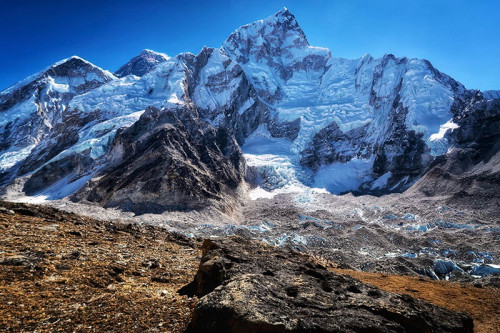
Standing at 8,848.86 meters, Mount Everest continues to attract climbers from across the world, but the 2026 season has highlighted both the dream and the danger of climbing the world’s highest mountain.
 Record Everest Permits in 2026
Nepal issued approximately 492–494 Everest climbing permits for the Spring 2026 season, the highest number ever recorded. Expedition operators confirmed that climbers from more than 55 countries joined Everest expeditions this year. The increase was partly influenced by the closure and restrictions on the Tibet/China side of Everest, pushing more climbers toward the Nepal route.
The permit increase also generated record royalty revenue for Nepal’s tourism industry after the government raised Everest permit fees from USD 11,000 to USD 15,000 for foreign climbers.
Delayed Route Opening at Khumbu Icefall
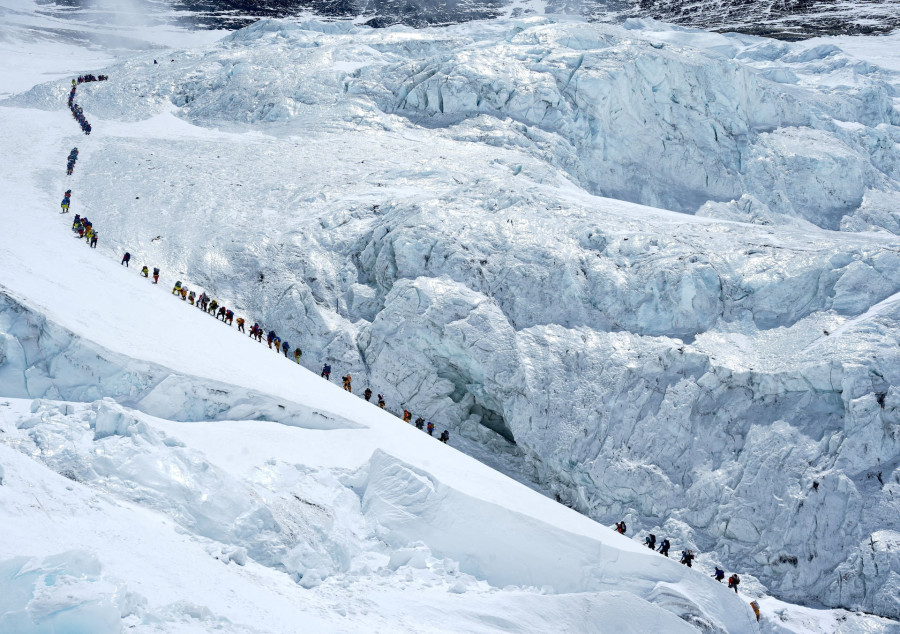
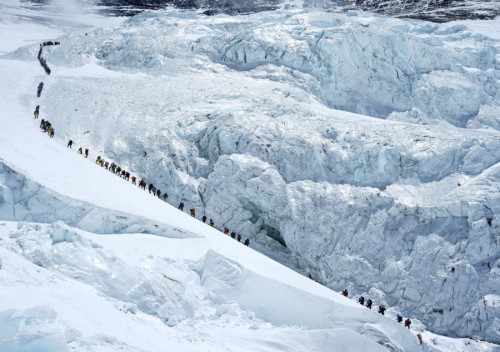
The season began with serious delays after a massive hanging ice serac blocked the route through the dangerous Khumbu Icefall section. Sherpa “Icefall Doctors” worked for weeks to safely reopen the route between Everest Base Camp and Camp I.
Because of the delay, many expeditions were forced to wait longer at Base Camp for acclimatization rotations. Once the route reopened in late April, summit traffic quickly intensified as teams rushed to take advantage of limited weather windows.
Record Summit Day on Everest
One of the biggest headlines of the 2026 Everest season came on May 20, when a record 274 climbers reached the summit from the Nepal side in a single day. This became the busiest summit day ever recorded on the southern route of Everest.
The narrow summit window caused major congestion in the “Death Zone” above 8,000 meters, where oxygen levels are dangerously low. Climbers reported long queues near the Hillary Step and summit ridge, raising renewed debate about overcrowding and climber management on Everest.
Historic Sherpa Achievements
Sherpa climbers once again made history during the 2026 season.
-
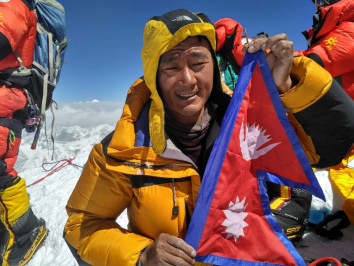
Kami Rita Sherpa extended his world record by summiting Everest for the 32nd time.
-
Pasang Dawa Sherpa completed his 30th Everest summit.
-
Lhakpa Sherpa increased her women’s Everest summit record to 11 successful ascents.
These achievements continue to highlight the critical role Sherpa climbers play in Himalayan expeditions and Everest safety operations.
Safety Concerns and Crowding Issues
The 2026 Everest season also renewed discussions about safety standards and climber experience requirements. Expedition leaders and experienced climbers warned that overcrowding increases risks, especially in high-altitude areas where delays can become life-threatening.
British climber Kenton Cool and several expedition organizers called for stricter vetting of climbers before allowing Everest permits. Nepal has already discussed implementing rules requiring climbers to first summit a 7,000-meter peak in Nepal before attempting Everest.
Climate change also remains a major concern. Warmer temperatures and unstable ice conditions have made the Khumbu Icefall more dangerous than previous years, increasing avalanche and serac collapse risks.
Everest Base Camp in 2026
Everest Base Camp transformed into a massive international expedition city during the season. Hundreds of tents, communication systems, medical facilities, dining camps, weather forecasting stations, and helicopter logistics supported climbers throughout the expedition period.
Most teams followed the classic South Col route:
- Everest Base Camp – 5,364m
- Camp I – 6,065m
- Camp II – 6,400m
- Camp III – 7,200m
- Camp IV (South Col) – 7,950m
- Summit – 8,848.86m
Everest 2026 Expedition Outlook
As the Spring 2026 climbing season closes, experts expect Everest summit numbers to surpass 950 climbers including Sherpas and guides. Despite overcrowding concerns, Everest remains one of the world’s most desired mountaineering achievements.
The 2026 Everest season will likely be remembered for:
- Record permit numbers
- Historic summit traffic
- Changing climate risks
- Strong Sherpa achievements
- Increased calls for better regulation and climber management
Mount Everest continues to inspire adventurers worldwide, but the 2026 season also proves that the future of Everest climbing will depend heavily on safety management, environmental protection, and responsible expedition planning.
Climbers Meet in Kathmandu to Discuss Mount Everest Challenges, 2026
Kathmandu, Nepal — May 2026:
Hundreds of climbers, expedition leaders, and government officials gathered in Nepal’s capital this week to address growing concerns about safety, overcrowding, and environmental pressure on Mount Everest during what is shaping up to be the busiest climbing season in history.
Record-Breaking Everest Season Sparks Concern
The meeting comes during the 2026 spring expedition season, which has seen an unprecedented number of climbers attempting the world’s highest peak (8,849m).
According to officials, Nepal issued a record 494 climbing permits, and the total number of people reaching the summit is expected to exceed 900 climbers and guides, making it one of the most crowded Everest seasons ever recorded.
The surge has led to:
- Heavy traffic in the “death zone” above 8,000 meters
- Long queues near summit routes
- Increased risk of altitude-related emergencies
- Growing environmental pressure on the mountain
Key Meeting in Kathmandu: “Everest Summiteers Summit”
The discussions took place during the Everest Summiteers Summit 2026 held in Kathmandu, where climbers shared first-hand experiences from this season.
Topics included:
- Overcrowding on summit days
- Safety risks in the Khumbu Icefall
- Waste management and environmental damage
- Climate change impact on glaciers and ice routes
- Need for stricter climber experience requirements
Officials and climbers described how rapid weather windows caused large groups to attempt summit pushes at the same time, creating dangerous bottlenecks on narrow ridge sections.
Major Safety Concerns Raised
Experienced climbers warned that Everest is becoming increasingly risky due to rising traffic and underprepared climbers.
A key concern raised during the meeting was that many climbers:
- Lack prior high-altitude experience
- Rely heavily on guided support and oxygen
- Underestimate extreme conditions above 8,000 meters
Experts also highlighted that warming temperatures are destabilizing ice formations, increasing the risk of avalanches and falling ice blocks in the Khumbu Icefall.
Environmental Pressure on Everest
Another major issue discussed was garbage accumulation along climbing routes and camps.
With thousands of people moving through Base Camp and higher camps each season, managing waste has become increasingly difficult despite existing regulations requiring climbers to bring back their trash.
Participants called for:
- Stronger enforcement of cleanup rules
- Better expedition monitoring
- Sustainable climbing practices
Possible New Rules Under Discussion
Nepalese officials indicated that new regulations are being considered, including:
- Mandatory previous climbing experience on high-altitude peaks
- Limits on total climber permits
- Stricter safety checks for expedition operators
One proposal discussed was reducing the number of climbers allowed per season to improve safety and reduce congestion.
Sherpa Voices and Industry Response
Sherpa guides, who play a crucial role in fixing ropes and supporting climbers, emphasized that overcrowding increases risks not only for foreign climbers but also for support teams working in extreme conditions.
Some experienced climbers suggested limiting permits to a smaller number to make expeditions safer and more manageable.
Why This Meeting Matters
The Kathmandu summit reflects a growing global debate about the future of Everest:
- Should access be limited for safety?
- Can tourism and conservation coexist on the mountain?
- How can climbers be better prepared before attempting Everest?
With Everest tourism at record levels in 2026, these discussions may shape future climbing rules and expedition standards.
The 2026 Kathmandu meeting highlights a turning point for Mount Everest. While the mountain continues to attract climbers from around the world, growing concerns about safety, overcrowding, and environmental damage are pushing Nepal toward potential policy changes.
Everest remains a symbol of human ambition — but experts warn that without stricter management, the risks may continue to rise alongside the number of climbers.
Everest 2026 Season Winds Down as Kathmandu Celebrates 73rd Everest Day
 Kathmandu, May 29, 2026 — The 2026 Mount Everest climbing season is nearing its end this weekend as most expedition teams descend from higher camps following a busy and crowded summit period earlier this month. Officials and operators report that the majority of climbers have already completed their summit attempts, with only a few teams still on the mountain as weather conditions begin to shift toward the approaching monsoon season. This year’s expedition season has been marked by record permit numbers, heavy congestion during summit windows, and short weather opportunities that forced large groups of climbers to attempt the peak within tight timeframes.
The season also brought renewed attention to safety concerns on the world’s highest peak, particularly overcrowding above 8,000 meters where climbers experienced delays and queueing during summit pushes. Expedition leaders highlighted challenges related to limited climber experience levels, increased reliance on supplemental oxygen, and unstable ice conditions in the Khumbu Icefall influenced by rising temperatures. As the season winds down, discussions continue within the mountaineering community about the need for stronger regulations, improved crowd management, and better environmental protection measures for future expeditions.
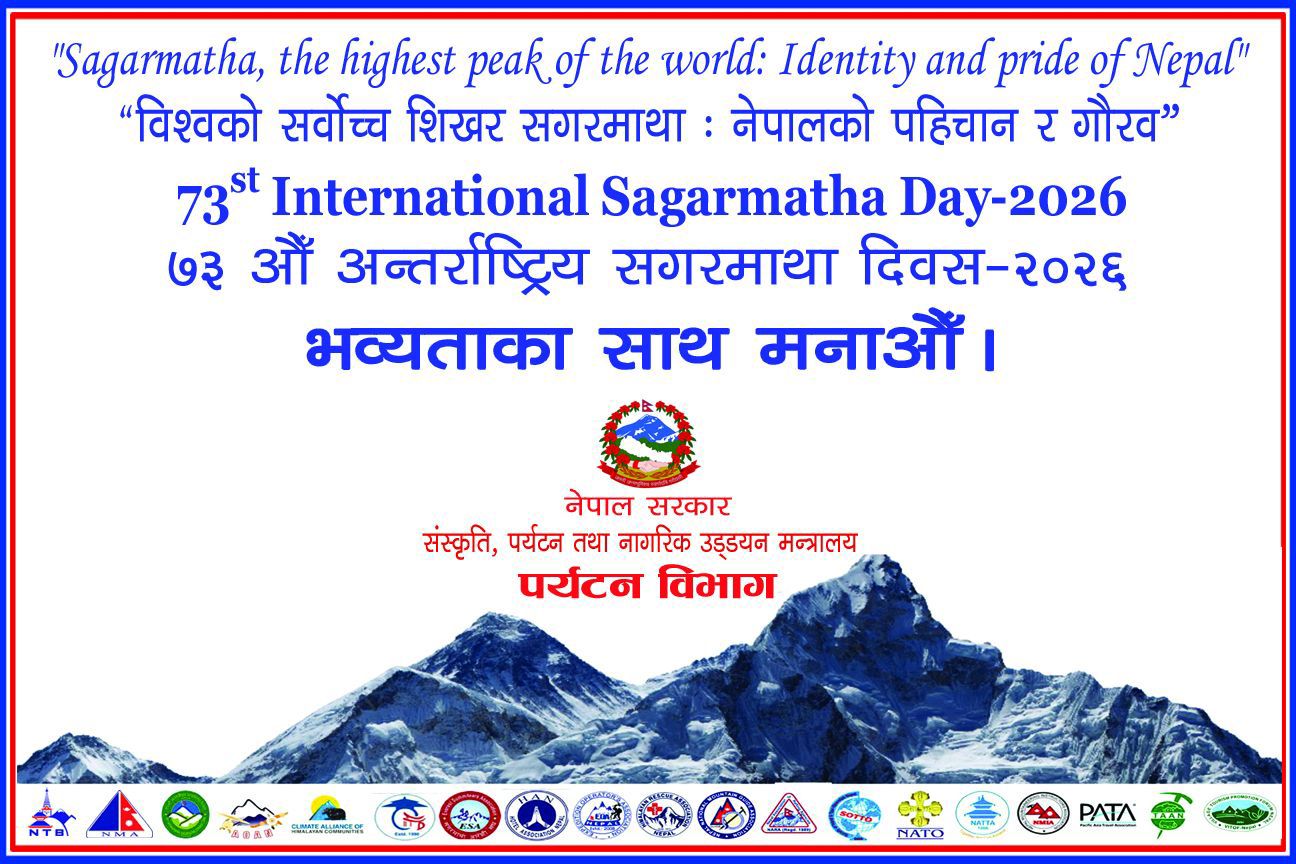
At the same time, Nepal is celebrating the 73rd International Everest Day in Kathmandu, marking the historic first ascent of Mount Everest by Sir Edmund Hillary and Tenzing Norgay in 1953. The occasion is being observed with official ceremonies, cultural programs, and tributes to Sherpa climbers and expedition workers who play a vital role in Himalayan mountaineering. As Everest 2026 comes to a close, the season is expected to be remembered both for its record activity and for the ongoing debate it has sparked about the future of safe and sustainable climbing on the world’s highest mountain.
NSG “Black Cats” Summit Mount Everest in Remarkable 20-Day Expedition
Kathmandu, May 2026:
India’s elite National Security Guard (NSG), popularly known as the “Black Cats,” has successfully completed a historic Mount Everest expedition, reaching the summit in just 20 days from Kathmandu, marking one of the fastest institutional climbs of the world’s highest peak.
The 16-member NSG Everest Expedition 2026 team reached the summit of Mount Everest (8,848.86m) at around 3:26 AM on May 23, according to expedition officials, completing a tightly planned rotation strategy that included acclimatization, route fixing, and summit push within a compressed timeline.
Rapid Expedition Sets New Benchmark
The expedition has drawn attention in the mountaineering community for its unusually fast turnaround, as standard Everest expeditions often take 6–8 weeks.
The NSG team completed:
- Departure from Kathmandu to Base Camp
- Acclimatization rotations through Camp I, II, and III
- Final summit push under a narrow weather window
- Return phase within a total of 20 days
Officials said the achievement reflects advanced planning, strong physical preparation, and coordinated support from experienced Sherpa guides.
Team Leadership and Support
The expedition was led under the command structure of NSG officers, with climbing operations supported by professional Himalayan guides and logistics teams.
The mission was executed in coordination with experienced expedition organizers and included a large Sherpa support team responsible for:
- Route fixing through the Khumbu Icefall
- Carrying supplies to high camps
- Safety and rope management on steep sections
- Summit support during final ascent
Beyond Climbing: Training and Environmental Efforts
Alongside the summit mission, the NSG team also participated in additional activities at Everest Base Camp, including a medical assistance camp and clean-up initiatives, aimed at supporting local communities and reducing waste on the mountain.
These efforts were highlighted as part of the expedition’s broader focus on endurance, discipline, and environmental responsibility.
Significance of the Achievement
Experts describe the 20-day Everest expedition as a rare operational success, as such timelines require:
- Perfect weather synchronization
- Fast acclimatization cycles
- Highly efficient logistics
- Strong team coordination at extreme altitude
The achievement also reflects increasing interest among institutional teams in high-altitude expeditions as a form of endurance and leadership training.
The NSG “Black Cats” Everest 2026 expedition stands out as one of the fastest organized climbs of Mount Everest in recent years. Beyond the summit success, the mission highlights discipline, teamwork, and the growing role of structured expedition programs in Himalayan mountaineering.
The expedition is now being recognized as a landmark achievement in India–Nepal mountaineering collaboration and modern high-altitude operations.
How Much Does It Cost to Climb Mount Everest in 2027?
Climbing Mount Everest in 2027 remains one of the world’s most challenging and prestigious mountaineering adventures. However, reaching the summit of the world’s highest mountain now requires a significantly larger budget than in previous years. Expedition prices continue to rise due to permit increases, higher logistics expenses, advanced safety systems, and growing demand from international climbers.
In 2027, the average Everest expedition cost ranges between $45,000 and $90,000 for standard guided climbs, while luxury and private expeditions can exceed $300,000.
Everest Expedition Cost Overview 2027
Budget Expeditions
- Starting from approximately $40,000–$50,000
- Basic logistics and shared Sherpa support
- Limited oxygen and camp services
Standard Full-Service Expeditions
- Average cost: $55,000–$85,000
- Professional guides and experienced Sherpa teams
- Full climbing logistics, oxygen, and base camp facilities included
Luxury & VVIP Everest Expeditions
- $150,000–$300,000+
- Private IFMGA guides
- Unlimited oxygen support
- Helicopter transportation between camps
- Heated sleeping domes and premium dining services
Why Everest Climbing Costs Are Increasing in 2027
Several major factors are driving the increase in Everest expedition prices:
- Nepal climbing permit fees now stand at $15,000 per climber
- Higher insurance and salary requirements for Sherpa staff
- Increased helicopter rescue and emergency support costs
- Rising oxygen bottle and high-altitude equipment prices
- More advanced expedition technology and weather forecasting systems
- Growing demand from climbers across Asia, Europe, and the Middle East
Expedition operators are also investing more heavily in safety infrastructure following recent high-altitude incidents and overcrowding concerns on summit routes.
Main Expenses Included in an Everest Expedition
Climbing Permits & Government Fees
A large portion of the Everest climbing budget goes toward government permits, environmental charges, liaison officers, and expedition administration.
International Travel & Trekking Costs
Flights to Nepal, hotel stays in Kathmandu, and the trek to Everest Base Camp can add several thousand dollars depending on travel class and itinerary.
Oxygen Systems & High-Altitude Support
Supplemental oxygen remains one of the most expensive components of the expedition. Most climbers use multiple oxygen bottles during acclimatization rotations and summit pushes.
Sherpa Guides & Safety Teams
Experienced Sherpa climbers are essential for route fixing, carrying loads, and supporting climbers during summit day. Higher-quality operators now employ larger Sherpa teams and expanded rescue resources.
Choosing the Right Everest Operator
Price should never be the only factor when selecting an Everest expedition company. Experienced climbers increasingly prioritize:
- Safety standards
- Guide experience
- Sherpa-to-client ratio
- Oxygen backup systems
- Emergency evacuation planning
- Success rate and expedition reputation
While low-cost expeditions still exist, many climbers now prefer reputable operators with strong logistics and professional support teams.
Everest in 2027: Bigger Demand, Better Technology
Mount Everest continues to attract climbers from around the world, and 2027 is expected to see another busy climbing season. Improved forecasting technology, drone-assisted logistics, and better communication systems are helping make expeditions safer and more efficient than ever before.
For climbers planning an Everest expedition in 2027, early booking, proper training, and selecting the right expedition operator remain the keys to a successful and safe summit experience.
 Frequently Asked Questions
How much does it cost to climb Mount Everest in 2027?
Most climbers can expect to spend between $45,000 and $90,000 for a standard guided expedition. Luxury and private expeditions may cost more than $300,000.
Why are Everest expeditions so expensive?
The high cost comes from permits, oxygen systems, Sherpa support, logistics, insurance, safety infrastructure, and remote high-altitude operations.
Is climbing Everest becoming more expensive every year?
Yes. Permit increases, inflation, safety upgrades, and rising demand continue to push expedition prices higher each season.
Are luxury Everest expeditions worth it?
Luxury expeditions provide additional safety, comfort, private guiding, and helicopter support, making them popular among climbers seeking premium service and reduced risk.
Recent Posts

8th Feb, 2026

6th Feb, 2026