How to book 7000m peak in nepal ?

 Kedar Neupane
18th Oct, 2025
Kedar Neupane
18th Oct, 2025
Kedar Neupane
I am Kedar Neupane, a passionate traveler, entrepreneur, mentor, and social contributor, born and raised in a village near the Nepal-China border in Sindhupalchok, Nepal. With a Master’s degree in Business from Tribhuvan University and Level 2 proficiency in the German language, I have dedicated my life to tourism, trade, mentorship, and holistic well-being.
🌍 A Global Explorer with a Vision
Having explored 26+ countries, I have gained profound insights into diverse cultures, business landscapes, and global tourism. My travels have taken me to:
🇹🇭 Thailand | 🇧🇹 Bhutan | 🇲🇾 Malaysia | 🇸🇬 Singapore | 🇨🇳 China | 🇭🇰 Hong Kong | 🇩🇪 Germany | 🇵🇱 Poland | 🇦🇹 Austria | 🇨🇭 Switzerland | 🇭🇺 Hungary | 🇳🇱 Netherlands | 🇧🇪 Belgium | 🇫🇷 France | 🇦🇪 UAE | 🇬🇧 UK | 🇺🇸 USA | 🇹🇷 Turkey | 🇶🇦 Qatar | 🇮🇳 India | 🇮🇩 Indonesia | 🇨🇦 Canada
Through my journeys, I have developed a deep appreciation for cultural exchange, adventure tourism, and sustainable business practices.
🏔️ Entrepreneurial & Professional Journey
I am actively involved in tourism, trade, and mentorship, leading multiple ventures that promote sustainable travel, adventure tourism, and business development:
✔ Founder & MD – Actual Adventure Pvt. Ltd. (A leading adventure travel company in Nepal)
✔ CEO – Himalayas Destination Management Company (Creating premium travel experiences)
✔ MD – Nepal Export & Import Pvt. Ltd. (Promoting Nepalese products globally)
✔ MD – Actual Mentor Pvt. Ltd. (Empowering entrepreneurs and professionals)
✔ Chairman – World Expedition Nepal (Focusing on high-altitude expeditions and trekking)
Through my entrepreneurial journey, social contributions, global explorations, and commitment to lifelong learning, I strive to inspire others to pursue their passions while making a meaningful difference. My dream is to build a world where travel, business, and holistic well-being come together, fostering growth, sustainability, and happiness for all.
Explore Lhakpa Ri, Putha Hiunchuli, Tilicho, Gangapurna, Baruntse, Api Himal, Himlung Himal, Nuptse — routes, difficulty, best season, permits and expedition tips from Actual Adventure.
Table of Contents
Overview — Why choose a 7000m peak?
Perfect for climbers moving from trekking peaks to full-scale expeditions. 7000m peaks offer high altitude experience, lower logistics costs than 8000m peaks, and excellent acclimatization.
Peaks covered in this guide
- Lhakpa Ri — 7,045 m
- Putha Hiunchuli — 7,246 m
- Tilicho Peak — 7,134 m
- Gangapurna — 7,454 m
- Baruntse — 7,162 m
- Api Himal — 7,132 m
- Himlung Himal — 7,126 m
- Nuptse — 7,861 m
Best season to climb
Spring (April–May) and Autumn (September–November) are the optimal windows for most 7000m ascents in Nepal. These seasons offer stable weather, clearer skies and safer climbing conditions. Monsoon and winter carry higher objective risks and access issues.
Detailed peak profiles
Lhakpa Ri — 7,045 m
Region: Everest (North side) — Difficulty: Moderate
Lhakpa Ri sits near the North Col of Everest and provides dramatic views of Everest's north face. The routes are mostly snow slopes with moderate crevasse risk depending on the year. It is favored as an introduction to 7000m climbing in the Everest region.
Typical route: Base camp on Tibetan side → North Col approach → summit ridge. Permit: Special peak permit (Tibet/Nepal border logistics may apply if approached from north).
Putha Hiunchuli — 7,246 m
Region: Dhaulagiri / Dolpo — Difficulty: Moderate
Putha Hiunchuli (also spelled Putha Hiunchuli) lies in the remote Dolpo region and offers long, steady snow slopes and an expedition-style approach. The peak is popular for climbers who also want to explore remote Dolpo culture and landscapes.
Typical route: Access via Juphal or road to Dolpo → long approach trek → glacier slopes to summit. Permit: Expedition permit (Dhaulagiri conservation and local permissions).
Tilicho Peak — 7,134 m
Region: Annapurna — Difficulty: Moderate
Tilicho Peak towers above Tilicho Lake (the highest lake in the world). The approach often follows the Annapurna Circuit making logistics simpler. Technical ice and mixed sections may be present, so basic alpine skills are needed.
Typical route: Annapurna Circuit approach → Tilicho base camp → glacier/ice slopes. Permit: Annapurna Conservation Area entry and peak permit.
Gangapurna — 7,454 m
Region: Annapurna (Manang) — Difficulty: Moderate to Challenging
Gangapurna is less-crowded and sits above Manang. The southwest ridge presents the more accessible line. The peak offers superb views across the Annapurna massif and is a beautiful objective for strong alpine climbers.
Typical route: Manang → base camp → ridge climb. Permit: Annapurna Conservation Area and peak permit.
Baruntse — 7,162 m
Region: Makalu / Hinku Valley — Difficulty: Moderate
Baruntse is often used as a high-altitude training peak for climbers preparing for 8000m objectives. The route has snow ridges and crevasse navigation; teams commonly combine Baruntse with acclimatization climbs in the region.
Typical route: Lukla → Hinku Valley approach → Baruntse base camp → summit ridge. Permit: Makalu-Barun National Park permit and peak permit.
Api Himal — 7,132 m
Region: Far West Nepal — Difficulty: Moderate
Api stands in a remote conservation area and is one of Nepal's least-visited 7000m peaks. The approach itself is a journey through quiet villages and rugged terrain. The climbing involves snow and ice slopes with limited technical rock sections depending on the chosen line.
Typical route: Access from Darchula/Api Nampa area → long trek to base → glacier approach. Permit: Api Nampa Conservation Area permit and peak permit.
Himlung Himal — 7,126 m
Region: Manaslu / Nar Phu — Difficulty: Easiest (recommended for first-timers)
Himlung Himal is widely regarded as the most accessible 7000m peak in Nepal. The routes are gradual and predictable; many guided parties report high success rates when acclimatization and weather are favorable. It is a top choice for climbers attempting their first 7000m objective.
Typical route: Trek via Nar/Phu or Samagaun → base camp → glacier approach → summit. Permit: Manaslu conservation permits and peak permit.
Nuptse — 7,861 m
Region: Everest — Difficulty: Difficult / Technical
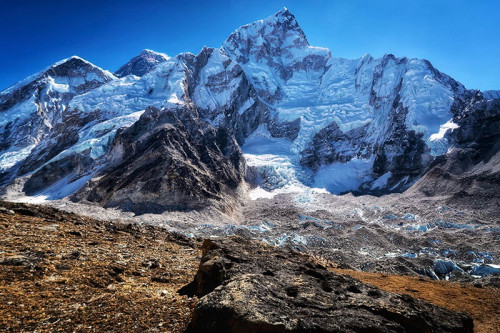
Nuptse forms part of the dramatic skyline beside Lhotse and Everest. While not the easiest, it is included here because of its prominence in the Khumbu. Nuptse requires substantial technical rock and ice climbing experience and is best attempted by experienced teams.
Typical route: South and West ridges from the Khumbu glacier zones. Permit: Everest region permits and peak permission; complex logistics in Khumbu.
Which is the Easiest 7000m Peak?
Himlung Himal (7,126 m) is generally considered the easiest 7000m peak in Nepal due to its non-technical routes, reliable approach through Nar/Phu, and high success rate when properly supported.
Permits, Costs & Logistics (Quick overview)
| Peak | Region | Approx. Cost (USD) |
|---|---|---|
| Himlung Himal | Manaslu | $6,500 – $8,500 |
| Putha Hiunchuli | Dolpo / Dhaulagiri | $8,500 – $11,000 |
| Baruntse | Makalu | $7,000 – $9,500 |
| Tilicho | Annapurna | $6,500 – $8,500 |
| Lhakpa Ri | Everest (North) | $8,000 – $11,000 |
| Api Himal | Far West | $7,000 – $10,000 |
| Gangapurna | Annapurna | $7,000 – $9,000 |
| Nuptse | Everest | $10,000+ |
Safety, Training & Equipment
All 7000m climbs require specific high-altitude gear: double-layer sleeping systems, down suits for high camps (depending on season), crampons, ice axes, harnesses, ropes and crevasse rescue equipment. Prior high-altitude experience (6000m peaks and glacier travel) and a structured acclimatization plan dramatically improve success rates.
Detailed FAQ — 7000m & High-Altitude Climbing
Can a non-technical climber attempt these peaks?
Some peaks like Himlung have non-technical routes and are suitable for climbers with guided support. Others, such as Nuptse or Gangapurna, demand technical ice/rock skills.
How long does a 7000m expedition take?
Typical expedition length is 4–8 weeks including approach, acclimatization rotations and summit window. Shorter itineraries may be possible for peaks closer to roadheads, but careful acclimatization is essential.
Do I need high-altitude medical checks?
Yes. A pre-expedition medical check and fitness assessment are recommended. Carry medications for altitude sickness and consult your physician about personal risk factors.
If you want this as a ready-to-publish page or need it adapted to your website CMS, we can provide a cleaned HTML/CSS bundle or a WordPress-ready template.
Which is the cheapest 7000m peak to climb in Nepal?
There is no single fixed "cheapest" 7000m peak because cost depends on permits, approach logistics (air vs road), length of trek, support level and operator. Peaks with shorter approaches and near major hubs (for example, peaks in the Annapurna or Manaslu regions) tend to be cheaper. Himlung and Tilicho commonly appear among the more affordable options.
What is the easiest 7000m peak for beginners?
Himlung Himal (7,126 m) is widely recommended as the easiest 7000m objective in Nepal due to its non-technical standard route and consistent success rates when climbed with experienced guides.
Where is the best 7000 meter mountain to climb?
"Best" depends on your goal: for safety and training choose Himlung; for wilderness and remoteness choose Putha Hiunchuli or Api; for practice toward 8000m peaks choose Baruntse. Consider logistics, season and budget when choosing.
What is the 7000m rule for Everest?
Recent policy proposals have recommended that Everest aspirants demonstrate prior successful summits of at least one 7000m peak (ideally in Nepal) before they qualify for an Everest permit. The rule aims to reduce inexperienced climbers on Everest; check the Department of Tourism for the final legal text.
What is the easiest 8000 m peak to climb?
Cho Oyu (8,201 m) is generally regarded as the least technical 8000m peak and is often used as a progression objective before Everest. It still requires full expedition experience and planning.
What is the easiest climb in Nepal?
For high-altitude introductory summits: Island Peak (Imja Tse, ~6,189 m) and Mera Peak (~6,476 m). For simple day hikes: Poon Hill and Nagarkot are accessible options.
How to climb your first 7a (sport grade)?
Follow a structured training plan: build base endurance, develop finger and pull strength, practise technique and footwork, project incrementally harder routes, rest and recovery, and consider coaching or a training program tailored to lead climbing.
What's the easiest of the 7 Summits?
By the Bass list the easiest is Mount Kosciuszko (Australia). By the Messner list (which includes Carstensz Pyramid) the easiest widely attempted mountaineering objective is Mount Kilimanjaro.
Can a beginner climb Manaslu?
Not recommended. Manaslu (8,163 m) is an 8000m expedition with significant objective hazards (including avalanche terrain). Climbers should have prior high-altitude expedition experience.
How many 7000m peaks are in Nepal?
Counts vary by database and whether sub-peaks are included. A commonly cited figure used in policy discussions is around 70+ peaks above 7,000 m in Nepal. Consult the Nepal Mountaineering Association for an official list when planning.
Which mountain climb has the highest death rate?
Among the 8000m peaks, Annapurna I has historically had the highest fatality-to-summit ratio. Keep in mind that fatality statistics vary by period and how they are calculated.
What is the 2pm rule on Everest?
The 2:00 pm turnaround rule is a safety guideline requiring summit teams to start descending early enough to avoid summit pushes that result in late afternoon or nighttime descents. Teams that miss the turnaround face greater risk from weather and darkness.
Is Nepal offering free climbing permits?
Nepal does not offer blanket free permits for 7000m/8000m peaks. Permit structures, fee-waivers for certain peaks and temporary policy changes have been announced at times; check the official Department of Tourism updates for current permit fees and any special programs.
Why is Cho Oyu considered easier?
Cho Oyu's standard route has fewer technical sections, gentler slopes and a relatively straightforward ridge line. These route characteristics, combined with logistic support, make it comparatively accessible among 8000ers.
Can you breathe at 8000 meters?
Breathing is possible but difficult at 8000 m: ambient oxygen pressure is very low and the human body cannot acclimatize long-term in the "death zone." Climbers commonly use supplemental oxygen to improve safety and performance at these heights.
What is the first rule of climbing?
Prioritize safety: protect your partners and avoid unnecessary risks. Being ready to turn back is often the single most important decision in expedition climbing.
Who is the youngest person to climb the 7 Summits?
Records change frequently. For a current, authoritative record, consult Guinness World Records or official mountaineering record sources.
Is 20 too old to start climbing?
No. Many climbers start in their 20s or later. With consistent training and safe progression, 20 is an excellent age to begin climbing seriously.
What is the easiest 6000m peak in Nepal?
Island Peak (Imja Tse) and Mera Peak are classic beginner-friendly 6000m objectives with well-established routes and guiding services.
Is solo hiking banned in Nepal?
Solo hiking is not universally banned. However, many conservation areas require registration and permits, and some high-altitude trekking or peak attempts may require licensed guides. Always check local rules and register where necessary.
Which 8000 peak is hardest?
K2 is widely considered the most technically demanding of the 8000m peaks, followed by other highly technical or avalanche-prone peaks.
Do you need oxygen for Cho Oyu?
Some climbers use supplemental oxygen on Cho Oyu to increase safety and summit chances; experienced alpinists sometimes climb without it but most guided teams include oxygen near the summit.
What is the death rate of Manaslu?
Fatality percentages vary by the study and time frame. Manaslu has a meaningful fatality history and should be treated as a serious 8000m objective.
Is Manaslu harder than Everest?
They are different challenges. Everest is higher and has crowding/logistical issues; Manaslu involves technical and avalanche risks. Neither is "easier" across all metrics—experience and objective hazards determine difficulty.
What is the cheapest 8000 meter mountain to climb?
Cho Oyu has often been more affordable compared with Everest because of access and permit differences, but political, permit and operator pricing changes can alter relative costs. Always get up-to-date quotes from reputable operators.
What is the new rule of Everest?
Policy changes since 2024–2025 include higher fees, ecological deposits and stricter eligibility requirements (including prior high-altitude experience). Confirm the latest regulations from Nepal's Department of Tourism before planning.
Which was the first 8000 metre peak to be climbed?
Annapurna I (1950) was the first 8000m peak to be successfully climbed.
How many mountains are above 7000m?
Worldwide totals vary by database, but there are several dozen peaks over 7000 m in the Himalaya and Karakoram. For Nepal specifically, official counts often cite around 70+ peaks above 7000 m depending on inclusion rules.
Which peak is difficult to climb?
Difficulty depends on technical terrain, objective hazard and remoteness. Examples of difficult peaks include K2, Annapurna I and some technical faces of Broad Peak and Nanga Parbat.
Is Gasherbrum II easy?
Gasherbrum II is considered technically less demanding than K2 but remains an 8000m expedition with serious weather and objective risks.
What is the most difficult 8000 meter peak?
K2 is widely regarded as the most challenging 8000m peak for technical difficulty and weather. Annapurna is notable for high fatality rates as well.
If you want, I can now insert this FAQ directly into your website HTML (I already added it to the page). I can also produce a print-ready PDF or a short checklist for climbers.
© "Actual Adventure Pvt. Ltd." — All rights reserved. Designed for climbers and travel planners. Last updated: October 18, 2025.
Recent Posts

8th Feb, 2026

6th Feb, 2026