Which Everest Route Is Hardest? South vs North — Expert Operator Guide
 Kedar Neupane
13th Feb, 2024
Kedar Neupane
13th Feb, 2024
Kedar Neupane
I am Kedar Neupane, a passionate traveler, entrepreneur, mentor, and social contributor, born and raised in a village near the Nepal-China border in Sindhupalchok, Nepal. With a Master’s degree in Business from Tribhuvan University and Level 2 proficiency in the German language, I have dedicated my life to tourism, trade, mentorship, and holistic well-being.
🌍 A Global Explorer with a Vision
Having explored 26+ countries, I have gained profound insights into diverse cultures, business landscapes, and global tourism. My travels have taken me to:
🇹🇭 Thailand | 🇧🇹 Bhutan | 🇲🇾 Malaysia | 🇸🇬 Singapore | 🇨🇳 China | 🇭🇰 Hong Kong | 🇩🇪 Germany | 🇵🇱 Poland | 🇦🇹 Austria | 🇨🇭 Switzerland | 🇭🇺 Hungary | 🇳🇱 Netherlands | 🇧🇪 Belgium | 🇫🇷 France | 🇦🇪 UAE | 🇬🇧 UK | 🇺🇸 USA | 🇹🇷 Turkey | 🇶🇦 Qatar | 🇮🇳 India | 🇮🇩 Indonesia | 🇨🇦 Canada
Through my journeys, I have developed a deep appreciation for cultural exchange, adventure tourism, and sustainable business practices.
🏔️ Entrepreneurial & Professional Journey
I am actively involved in tourism, trade, and mentorship, leading multiple ventures that promote sustainable travel, adventure tourism, and business development:
✔ Founder & MD – Actual Adventure Pvt. Ltd. (A leading adventure travel company in Nepal)
✔ CEO – Himalayas Destination Management Company (Creating premium travel experiences)
✔ MD – Nepal Export & Import Pvt. Ltd. (Promoting Nepalese products globally)
✔ MD – Actual Mentor Pvt. Ltd. (Empowering entrepreneurs and professionals)
✔ Chairman – World Expedition Nepal (Focusing on high-altitude expeditions and trekking)
Through my entrepreneurial journey, social contributions, global explorations, and commitment to lifelong learning, I strive to inspire others to pursue their passions while making a meaningful difference. My dream is to build a world where travel, business, and holistic well-being come together, fostering growth, sustainability, and happiness for all.
The hardest route to climb Mount Everest is generally considered to be the Northeast Ridge route from the Tibetan side. This route is known for its technical challenges, including steep sections, exposed terrain, and unpredictable weather. Additionally, climbers must contend with the altitude and harsh conditions found at high elevations. While the Southeast Ridge route from the Nepalese side is more popular among climbers, the Northeast Ridge route is often considered more difficult and dangerous.
Table of Contents
Intro — Quick Summary & How to Book Your Adventure
Both the South (Nepal) and North (Tibet) routes of Mount Everest are legendary for their beauty and challenge — but they differ in access, terrain, risk, and support infrastructure. The South Route via Nepal is the most popular for trekkers and climbers, while the North Route via Tibet offers a more remote and technical experience.
Explore our Everest Base Camp Treks and Everest Expedition Packages for 2026 and 2027 departures with Actual Adventure Pvt. Ltd. — a trusted Nepal-based expedition company.
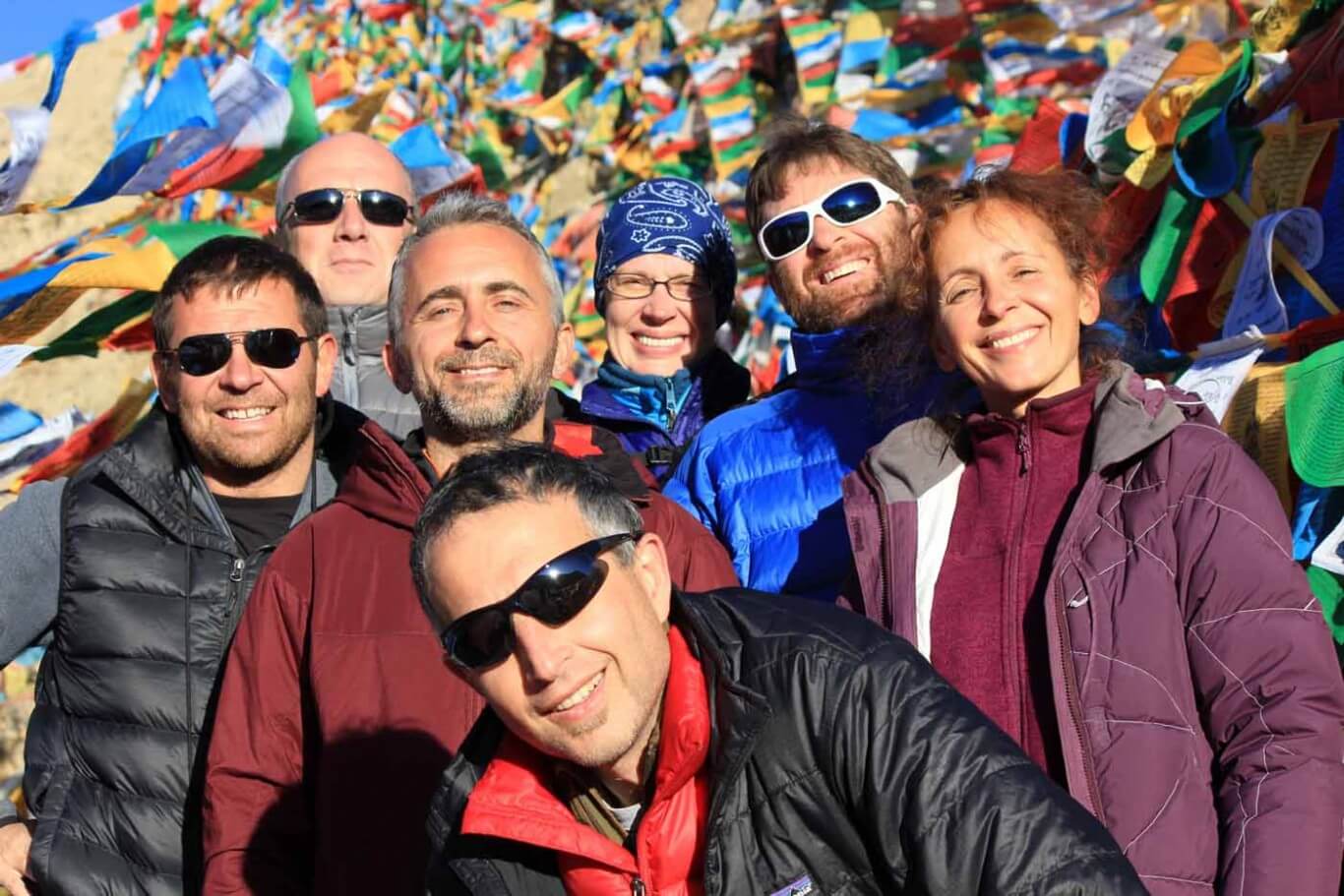 South Route (Nepal) — Base Camp Tours & Summit Approach
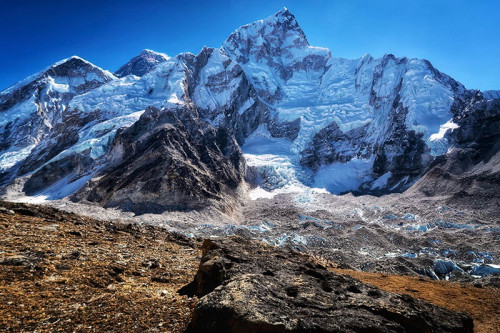
The South Route begins from Lukla, following the Khumbu Valley through Sherpa villages, monasteries, and scenic spots like Namche Bazaar, Tengboche, and Gorak Shep before reaching Everest Base Camp (5,364 m).
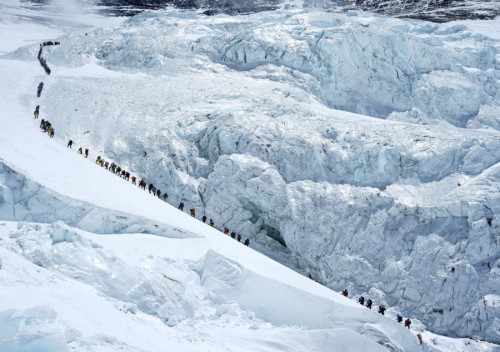
For climbers, the route continues through the Khumbu Icefall, Western Cwm, Lhotse Face, South Col, and finally the Southeast Ridge to the summit.
Key Highlights:
-
Classic Everest Base Camp Trek (14 days) itinerary.
-
Optional helicopter return from Gorak Shep or Kala Patthar.
-
Khumbu Icefall – one of the most technically hazardous sections on the planet.
-
Rich Sherpa culture, warm hospitality, and teahouse accommodation.
Operator View: The South Route offers better logistics, trained Sherpa teams, and well-managed infrastructure — ideal for commercial expeditions and first-time summiters.
North Route (Tibet) — Base Camp Tours & Summit Approach
The North Route, accessed via Tibet, begins near Rongbuk Monastery (5,000 m) and proceeds through Advanced Base Camp, North Col, and the Northeast Ridge. It is technically demanding with sustained exposure to cold winds and altitude.
Key Highlights:
-
Road access to Rongbuk Base Camp — no internal flight required.
-
The Second Step (8,610 m) — the most challenging section of the north route.
-
Vast, barren landscapes and incredible Tibetan panoramas.
-
Requires multiple permits from Chinese authorities.
Operator View: The North Route is logistically complex, colder, and more exposed. It suits technically strong and well-acclimatized climbers ready for high-altitude endurance and wind challenges.
Direct Comparison — South vs North Route
| Factor | South Route (Nepal) | North Route (Tibet) |
|---|---|---|
| Access | Flight to Lukla + 10–12 day trek | Drive from Lhasa to Rongbuk Base Camp |
| Technical Crux | Khumbu Icefall & Lhotse Face | Second Step & exposed ridges |
| Risk Type | Icefall collapse, avalanches | Wind exposure, long summit ridge |
| Logistics | Strong Sherpa support, teahouses | Limited Sherpa access, Chinese permits |
| Popularity | Most trekked and guided route | Less crowded, more restricted |
Summary: South = safer logistics and cultural richness. North = colder, windier, but less crowded and more technical.
Who Should Choose Which Route?
Choose the South (Nepal) Route if:
-
You want the classic Everest Base Camp trek with Sherpa hospitality.
-
You prefer a guided, well-supported expedition.
-
You value cultural immersion and easier logistics from Kathmandu.
Choose the North (Tibet) Route if:
-
You are an experienced climber seeking technical challenges.
-
You want to avoid the Khumbu Icefall hazards.
-
You prefer a vehicle-accessible Base Camp with fewer crowds.
Safety, Permits & Logistics (Operator Checklist)
-
Permits: Nepal Climbing Permit (South), Tibet Mountaineering Permit (North), liaison officers, environmental fees.
-
Rescue: Helicopter evacuation available only on Nepal side. North side relies on road evacuation.
-
Medical: Carry oxygen systems, Gamow bag, and high-altitude medical kits.
-
Staffing: Always hire experienced Sherpas or certified high-altitude guides.
-
Insurance: Clients must have rescue and medical coverage up to 8,000 m.
FAQs — Detailed Operator Answers
Q1: Which side is safer to climb?
The North Side avoids the dangerous Khumbu Icefall, but it has harsher winds, colder temperatures, and prolonged exposure above 8,000m. The South Side offers better rescue options, more infrastructure, and well-established Sherpa support, making it operationally safer despite the Icefall risk.
Q2: Which side is more technical?
The North Route has a technical rock climb at the Second Step (8,610 m), requiring fixed ropes and ladder crossings. The South Route involves more snow and ice but is technically easier due to better rope support and established ladders in the Khumbu Icefall.
Q3: Can trekkers visit both base camps?
Yes, but not in one continuous trip due to international borders. You can trek to Everest Base Camp (Nepal) via Lukla and separately tour Rongbuk Base Camp (Tibet) via Lhasa. Both are spectacular in their own ways.
Q4: Which route offers better views?
The South Route features panoramic Himalayan views including Ama Dablam, Lhotse, and Nuptse. The North Routeprovides sweeping views of Everest’s massive north face from Rongbuk — one of the world’s most iconic perspectives.
Q5: When is the best time to climb or trek?
For both sides, April–May (spring) and September–October (autumn) are ideal. Climbers generally target May for summit pushes. Monsoon and winter months bring extreme conditions and are not suitable.
Q6: How long does each trip take?
Q7: What is the cost difference?
Typical full-service expedition prices (as of 2025):
-
South Route (Nepal): USD 45,000–70,000
-
North Route (Tibet): USD 35,000–60,000
Base Camp treks or tours are far cheaper — USD 1,200–2,500 depending on group size and services.
Q8: Which side has better support services?
The Nepal (South) side has stronger support with experienced Sherpas, teahouse networks, and helicopter rescue options. The Tibet (North) side is more self-reliant, with limited rescue options and fewer support teams.
Book With Us — Everest Treks & Expeditions 2025–2026
Ready to face Everest your way? Whether you want to trek to Everest Base Camp in Nepal or join a full Everest Expedition via the South or North Route, we’ll organize all permits, logistics, and expert Sherpa teams for a seamless Himalayan experience.
Visit www.actual-adventure.com
📧 Email: info@actual-adventure.com
📞 WhatsApp / Call: +977-9851012358
Join the ultimate Himalayan journey with Actual Adventure — where safety, experience, and passion meet the world’s highest peaks.
Recent Posts

8th Feb, 2026

6th Feb, 2026