World’s Most Dangerous Airport – Lukla Airport
 Kedar Neupane
16th Jul, 2025
Kedar Neupane
16th Jul, 2025
Kedar Neupane
I am Kedar Neupane, a passionate traveler, entrepreneur, mentor, and social contributor, born and raised in a village near the Nepal-China border in Sindhupalchok, Nepal. With a Master’s degree in Business from Tribhuvan University and Level 2 proficiency in the German language, I have dedicated my life to tourism, trade, mentorship, and holistic well-being.
🌍 A Global Explorer with a Vision
Having explored 26+ countries, I have gained profound insights into diverse cultures, business landscapes, and global tourism. My travels have taken me to:
🇹🇭 Thailand | 🇧🇹 Bhutan | 🇲🇾 Malaysia | 🇸🇬 Singapore | 🇨🇳 China | 🇭🇰 Hong Kong | 🇩🇪 Germany | 🇵🇱 Poland | 🇦🇹 Austria | 🇨🇭 Switzerland | 🇭🇺 Hungary | 🇳🇱 Netherlands | 🇧🇪 Belgium | 🇫🇷 France | 🇦🇪 UAE | 🇬🇧 UK | 🇺🇸 USA | 🇹🇷 Turkey | 🇶🇦 Qatar | 🇮🇳 India | 🇮🇩 Indonesia | 🇨🇦 Canada
Through my journeys, I have developed a deep appreciation for cultural exchange, adventure tourism, and sustainable business practices.
🏔️ Entrepreneurial & Professional Journey
I am actively involved in tourism, trade, and mentorship, leading multiple ventures that promote sustainable travel, adventure tourism, and business development:
✔ Founder & MD – Actual Adventure Pvt. Ltd. (A leading adventure travel company in Nepal)
✔ CEO – Himalayas Destination Management Company (Creating premium travel experiences)
✔ MD – Nepal Export & Import Pvt. Ltd. (Promoting Nepalese products globally)
✔ MD – Actual Mentor Pvt. Ltd. (Empowering entrepreneurs and professionals)
✔ Chairman – World Expedition Nepal (Focusing on high-altitude expeditions and trekking)
Through my entrepreneurial journey, social contributions, global explorations, and commitment to lifelong learning, I strive to inspire others to pursue their passions while making a meaningful difference. My dream is to build a world where travel, business, and holistic well-being come together, fostering growth, sustainability, and happiness for all.
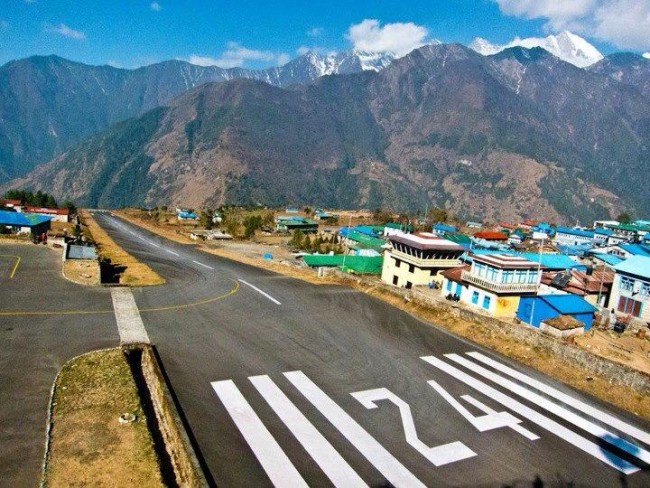
Lukla Airport — officially named Tenzing-Hillary Airport — is often described as the world’s most dangerous airport. Serving as the thrilling gateway to the Everest region, it is an iconic destination for adventure seekers, trekkers, and mountaineers from around the globe. Its dramatic runway, breathtaking Himalayan surroundings, and critical role in supporting expeditions have made it legendary in the world of aviation and adventure.
Table of Contents
| Fact | Details |
|---|---|
| Name | Tenzing-Hillary Airport (Lukla Airport) |
| Type | Domestic Airport & Altiport |
| Location | Lukla, Khumbu Pasanglhamu, Solukhumbu District, Koshi Province, Nepal |
| Address | MPQJ+6H8, 30 Lukla - Everest Base Camp Trekking Route, Chaurikharka 56000 |
| Elevation | 2,846 m (9,337 ft) |
| IATA Code | LUA |
| Owner | Government of Nepal |
| Hub For | Air Dynasty |
| Coordinates | 27°41′16″N 086°43′53″E (27.68778°N, 86.73139°E) |
| Serves | Lukla & Everest Base Camp region |
| Estimated Travel Time from Kathmandu | Approximately 10 hours by road + trek |
| Phone | 038-550044 |
Why is Lukla Airport So Dangerous?
Lukla Airport is renowned for its challenging runway, which measures just 527 meters (1,729 feet) long and has a steep 11.7% slope. This short, inclined runway sits on a mountainside, surrounded by towering peaks and deep valleys, leaving pilots with little room for error.
To make matters more complicated, the region is notorious for unpredictable weather, including fog, high winds, and sudden rain — which often lead to flight delays and cancellations. Pilots require exceptional skill and experience to land and take off safely in these conditions.
Lukla Airport Facts at a Glance
| Fact | Description |
|---|---|
| Official Name | Tenzing-Hillary Airport (LUA) |
| Nickname | The World’s Most Dangerous Airport |
| Location | Lukla, Khumbu Pasanglhamu, Solukhumbu District, Koshi Province, Nepal |
| Altitude | 2,846 meters (9,334 feet) above sea level |
| Runway Length | 527 meters (1,729 feet) |
| Runway Width | 30 meters (98 feet) |
| Runway Slope | 11.7% |
| Weather | Unpredictable: strong winds, fog, and rain |
| Traffic | Very busy — the main gateway to Mount Everest |
| Accidents | Over 50 fatal accidents since opening in 1971 |
| Why so dangerous? | Short runway, steep slope, high altitude, and unpredictable weather |
A Brief History of Lukla Airport
Lukla Airport was built in 1964, thanks to the vision and efforts of Sir Edmund Hillary and Tenzing Norgay, the legendary duo who first summited Mount Everest in 1953. Hillary saw the need for an airstrip to facilitate access to the Everest region, making it easier for trekkers, climbers, and supplies to reach the remote Himalayan villages.
In honor of their historic climb, the airport was named Tenzing-Hillary Airport and has since become an indispensable hub for tourism and local life in the Khumbu region.
Aircraft and Operations at Lukla
Due to the short runway and challenging conditions, only small aircraft like Twin Otters and Dornier Do 228s can operate here. Flights are frequently affected by the unpredictable weather, which can ground planes for hours or even days.
To counter these difficulties, many travelers opt for a helicopter flight from Kathmandu to Lukla, which is more flexible in bad weather and offers stunning aerial views of the Himalayas.
Importance of Lukla Airport
Despite its dangerous reputation, Lukla Airport is a lifeline for the local community and a crucial link to the rest of Nepal. It enables the flow of goods, medical supplies, and tourists, sustaining both the economy and livelihoods in the region.
Impact on the Local Economy
The airport fuels the local economy by attracting thousands of trekkers and climbers each year. This influx of visitors generates significant income through tourism, providing jobs in the hospitality, guiding, and transportation sectors. Even local residents frequently use the airport to travel between Kathmandu and their mountain homes.
Facilities at Lukla Airport
Lukla Airport is modestly equipped, given its remote location. Facilities include:
- A small terminal building with check-in counters
- A few shops and stalls selling basic goods
- Limited seating and amenities
There is no advanced infrastructure, but the charm of this rugged airstrip is part of its allure.
The Dangerous Reputation
Lukla Airport’s extreme environment has earned it its infamous title. Over the decades, more than 50 accidents — many fatal — have occurred here due to the combination of its short, sloped runway, challenging terrain, and unpredictable weather. Pilots flying to Lukla must undergo special training to qualify for this route.
How dangerous is a Lukla flight?
A flight to Lukla Airport, officially known as Tenzing-Hillary Airport, is considered one of the most dangerous commercial flights in the world. The danger lies in the airport’s extreme geography — it sits at an altitude of about 2,845 meters (9,334 feet) in the Himalayan mountains, surrounded by steep terrain and subject to rapidly changing weather. The runway is only about 527 meters (1,729 feet) long, sloping uphill at 11.7%, leaving very little room for error during takeoff or landing. Pilots flying to Lukla are highly skilled and specially trained for this route, but the combination of altitude, short runway, and unpredictable winds makes it risky.
What is Lukla known for?
Lukla is known as the gateway to the Everest region of Nepal. It is the starting point for trekkers heading to Everest Base Camp, Gokyo Lakes, and other Himalayan adventures. Apart from its spectacular mountain scenery and Sherpa culture, Lukla is globally famous for its airport, which attracts adventure travelers looking for a thrilling and unforgettable flight experience.
How high is Lukla Airport Nepal?
Lukla Airport is situated at an elevation of about 2,845 meters (9,334 feet) above sea level, making it one of the highest airports in the world. The high altitude also means thinner air, which affects aircraft performance and adds to the challenges of operating there.
Is landing in Nepal dangerous?
Landing in Nepal is generally safe, but landing at certain mountain airports — like Lukla Airport — is considered dangerous due to the terrain, short runways, and weather conditions. Other airports in Nepal, such as Kathmandu’s Tribhuvan International Airport, are less challenging compared to Lukla, though still subject to mountain weather.
Is Nepal dangerous to fly?
Nepal has some of the most challenging airports in the world because of its geography. While flying in Nepal is not inherently dangerous, routes like Kathmandu to Lukla are riskier than most due to terrain and weather. Airlines and pilots operating in Nepal, especially to Lukla, undergo rigorous training to minimize risk.
Is Nepal runway dangerous?
Some runways in Nepal, particularly at Lukla, Jomsom, and Simikot, are considered dangerous because of their short length, high altitude, and surrounding mountains. Lukla’s runway, in particular, is sloped and ends at a rock wall on one side and a cliff on the other, leaving no margin for error.
What is the most dangerous landing in the world?
The landing at Lukla Airport is widely regarded as one of the most dangerous landings in the world. Its short, sloped runway and the surrounding mountains mean pilots have just one chance to land properly — there’s no go-around option due to the terrain.
Where was the plane crash in Nepal?
Over the years, there have been several plane crashes in Nepal, including at or near Lukla Airport, where adverse weather and difficult approach conditions have led to accidents. A notable crash happened in 2008 near Lukla when a plane hit the runway and caught fire due to fog.
What is the most dangerous country to fly into?
While Nepal is not necessarily “the most dangerous country to fly into” overall, it does have some of the world’s most challenging airports, especially Lukla, which is why many travelers and pilots consider it one of the most difficult and dangerous flight destinations.
Which is the shortest runway in Nepal?
The shortest runway used for regular flights in Nepal is at Lukla Airport, measuring just 527 meters (1,729 feet). This incredibly short runway is a key factor in why Lukla is famous for being such a dangerous airport.
Which flight is most safe?
In Nepal, flights to larger airports like Kathmandu or Pokhara are relatively safe because of longer runways and better navigation aids. Flights to Lukla and other mountain airports carry more risk but are operated by experienced pilots and maintained to strict safety standards.
What is the shortest runway in the world?
While Lukla has one of the shortest commercial runways, the shortest paved runway in the world is actually at Juancho E. Yrausquin Airport on Saba Island, Caribbean, measuring just 400 meters (1,312 feet). However, Lukla’s combination of short runway, high altitude, and harsh environment makes it uniquely dangerous.
What is the most dangerous part of air travel?
The most dangerous parts of air travel are takeoff and landing, especially at airports like Lukla, where these phases are extremely challenging due to the terrain and short runway.
What is the most dangerous flight route in the world?
The Kathmandu to Lukla flight route in Nepal is considered the most dangerous flight route in the world because it combines mountainous terrain, unpredictable Himalayan weather, and the infamous Lukla runway.
In summary, Lukla Airport in Nepal has earned its reputation as one of the most dangerous airports and flight routes globally due to its short, high-altitude runway, steep terrain, and rapidly changing weather. Despite these challenges, it remains an essential and thrilling gateway to the Everest region, drawing thousands of adventure seekers each yea
The Ultimate Guide to Trekking in Nepal and the Himalayas: Answers to Your Most Asked Questions
Nepal is world-renowned for its spectacular trekking routes, stunning mountain landscapes, and rich cultural experiences. From beginners to seasoned trekkers, the Himalayas offer something for everyone. In this comprehensive guide, we answer common questions about Nepal’s longest, toughest, and most beautiful treks, along with tips on costs, difficulty, and the best time to trek.
What is the Longest Hiking Trail in Nepal?
The Great Himalayan Trail (GHT) holds the title as the longest hiking trail in Nepal, stretching over 1,700 kilometersfrom east to west. This epic trail crosses diverse terrain — high mountain passes, remote villages, dense forests, and alpine meadows — connecting the eastern Kanchenjunga region to the far western Humla district.
What is the Longest Trek in the Himalayas?
The Great Himalayan Trail is also considered the longest trek in the entire Himalayan mountain range. Covering vast distances across multiple mountain ranges, it is unmatched in length and diversity.
Which is the Toughest Trek in Nepal?
Many consider the Kanchenjunga Circuit Trek and the Great Himalayan Trail High Route as the toughest treks in Nepal. These routes feature extreme altitudes, remote wilderness, unpredictable weather, and challenging technical sections. The Everest Three Passes Trek is also notoriously demanding due to multiple high passes and altitude changes.
How Long Does it Take to Walk the Great Himalayan Trail?
The duration depends on the route chosen:
-
High Route: Approximately 120–150 days (4 to 5 months)
-
Cultural Route: Around 100–130 days
-
Sectional Treks: Typically 2 to 6 weeks per section
Is Annapurna Easier Than Everest?
Generally, yes. The Annapurna Base Camp Trek is considered less strenuous than the Everest Base Camp Trekbecause:
-
Annapurna has lower maximum altitude (~4,130 m vs. ~5,364 m)
-
Terrain is less rugged and technical
-
Annapurna region has more accessible villages and facilities
However, both treks require good fitness and acclimatization.
Why Is Trekking in Nepal So Expensive?
Trekking costs in Nepal include:
-
Permits and national park fees
-
Hiring certified guides and porters for safety and local knowledge
-
Accommodation in remote mountain lodges or camping gear
-
Transport logistics and sometimes domestic flights
-
Food supplies in remote regions
Due to Nepal’s challenging terrain and infrastructure limitations, these costs can add up quickly, making trekking appear expensive. Responsible trekking companies also invest in community support and sustainable tourism, which adds value.
Which Trek is Hardest?
The Kanchenjunga Circuit Trek, Upper Dolpo Trek, and the Great Himalayan Trail High Route are among the hardest. These involve long durations, high altitudes, technical terrain, and remoteness.
Which is the Shortest Trek in Nepal?
The Poon Hill Trek is one of the shortest popular treks, usually completed in 4 to 5 days. It offers stunning panoramic views of the Annapurna and Dhaulagiri ranges and is great for beginners or those short on time.
What is the Best Trek in the Himalayas?
The answer depends on your preferences:
-
For classic mountain views and culture: Everest Base Camp Trek
-
For diverse landscapes and moderate challenge: Annapurna Circuit Trek
-
For untouched wilderness and remoteness: Upper Dolpo Trek or Kanchenjunga Trek
-
For the ultimate challenge: Great Himalayan Trail High Route
Which is the Most Beautiful Trek in Nepal?
Beauty is subjective, but popular choices include:
-
Annapurna Circuit and Base Camp — varied landscapes from subtropical forests to high alpine meadows
-
Everest Base Camp and Gokyo Lakes — iconic Himalayan views and glacier-fed lakes
-
Langtang Valley Trek — rich flora and traditional Tamang culture
-
Upper Mustang Trek — desert-like landscapes and Tibetan culture
What is the Toughest Trek in 5 Kedar?
If by “5 Kedar” you mean the five hardest or notable treks associated with the Himalayas (like Kanchenjunga, Everest, Annapurna, Manaslu, and Dolpo), the Kanchenjunga Circuit and Dolpo Trek are generally considered the toughest due to remoteness and altitude.
What is the Hidden Trek in Nepal?
Several less-explored treks qualify as “hidden gems”:
-
Tsum Valley Trek: A sacred Himalayan valley with rich Tibetan Buddhist culture
-
Upper Dolpo Trek: Remote, wild, and culturally rich, with minimal tourism
-
Rara Lake Trek: To Nepal’s largest lake, surrounded by pristine forests
-
Makalu Base Camp Trek: Remote region with stunning high-altitude scenery
How Much Does it Cost to Do the Great Himalaya Trail?
Costs vary depending on route and duration, but approximate ranges are:
-
Full High Route (120–150 days): $10,000 to $20,000
-
Full Cultural Route (100–130 days): $8,000 to $15,000
-
Sectional Treks (20–40 days): $3,000 to $7,000
Costs include permits, guides, accommodation (camping and teahouses), food, and logistics.
Which Month is Best for Trekking in the Himalayas?
The best trekking seasons are:
-
Spring (March to May): Warm weather, blooming rhododendrons, and clear views
-
Autumn (September to November): Cool temperatures, clear skies, and stable weather
Winter can be very cold and risky at high altitude; monsoon season brings heavy rain and landslides.
Is the Himalayan Trek Difficult?
Trekking in the Himalayas ranges from easy to extremely difficult based on route, altitude, weather, and your fitness level. High-altitude treks require acclimatization and stamina. Lower altitude and shorter treks are suitable for beginners. Preparation, proper gear, and professional guidance can make any trek manageable and enjoyable.
Final Thoughts
Nepal offers trekking experiences for all levels, from beginner-friendly day hikes to the world’s longest and most demanding trails. Whether you want stunning views, cultural immersion, or the challenge of rugged wilderness, Nepal’s Himalayas deliver. Choosing the right trek and planning carefully with experienced operators like Actual Adventure will help you have a safe and unforgettable journey.
In Summary
Lukla Airport is more than just an airstrip — it’s a symbol of adventure, resilience, and human ambition. Its awe-inspiring setting and unique challenges continue to captivate travelers and aviation enthusiasts alike. Whether you arrive by small plane or helicopter, landing at Lukla is a thrilling start to your journey to the world’s highest peaks.
Best Selling Trips Nepal, Tibet And Bhutan
Actual Adventure offer more then 50 special holidays package in Nepal, Tibet, Bhutan and India, including Trekking, tour, biking and climbing. from 1 week to 3 weeks holidays with reasonable. you can think for Annapurna Base Camp Trekking, Manaslu circuit Trek, Tsum Valley Trek, and Everest Base Camp Trekking, which are equally worthy to carry out Nepal Trekking and Hiking during your Nepal to visit lets Book your Adventure with us Everest Base Camp Trek, Annapurna Base Camp Trek, Langtang Valley Trek, Langtang Gosainkunda Trek, Manaslu Circuit Trekking Peak climbing and Expedition above 8000m or Any 3 country tour in Himalayas for culture, pilgrimage or explore view Explore the most sought-after Buddhist pilgrimage packages in Asia featuring enchanting destinations in Nepal,Tibet, and Bhutan
Recent Posts

8th Feb, 2026

6th Feb, 2026