Every foreign visitor still needs a Tibet Travel Permit and must travel on a guided tour. Most travellers coming from Nepal also need a China Group Visa issued in Kathmandu. Indian pilgrims can again reach Kailash through Nepal, under a Chinese quota that rose to 24,000 in 2026. The biggest lesson of the season: do not start your journey until the Chinese visa and Tibet permit are approved. Applied for is not enough.
The 2026 Kailash season was the busiest in years. A higher quota for Indian pilgrims, the auspicious Horse Year and the return of India's own government-run yatra all brought crowds to Nepal's border routes. It also brought problems: pilgrims stranded in Kathmandu without permits, a monsoon flood that cut the Kerung road, and new warnings from India's Ministry of External Affairs.
This guide brings together everything that changed and everything you need to know before you plan a Tibet tour or a Kailash Mansarovar Yatra for 2027. We operate from Kathmandu and update this page as new rules are announced.
If you only read one section, read this one.
- Higher quota for Indian pilgrims. China allowed 24,000 Indian passport holders to visit Kailash through Nepal in 2026, up from 20,000 in 2025. Demand was far higher, at over 40,000 enquiries.
- India's government yatra is back. The Ministry of External Affairs ran its own yatra from June to August 2026 through the Lipulekh and Nathu La passes. It is capped at 1,000 pilgrims selected by lottery, so most Indians still travel privately through Nepal.
- A strict warning after pilgrims were stranded. In June 2026 a group of Indian pilgrims reached Kathmandu without approved Chinese visas and could not continue. India's MEA responded with an advisory telling pilgrims not to leave home until every permit is approved.
- The Kerung road was cut by floods. In late August a flood on the Bhotekoshi river disrupted the Kerung border crossing. Pilgrims already in Tibet were rerouted home through Hilsa.
- Prices went up. Operators raised Kailash package prices in 2026, mainly because of higher fuel and food costs in Tibet.
- Visa-free China, but not visa-free Tibet. China's visa-free list keeps growing. Travellers from those countries can now enter Tibet from Nepal without a Group Visa, but they still need the Tibet Travel Permit and a guided tour.
- New Chinese entry–exit law. China's new Regulation on Exit and Entry Administration took effect on 15 September 2026. It is a general border law rather than a Tibet tourism rule. We are watching for any practical effect on tour groups.
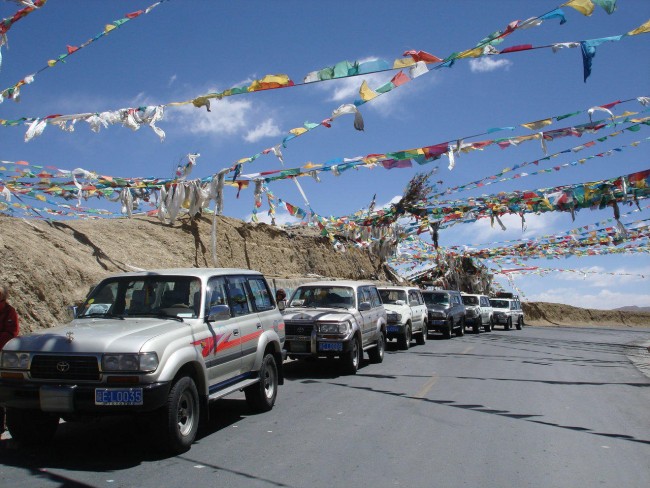
The road across the Tibetan plateau towards Saga and DarchenIllustration · Actual Adventure
Foreign passport holders
Table of contents Show
The Tibet Travel Permit: how it works now
Tibet is part of China, but it has its own entry rules on top of the Chinese visa. These are the rules that apply to every non-Chinese traveller.
- Everyone needs it. The Tibet Travel Permit (TTP) is issued by the Tibet Tourism Bureau. You need it even if you have a Chinese visa or come from a visa-free country. Without it you cannot board a flight or train to Lhasa or cross the border from Nepal.
- Only agencies can apply. You cannot apply yourself. A licensed Tibetan tour operator applies on your behalf, usually with Actual Adventure handling the Nepal side.
- No independent travel. You must book a guided tour with a fixed itinerary, a licensed Tibetan guide and private transport. Your guide keeps the permit and shows it at checkpoints.
- Extra permits for remote areas. Mount Kailash, Everest Base Camp and other places outside Lhasa also need an Alien's Travel Permit and a border permit. Your operator arranges these as part of the tour.
- Apply early. Allow at least 4–5 weeks before entry. Permits are issued close to the travel date, often in the last week or two.
- Watch for holiday closures. No permits were processed during the Tibetan New Year holiday, 15 to 26 February 2026. Expect a similar pause around Losar each year, and occasional closures around sensitive dates.
| Document | Who issues it | When you need it |
|---|---|---|
| Passport | Your government | At least 6 months' validity and blank pages |
| China Group Visa | Chinese Embassy, Kathmandu | Entering Tibet from Nepal (unless your passport is visa-free for China) |
| Tibet Travel Permit | Tibet Tourism Bureau, via your agency | All foreign travellers, everywhere in Tibet |
| Alien's Travel Permit | Local Public Security Bureau | Kailash, Everest Base Camp and areas outside Lhasa |
| Border / military permits | Arranged by your operator | Border areas, including the Kailash region |
Entering Tibet from Nepal: the China Group Visa
Kathmandu is the most popular gateway to Tibet, but the visa process here is different from applying in your home country.
- Group of four or more. The Group Visa is issued to groups, generally with a minimum of four people. Solo travellers can join a group we form.
- In person in Kathmandu. Applicants may need to attend an interview and give fingerprints at the Chinese Embassy. Plan to arrive in Kathmandu at least 5 working days before entering Tibet.
- It cancels your existing Chinese visa. Once the Group Visa is issued, any Chinese visa already in your passport becomes invalid. If you plan to visit other parts of China later on that visa, consider flying from Kathmandu to Chengdu or Kunming instead.
- Visa-free passports skip this step. Travellers from countries with visa-free entry to China can enter from Nepal without a Group Visa. They still need the Tibet Travel Permit.
The Group Visa is checked when you board the Kathmandu–Lhasa flight or cross the border at Kerung (Gyirong). Requirements at the Chinese Embassy can change at short notice, so we confirm the current rules for every group when you book.
Kailash Mansarovar Yatra
The 2026 Kailash season in review
After five years of closure, Kailash reopened to Indian passport holders in 2025. In 2026 it became fully busy again.
- Season: mid-May to September. Some groups travel into early October, but snow often closes the Hilsa–Taklakot road from October.
- Quota: 24,000 Indian pilgrims via Nepal, plus an estimated 5,000 foreign passport holders. Operators asked China for 15,000 extra places because of high demand.
- Why so busy: the Horse Year, which began on 17 February 2026, is considered especially auspicious for the Kailash kora in Tibetan tradition.
- Lake Manasarovar: bathing in the lake has been banned since 2018. Pilgrims can still collect holy water.
- No climbing: Mount Kailash itself may not be climbed. The pilgrimage is the 52 km kora (parikrama) around its base, usually walked in three days and crossing the Drolma La at about 5,630 m.
The Karnali valley near Hilsa, Humla: Nepal's westernmost gateway to KailashIllustration · Actual Adventure
Routes from Nepal to Kailash
Three routes run from Nepal. Package prices are typical 2026 market rates reported by Nepali operators. They vary by group size, hotel class and season, and 2027 prices are not yet set.
Kathmandu – Rasuwagadhi – Kerung (overland)
- Open
- ~10 days
- From about US$1,700
- Most popular
Drive north from Kathmandu to the Rasuwagadhi border, cross into Tibet at Kerung (Gyirong), then continue across the plateau via Saga and Paryang to Lake Manasarovar and Darchen. The gradual drive helps with acclimatisation and suits most pilgrims. The weak point is the monsoon: floods and landslides on the Bhotekoshi have cut this road more than once, including in August 2026.
Nepalgunj – Simikot – Hilsa (fly and drive)
- Open
- ~8 days
- From about US$1,550
- Shortest
Fly from Nepalgunj to Simikot in Humla, then take a helicopter to Hilsa on the border and cross to Taklakot (Purang). It's the quickest route, and popular with pilgrims from northern India who reach Nepalgunj by road from Lucknow. But it depends on good weather. Helicopters carry only a few passengers per flight, so delays of a day or more are common at peak times, especially around full moon. There are no ATMs in Simikot or Hilsa, and medical facilities are very limited.
Kathmandu – Lhasa (by air)
- Open
- 14–15 days
- From about US$5,000
- Most comfortable
Fly to Lhasa, spend a few days acclimatising and visiting the Potala Palace and Jokhang, then drive west to Kailash, often via Shigatse and Everest Base Camp. It's the most expensive option but the gentlest on the body, which makes it good for older pilgrims.
Kodari – Tatopani – Zhangmu
- Closed to tourists
The old Friendship Highway crossing has not reopened for tourists since the 2015 earthquake.
Indian passport holders
Rules for Indian pilgrims
Indian citizens have two options: the government-run yatra or a private yatra through Nepal.
| Government yatra (MEA) | Private yatra via Nepal | |
|---|---|---|
| Routes | Lipulekh (Uttarakhand), Nathu La (Sikkim) | Kerung, Hilsa, or by air via Lhasa |
| Seats | 1,000 (lottery) | 24,000 quota in 2026 |
| Duration | About 21–22 days | About 8–15 days |
| How to apply | Online at kmy.gov.in, usually early in the year | Through a licensed Nepal operator |
| Who can go | Indian citizens only | Indian citizens, NRIs, OCI holders and foreigners |
After pilgrims were stranded in Kathmandu in June 2026, India's Ministry of External Affairs told citizens to:
- leave home only after every visa and permit for the whole journey has been approved, not just applied for
- use a registered, authorised tour operator
- get written confirmation of all arrangements and China-entry approvals before paying
- make sure the package includes medical evacuation and emergency support
- carry copies of their permits, visa, insurance and medical certificate
Where is the Chinese visa issued? The Indian Embassy in Kathmandu advises Indian pilgrims to obtain the Chinese visa and Tibet permit before leaving India, through the Chinese Embassy in New Delhi. Some groups are processed in Kathmandu instead. The correct process depends on your route and operator, so we confirm it in writing for every pilgrim before any travel is booked.
Embassy tips for the Hilsa route:
- Avoid travelling on or near full-moon days, when Simikot and Hilsa become overcrowded and overbooked.
- Carry enough cash, because there are no ATMs.
- Bring medicine for the whole trip plus at least 10 extra days.
- Carry a SIM with international roaming, because there's no local mobile signal in places.
- Don't attempt the parikrama if your health doesn't allow it.
Document checklist
Send us scanned copies at least 6–8 weeks before departure. Permit applications are submitted in batches, and missing documents are the most common cause of delay.
- Passport valid for at least 6 months from your travel date, with blank pages. Aadhaar and PAN cards are not accepted for Tibet.
- Clear passport scan in colour, with all four corners visible.
- Photographs: recent passport-size photos on a white background (4–6 copies).
- Medical fitness certificate from a registered MBBS doctor confirming fitness for high altitude. This is strongly advised for all pilgrims and required for some.
- Travel insurance covering high altitude (up to about 5,700 m), helicopter evacuation, cancellation and delays.
- Indian citizens entering Nepal by land: a passport is required for Tibet. A voter ID is also commonly requested at the Nepal border.
- Occupation and employer details as requested on the permit application.
- Signed undertaking covering health risks and the journey rules, where your operator requires one.
Journalists, diplomats and government officials may face extra checks or be refused a permit. Please tell us your occupation honestly when you apply.
Planning for 2027: what we know and what we don't
As of November 2026, the 2026 season has ended. China has not yet announced the 2027 quota for Indian pilgrims, permit opening dates or the status of the Kerung road for next season. India's MEA usually opens applications for its government yatra early in the year. The Chinese quota for the Nepal routes has typically been confirmed in spring.
- Register your interest now. Places on popular dates, especially full-moon and Guru Purnima departures, fill months ahead.
- Check your passport. Renew it now if it expires before early 2028.
- Start training. The kora involves walking at 4,600–5,600 m. Regular walking, stair climbing and a medical check-up help a great deal.
- Keep your dates flexible. Permit issue dates and border openings can change at short notice. A day or two of buffer protects your international flights.
- Pay only after approval. A good operator will take a deposit to apply and confirm the balance only once your permits are approved.
We'll update this page as soon as the 2027 rules are announced.
Frequently asked questions
Yes. Tibet is open to foreign tourists on guided tours with a Tibet Travel Permit. The Kailash region is busiest from May to September. Winter tours to Lhasa run, but Kailash tours do not.
My country is visa-free for China. Do I still need a permit?Yes. Visa-free entry covers China, not Tibet. You still need the Tibet Travel Permit and a guided tour. You don't need the China Group Visa when entering from Nepal.
Can I travel to Tibet alone?You can't travel independently. Solo travellers can book a private guided tour or join one of our group departures. For entry from Nepal, we can place you in a group so you qualify for the Group Visa.
Can Indian passport holders do the Kailash Yatra through Nepal?Yes. Since 2025, Indian passport holders can travel to Kailash through Nepal with a licensed operator, within China's annual quota. The Chinese visa and Tibet permit must be approved before you leave home.
Which route is best for senior citizens?The Lhasa route is the gentlest because it gives the most time to acclimatise. The Kerung overland route is a good middle option. The Hilsa route is shortest but gains altitude quickly and depends on weather.
Can I take a helicopter around Kailash instead of walking?No. Helicopter flights are not allowed in Tibet. Pilgrims who can't walk the kora can hire ponies or porters on the first and third days, or visit the Yama Dwar gate at the start of the circuit and do a short darshan.
How much does the Kailash Yatra cost from Nepal?In 2026, typical packages started at around US$1,550 for the Hilsa route and US$1,700 for the Kerung route. Packages via Lhasa cost around US$5,000. Prices depend on group size, hotels and dates. Contact us for 2027 prices.
Plan your Kailash or Tibet trip
Travel with a Kathmandu team that handles the paperwork
Send us your dates, group size and passport nationality. We'll tell you the current permit rules for your route and the timeline you need. We submit your applications and confirm your trip only when everything is approved.
Want a Himalayan adventure without the Tibet paperwork? The Manaslu Circuit Trek in Nepal offers Tibetan-Buddhist villages, a high pass over Larke La (5,106 m) and the world's eighth-highest mountain, with permits issued in Kathmandu.
Rules described here were correct as of 20 November 2026. Tibet permit and visa rules can change without notice. Always confirm the latest requirements with us before booking flights.

Kedar Neupane
Mr Kedar Neupane is a Founder and managing director of this Company which was founded on March 2010. On the Age of 19thwith his single effort, he established this company with vision to provide young leadership in the tourism industries. He worked as manager in different trekking company before establishing this company.
He was born and grown up nearly to the Tibet boarder called “Sindhupalchok” northern from Kathmandu valley. After his school level studies, he came to Kathmandu on 2005 for further higher education and he completed his Master in business studies including Travel and tourism Management from Tribhuvan university on 2013.
Published by Actual Adventure pvt ltd


.jpeg)

