

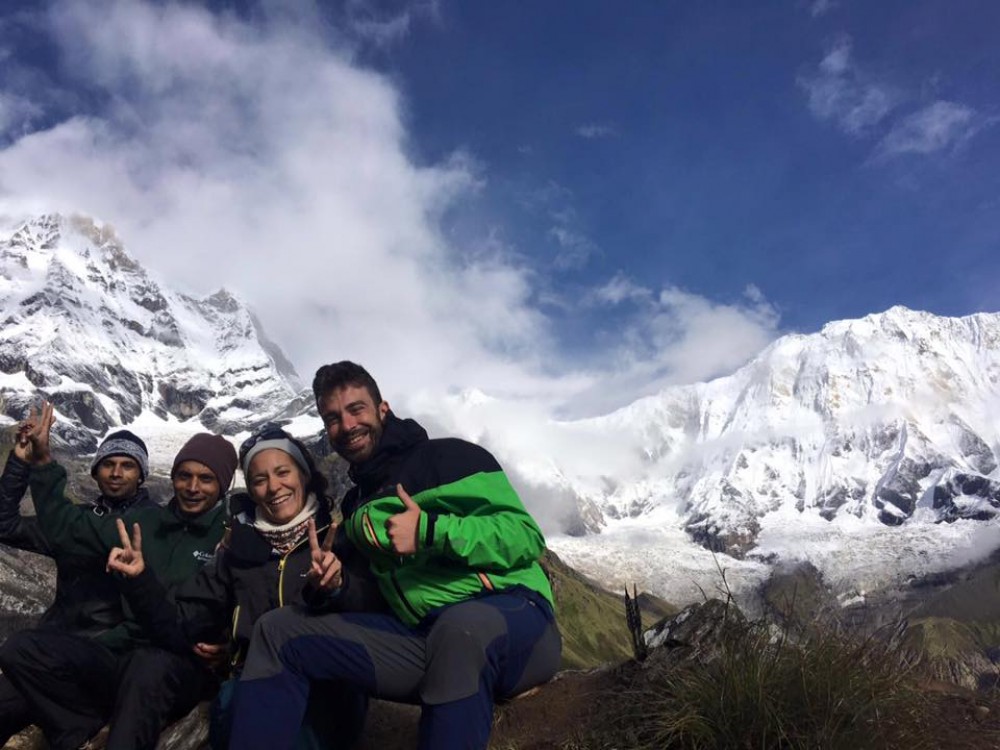
Poonhill Trekking in Nepal I experienced a wonderful trekking trip in 2019. We starts from Kathmandu>Pohkrara>Tikhedunga > Ghorepani>Poonhill ( for the amazing sunrise time)>Tadapani>Ghandruk>Pokhara>Kathmandu . We need to pass through slippery Ice surface in some of the...
Annapurna Adventure Trek
10 Days Moderate Annapurna Trekking
Trip Duration: 10 Days
Trip Duration: 10 Days
Trekking area: Annapurna Region Nepal
Group Size: Any
Best Season: Autumn / Spring
Transportation: Private car / bus / Flight
Trekking grade: Moderate
Trek Start from: Kathmandu
Trek End at: Kathmandu
Overview
Annapurna adventure trek is one of the most beautiful treks that encompass easy walking through the villages inhibited by diverse ethnic groups and dense forest with variety of wildlife and vegetation situated beneath the lap of regal Himalayas.
Showcasing the cultural and topographical variation, Annapurna Adventure trek is the lodge based trek that takes us to the cultivated terraced slopes, picturesque villages and Rhododendron forest. The trek offers the majestic view of Machhapuchhare and Annapurna south which dominates the whole skyline.
We will start the trek with a scenic flight from Kathmandu to Pokhara through the Himalayas. From Pokhara we will trek to Shyauli Bazaar to the scenic gurung settlement of Ghandruk. Later we will trek through astonishing Rhododendron forest to Landruk and then to Dhampus. Throughout the trek we will play hide and seek with the regal vista of Annapurna massif. This trek is an ideal getaway from the hustle and bustle of city within a short time frame without much of a physical exaggeration.
Day-by-day itinerary
Day1 Kathmandu Arrival
As your aircraft lands in Tribhuwan International Airport our representative will receive you and help you to transfer into the hotel of your choice.
Dinner Hotel 1300 m.
Day2 Kathmandu Sightseeing
Today we will start the day by visiting Pashupatinath temple which is situated 5km east of Kathmandu in the bank of holy Bagmati River. Pashupatinath is a pagoda shaped temple with tiered golden roofs and silver doors. Only the Hindu’s can visit the temple, but the visitors can clearly see the temple and activities performed in the temple premises from the eastern bank of Bagmati River where the dead bodies are cremated. From here we will visit Boudhanath Stupa which is located 8km east of Kathmandu. Boudhanath stupa is dome shaped monument representing the mind of Buddha and pilgrimage destination for Tantric Buddha. . In the afternoon we will drive to Patan Durbar Square which is situated in the southern area of the city. The square is dotted with ancient palaces, temples and shrines which are known for their antique and exquisite carvings. From here we will proceed to Kathmandu Durbar Square which is the historic seat of Nepalese royalty. Here we will visit Kastamandap Temple (a temple rumored to be constructed from the wood of single tree), Taleju temple, statue of Kal Vairab, Basantapur palace and Kumari Temple (residence of living goddess Kumari). After this we will pay our visit to Swoyambhunath temple which is listed in UNESCO World Heritage Site. The temple dates back to 2500years and is situated in the hilltop offering the astonishing view of Kathmandu. Return back to hotel for overnight stay.
Breakfast Hotel 1300 m.
Day3 Fly to Pokhara and Trek to Shyauli
We will take a early flight from Kathmandu to Pokhara through the Himalayas. Upon arriving Pokhara we will have our breakfast and drive towards Nayapool where we will meet the tour guide and listen to the short description about the tour. From Nayapool we will commence the trek crossing Modi Khola watching the distant view of Machhapuchhare to the small village of Shyauli via Birethanti. Stay overnight in Shyauli.
Breakfast, Lunch & Dinner Lodge 1160 m.
Day4 Trek to Ghandruk 5hours
From Shayuli the trail gradually goes uphill to suspension bridge, as we cross the bridge the trail climbs more steeply to the settlement of Klieu, Kimche and Chane which offers the beautiful vista of the surrounding environment. From Chane the trail traverses and climbs uphill to the village of Ghandruk where we will stop for overnight. Ghandruk is a large Gurung settlement which offers the sensual vista of Annapurna south, Machhapuchhare and Hiunchuli.
Breakfast, Lunch & Dinner Lodge 1940 m.
Day5 Trek to Landruk
From Ghandruk the trek goes downhill to Modi Khola through terraced fields and small village called Kyumi. Crossing the suspension bridge we will follow the stone steps to Landruk village which offers the magnificent view of Ghandruk village, Mt Hiunchuli, Annapurna and Machhapuchhare. Stay overnight in Landruk.
Breakfast, Lunch & Dinner Lodge 1565 m.
Day6 Trek to Dhampus 4-5hours
From Landruk the trail traverses through open area and climbs through the sparse woods to the small settlement of Tolka. From Tolka the trail climb to another small settlement of Bichko Deurali and then a steep uphill walk of 45minutes takes us to Pothana village. Finishing the lunch at Pothana we will continue the walk for another 90minutes to the Gurung village of Dhampus. Stay overnight at Dhampus in local lodge.
Breakfast, Lunch & Dinner Lodge 1650 m.
Day7 Trek to Phedi and Drive to Pokhara
From Dhampus the trail descends through the terraced fields and forest for about an hour or two to a small settlement of Phedi. From Phedi we will catch our ride back to Pokhara. Upon arriving Pokhara we will check into the hotel and enjoy a hot shower. In the evening you stroll around the lakeside and feel magnificence of nature.
Breakfast, Lunch & Dinner Lodge 900 m.
Day8 Explore Pokhara
We will wake up very early in the morning and drive to Sarankot to see sunrise over the magnificently snow capped Himalayas. Sarankot situated in the altitude of 1500m from the sea level gives you an option of paragliding over the lake city. Later we will drive back to hotel and have breakfast. After breakfast we will set off for city tour and visit places like David’s fall, Gupteshwor cave and Tibetan refugee camp. Stay overnight at hotel in Pokhara.
Breakfast, Lunch & Dinner Hotel 900 m.
Day9 fly back to Kathmandu
Early in the morning after having breakfast we will board a airstrip back to Kathmandu through the Himalayas. Upon arrival we will check into hotel, freshen up, have lunch and start for a self city tour or do some family shopping.
Dinner Hotel 1300 m.
Day10 Farewell
You will be transferred to Tribhuwan International airport for your onward journey.
Breakfast
Route map & altitude profile
Start1,300m Highest1,940m Highest sleep1,940m
Additional information
Trekking Info
Stay Safe
Altitude Sickness: The main and common risk while trekking above about 2500m is Altitude sickness. Altitude sickness is caused by acute exposure to low partial pressure of oxygen at high altitude. The available amount of oxygen to sustain mental and physical alertness decreases with altitude. Available oxygen drops as the air density itself, the number of molecules (of both oxygen and nitrogen) per given volume, drops as altitude increases. So don’t ignore, if you have any symptoms then descending to a lower altitude is the only option.
Water: Have some means to purify water, iodine or a fine ceramic filter are the best options. The streams should be considered polluted and whilst bottled water is often available, the disposal of plastic bottles is a problem.
Electricity in Nepal
Nepal is a developing country, Outside of major cities area electricity on trekking can be scares. You should have to pay 100-800 NRs per hour to charge goods on many lodges and also many tea-house treks, including in Annapurna base camp trek, Everest Base camp trek and many others treks also. Chargers often won't work on low power solar systems you find right up in the mountains so u can buy alternative bayonet light to electricity power plug converter, which will only works in low voltage is highlow. The standard Nepalese electrical outlet is a three-pronged triangle so bring three-pronged triangle chargers.
Nepal Climate information
Nepal is a landlocked country which lies in Hindu Kush Himalayan region. Nepal has monsoonal climate having four main seasons: spring, summer, monsoon, autumn and winter.
Below is a general guide to conditions at different seasons:
January to March (winter): In this season temperature will decrease at often 0°C (32°F) at night, with extreme cold at high elevations. It is possible to trek in places like the Everest region during the winter but due to extreme cold weather and heavy snow fall it may be quite difficult than as usual.
April to June (summer): In these months it is quite warm and dry weather. There is an abundance of blooming flowers in the Himalayas at this time, with rhododendrons, in particular, adding a splash of color to the landscape. This season is the best time to undertake mountain expeditions.
June to September (Monsoon): There will be heavy monsoonal rainfall in this season. Rains are generally lighter in high Himalayan reasons. In this season the mountain ranges are not often visible due to the clouds.
October to December (autumn): These months are cool and clear which is due to the end of monsoon, there is little dust in the air so this is the best season to visit the hilly and mountainous regions.
Nepal Visas information
Visa in Nepal can be acquired on arrival at Tribhuwan International Airport, Kathmandu and also at the border entry points in Kakadvitta, Birgunj, Bhairahawa, Nepalgunj, Gaddachowki border of Nepal - India and Kodari on Nepal-China border. Visa can also acquire at the nearest Nepal Embassy. For visa renewal purpose you can contact at Department of Immigration, Kalikasthan at Kathmandu. A valid passport and one passport -size photo with a light background is required. Visa can be obtained only through payment of cash in the following currency: Euro, Swiss Franc, Pound Sterling, US Dollar, Australian Dollar, Canadian Dollar, Hong Kong Dollar, Singapore Dollar and Japanese Yen. Credit card, Indian currency and Nepali currency are not accepted as payment of visa fee.
Nepal Visas information and fee
| Visa Facility | Duration | Fee |
|---|---|---|
| Multiple entry | 15 days | US$ 25 or equivalent convertible currency |
| Multiple entry | 30 days | US$ 40 or equivalent convertible currency |
| Multiple entry | 90 days | U US$ 100 or equivalent convertible currency |
Respect to Local Peoples
In Nepal, “Namaste” or “Namaskar” is said to an older or high-status person with palms together, figure up. It is used to greet a person in place of goodbye or hello. There is no limitation how many times you say “Namaste” but, it is better if you say once per person, per day. If You want to say “Thank You” then you can say “Dhanyabaad /'ðɅnjɅbɑ:d/ (Dhan-ya-baad)”
Image gallery
Client reviews Write a review
Annapurna Adventure trekking- October 2016 Kedar was very attentive to my needs and even drove many hours to bring me new shoes when my boots gave me terrible blisters. He also supplied me with a trekking pole for my trip and helped me pick out the gear I needed for the trek....
You may also like
Similar trips
 Moderate Save $310
Upper Mustang Motorcycle Tour in Nepal
From $3,200 $2,890 pp
Book Now 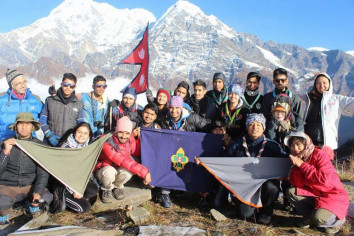 Moderate Save $110
Mardi Himal Trek
From $1,300 $1,190 pp
Book Now  Moderate
Himalayan Highlights Walking
PriceOn request
Book Now