
 Adventurous Save $100
 Island Peak Climbing in Nepal
From $2,890 $2,790 pp
Book Now 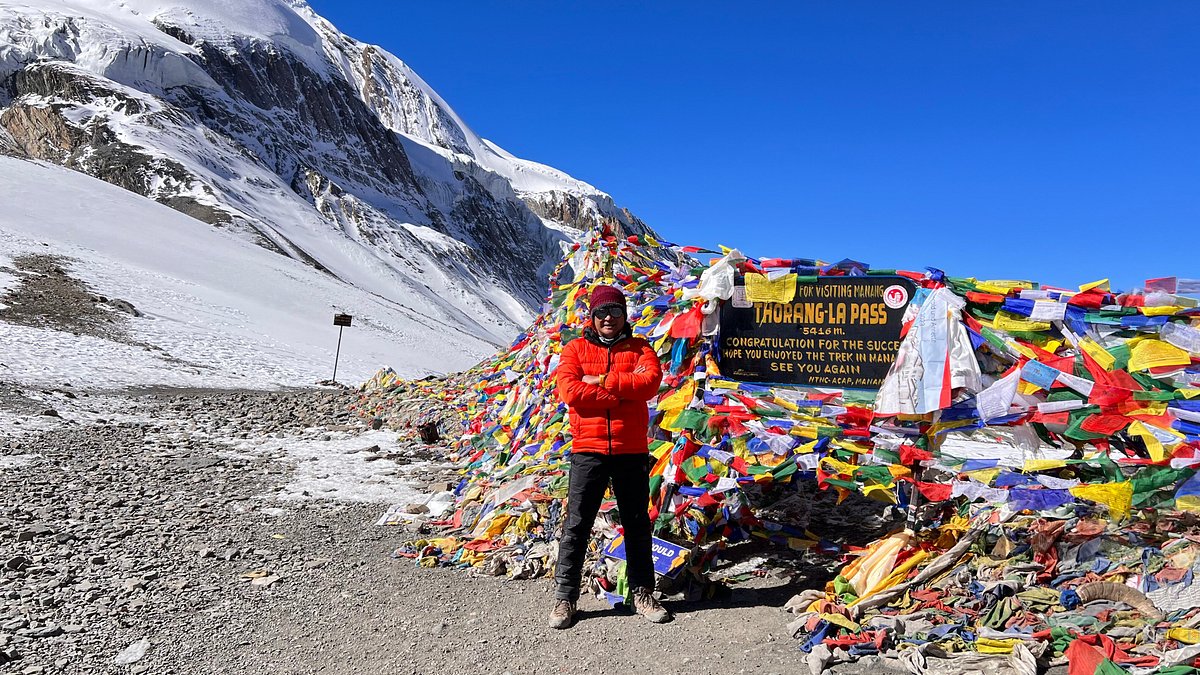
Thorong Peak Climbing is perfect for those who are reasonably fit and eager to explore the breathtaking mountain scenery of Nepal's Annapurna region. Standing at 6,144 meters, this climb offers not only a thrilling adventure but also a chance to experience the rich culture of the Gurung people. In this remote region, the Gurungs, who follow Buddhism, live in isolated villages with distinctive architecture and strong spiritual traditions. The trail winds through stunning rhododendron forests, where red, white, and pink blossoms beautifully contrast with the greenery. The rhododendron, Nepal's national flower, adds to the splendor of the journey. Thorong Peak lies south of the famous Thorong La Pass at 5,146 meters.
Your trek begins at Bhulbhule (840 meters) and gradually ascends through various villages, leading you to Thorong La Pass and ultimately Thorong Peak. Along the way, you’ll visit the sacred Vishnu Muktinath Temple, revered by both Buddhists and Hindus. Situated in the Muktinath Valley at the base of Thorong La Pass in Mustang, this high-altitude temple is renowned for its 108 bull-shaped water spouts. The trek follows the Kali Gandaki River Valley, passing through key stops like Jomsom (2,743 meters), Marpha (1,630 meters), Tukuche, and Tatopani (meaning 'hot water' in Nepali), before concluding in the vibrant city of Pokhara.
This region is also known for being the home of the legendary Gurkha soldiers, famed worldwide for their courage and resilience in battle. The rugged mountain landscape they call home gives you a glimpse into why they are held in such high regard. Throughout the trek, you'll encounter terraced farmlands, unique wildlife, and fascinating flora, including yaks, mountain goats, and diverse bird species.
With sweeping valleys, charming traditional Buddhist and Hindu villages, and rich, age-old cultures set against the backdrop of towering peaks, this adventure will captivate even the most discerning traveler.
Thorong Peak (6,144 m) is a non-technical snow peak beside Thorong La Pass on the Annapurna Circuit, climbed in about 16 days from Kathmandu. It suits fit trekkers wanting a first 6,000 m summit, combining a classic circuit trek with one glaciated summit day on crampons and fixed rope.
The peak sits on the Manang–Mustang border, south of Thorong La (5,416 m). Its first recorded ascent was by a Japanese–Nepali team on 8 November 2007, so it is still one of Nepal's newer and quieter permit peaks.
The standard 16-day plan drives to Chame, acclimatizes in Manang and at High Camp, then summits from a camp near Thorong La before crossing to Muktinath. Day 11 is a reserve day for bad weather.
Day | Route | Overnight altitude | Time |
|---|---|---|---|
1 | Arrive Kathmandu, gear check and briefing | 1,400 m | – |
2 | Drive Kathmandu to Chame via Besisahar | 2,670 m | 9–10 hrs |
3 | Chame to Upper Pisang | 3,300 m | 5–6 hrs |
4 | Upper Pisang to Manang via Ngawal | 3,540 m | 6–7 hrs |
5 | Acclimatization in Manang (Ice Lake or Gangapurna Lake hike) | 3,540 m | 4–6 hrs |
6 | Manang to Yak Kharka | 4,050 m | 4 hrs |
7 | Yak Kharka to Thorong Phedi | 4,450 m | 4 hrs |
8 | Thorong Phedi to High Camp, acclimatization hike | 4,880 m | 2–3 hrs |
9 | High Camp to Thorong Peak Base Camp near the pass | about 5,300 m | 4–5 hrs |
10 | Summit Thorong Peak, return to base camp | 6,144 m / 5,300 m | 8–10 hrs |
11 | Reserve day for weather | 5,300 m | – |
12 | Cross Thorong La (5,416 m), descend to Muktinath | 3,800 m | 5–6 hrs |
13 | Drive Muktinath to Jomsom | 2,720 m | 2 hrs |
14 | Fly Jomsom to Pokhara | 822 m | 25 min |
15 | Drive or fly Pokhara to Kathmandu | 1,400 m | 6–7 hrs / 25 min |
16 | Departure | – | – |
Combine it with Tilicho Lake (4,919 m) by adding 2–3 days after Manang, which also improves acclimatization.
Welcome to Nepal! Upon arrival at Tribhuvan International Airport, a representative will greet you and transfer you to your hotel. After check-in, relax and prepare for the adventure ahead.
Accommodation: 4-star hotel in Kathmandu
Depart early to avoid traffic, traveling through scenic landscapes alongside rivers like Trishuli and Marsyangdi. The drive takes you to the charming village of Jagat, the starting point for the trek.
Begin trekking through small villages and terraced fields, crossing suspension bridges and waterfalls along the way. Pass villages like Chyamche, Tal, and Karte before arriving at Dharapani.
Today’s trek brings the first glimpses of Annapurna II. Walk through forests and rocky landscapes along the Marsyangdi River. The trail offers Tibetan cultural elements as you reach the bustling village of Chame.
Hike through dense pine forests and along narrow trails. Cross suspension bridges and pass by apple orchards and traditional stone houses. Enjoy views of Pisang Peak (6,091m) and the surrounding Himalayas.
Ascend through arid landscapes, leaving behind lush greenery. Witness yak pastures, swaying barley fields, and Buddhist prayer wheels as you approach the vibrant village of Manang.
Spend the day exploring Manang and its surroundings. Visit local monasteries, take short hikes, and enjoy panoramic views of Annapurna III, Gangapurna, Chulu East, and Chulu West. This day is vital for acclimatization.
The trail gradually ascends, offering stunning views of the rugged terrain and Himalayan peaks. Pass through Ghunsang and cross the Ghyangchang River before reaching Yak Kharka, a grazing area for yaks.
Follow the trail along the Kone River and cross suspension bridges to Thorong Phedi, a popular base for trekkers attempting the Thorong La Pass.
Begin the ascent early to avoid strong winds. Thorong La is one of the highest and largest passes in the world, offering spectacular views of the Annapurna and Dhaulagiri ranges.
Spend the day preparing for the climb. Practice using climbing gear under expert guidance and explore the area while acclimatizing further.
Start the climb early, tackling steep sections to reach the summit. Enjoy breathtaking views of the Dhaulagiri and Annapurna ranges before descending to Muktinath, a sacred pilgrimage site.
This extra day is reserved for unforeseen delays or acclimatization issues during the summit attempt.
Visit the Muktinath Temple, known for its sacred 108 water spouts, before descending through windy trails to Kagbeni, a charming village by the Kali Gandaki River.
Follow the river trail through Lubra Village, enjoying the unique desert-like landscape of Mustang. Cross suspension bridges and apple orchards before reaching Jomsom.
Take an early morning flight over the Kali Gandaki Valley. In Pokhara, enjoy a relaxing boat ride on Phewa Lake or explore lakeside restaurants.
Return to Kathmandu with scenic views of the Himalayas. Spend the rest of the day shopping or exploring the city at your leisure.
Thorong Peak is graded PD (moderately easy alpine): the climbing is simple, but summit day above 6,000 m is physically hard. Expect snow and scree slopes of 30–40°, a short glaciated section and fixed rope near the summit ridge.
Summit day starts around 2–3 am and takes 8–10 hours return. The main challenges are altitude, cold (−15 to −20 °C before sunrise) and fatigue, not technique.
You can climb it if you:
Previous mountaineering experience helps but is not required. Beginners should choose an itinerary with at least three acclimatization nights above 4,000 m.
Thorong Peak needs three permits: a Department of Tourism climbing permit, the Annapurna Conservation Area permit and a TIMS card. The climbing royalty for foreigners is US$250 in spring and US$125 in autumn (Nepal Himal Peak Profile).
Permit | Foreigners | Notes |
|---|---|---|
Thorong Peak climbing royalty | Spring US$250, autumn US$125, winter/summer US$70 | Issued by the Department of Tourism through a registered agency |
ACAP entry permit | NPR 3,000 (about US$22) | Checked at Chame, Manang, Thorong Phedi |
TIMS card | NPR 2,000 (about US$15) | Licensed guide mandatory in the Annapurna region since 2023 |
Nepali climbers pay NPR 4,000 in spring and NPR 2,000 in autumn. Confirm current royalty rates with the Department of Tourism before booking, as Nepal revised several peak fees in 2025.
Package type | Approx. price per person (USD) |
|---|---|
Budget, tea houses, small group | 1,900–2,400 |
Standard, private guide, Jomsom flight | 2,400–3,000 |
Premium, Tilicho add-on, full camping crew | 3,000–3,400+ |
Packages usually include permits, guides, porters, ground transport, tea-house lodging, meals on the trek and group climbing gear. They usually exclude international flights, Nepal visa (US$50 for 30 days), insurance, personal gear, drinks and tips.
October–November is the best time to climb Thorong Peak, with stable weather and the clearest views. April–May is the second window: warmer, but with more afternoon cloud and occasional snow on the pass.
Season | Months | Conditions | Verdict |
|---|---|---|---|
Autumn | Oct–Nov | Dry, clear, very cold summit mornings | Best |
Spring | Mar–May | Milder, more snow on route, afternoon cloud | Very good |
Winter | Dec–Feb | Heavy snow can close Thorong La; many lodges shut | Not advised |
Monsoon | Jun–Sep | Rain below Manang, landslides on the road, poor views | Not advised |
Most climbing hardware can be rented in Kathmandu or Manang; bring your own boots and warm layers. Group gear (main ropes, snow bars, ice screws) is supplied by the operator.
Category | Items |
|---|---|
Climbing | Mountaineering boots (crampon-compatible), crampons, harness, helmet, ice axe, jumar, figure-8 or ATC, 2 locking + 2 plain carabiners, prusik loops |
Clothing | Down jacket (−20 °C), insulated pants, waterproof shell jacket and pants, fleece, thermal base layers, trekking pants |
Hands and head | Down summit mittens, liner and insulated gloves, warm hat, buff, glacier glasses (category 4) |
Sleeping | Four-season sleeping bag rated −20 °C, sleeping-bag liner |
Trek | Trekking boots, poles, 35–45 L daypack, 80–90 L duffel for porter |
Other | Headlamp + spare batteries, 2 water bottles (one insulated), sunscreen SPF 50, first aid kit, water purification |
Altitude sickness is the main risk on Thorong Peak, so the itinerary sleeps at 3,540 m, 4,050 m, 4,450 m and 4,880 m before base camp. Never skip the Manang and High Camp acclimatization days.
Adventurous Save $100  Adventurous Save $200 Moderate Save $200