Table of contents Show
Introduction
What is trekking in Nepal?
Trekking in Nepal is a multi-day walking journey through the Himalaya, following ancient trade routes, village trails and high mountain passes. Each night you rest in a local teahouse or lodge, so you travel light and meet the people who live in the mountains. You do not need climbing skills; you need good health, steady walking and the right support team.
Why is Nepal the best country for trekking?
Nepal is home to eight of the world's fourteen peaks above 8,000 m, including Mount Everest, Kanchenjunga, Lhotse, Makalu, Cho Oyu, Dhaulagiri, Manaslu and Annapurna. No other country lets you walk so close to so many giant mountains in a single trip. The trails also pass Buddhist monasteries, Hindu temples, Sherpa, Gurung, Tamang and Thakali villages, rhododendron forests and glacial lakes.
From a five-day family walk to a three-week high-pass adventure, there is a trek for every age, budget and fitness level.
What Are the Most Popular Trekking Packages in Nepal?
The eight treks below are the most requested by travellers. Durations are standard itineraries from Kathmandu and can be shortened or extended.
Trek | Region | Duration | Max altitude | Difficulty |
|---|---|---|---|---|
Ghorepani Poon Hill Trek | Annapurna | 5 days | 3,210 m | Easy |
Mardi Himal Trek | Annapurna | 7 days | 4,500 m | Moderate |
Langtang Valley Trek | Langtang | 8 days | 4,984 m (Tserko Ri) | Moderate |
Annapurna Base Camp Trek | Annapurna | 11 days | 4,130 m | Moderate |
Gokyo Lakes Trek | Everest | 12 days | 5,357 m (Gokyo Ri) | Moderate to strenuous |
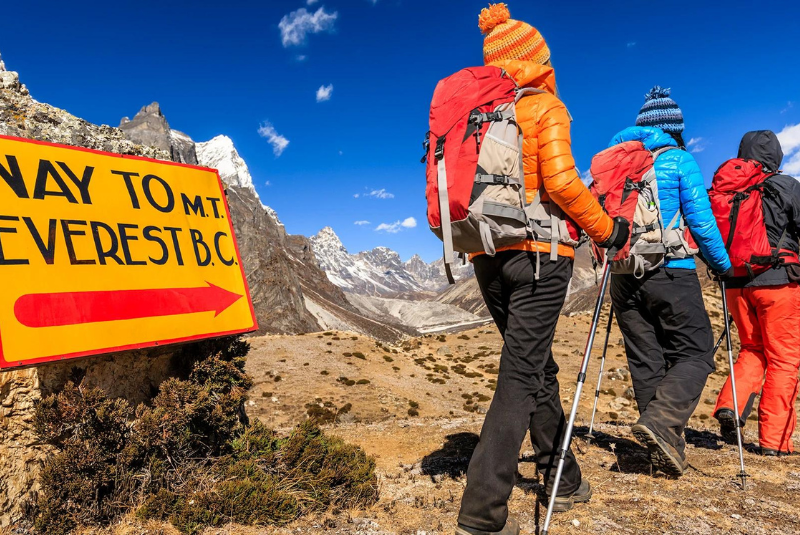
Everest Base Camp Trek | Everest | 14 days | 5,545 m (Kala Patthar) | Moderate to strenuous |
Annapurna Circuit Trek | Annapurna | 14 days | 5,416 m (Thorong La) | Strenuous |
Manaslu Circuit Trek | Manaslu | 14 days | 5,106 m (Larkya La) | Strenuous |
Trek by Trek: What, How and When
What is the Everest Base Camp Trek?
The Everest Base Camp Trek is the world's most famous trek, taking you to the foot of Mount Everest (8,848.86 m) in the Khumbu region. Over about 14 days you walk through Sherpa villages such as Namche Bazaar, visit Tengboche Monastery and climb Kala Patthar (5,545 m) for the closest sunrise view of Everest.
How does it start? The trek begins with a scenic mountain flight from Kathmandu (or Ramechhap in peak season) to Lukla. From there, acclimatization days in Namche and Dingboche help your body adjust to the altitude.
When should you go? March to May and late September to November give the clearest views and most stable weather.
What is the Annapurna Base Camp Trek?
The Annapurna Base Camp (ABC) Trek leads into the Annapurna Sanctuary, a natural amphitheatre ringed by Annapurna I, Hiunchuli, Annapurna South and Machhapuchhre (Fishtail). It takes about 11 days and reaches 4,130 m, making it a rewarding choice for first-time high-altitude trekkers.
How is the route? It starts from Pokhara, passes the Gurung village of Chhomrong, bamboo forests and the natural hot springs at Jhinu Danda. Many itineraries add the Poon Hill sunrise on the way.
When is it best? Spring and autumn are ideal; spring adds blooming rhododendron forests.
What is the Annapurna Circuit Trek?
The Annapurna Circuit is a classic loop around the entire Annapurna massif. In about 14 days you move from green rice terraces to the dry, Tibetan-style landscape of Manang and Mustang, crossing Thorong La Pass at 5,416 m.
How does it work? You drive to Besisahar or further up the valley, trek through Manang, cross Thorong La early in the morning and descend to the sacred temple of Muktinath before driving or flying out via Jomsom.
When is the right time? October to November and March to April, when the pass is usually free of heavy snow.
What is the Ghorepani Poon Hill Trek?
The Ghorepani Poon Hill Trek is a short, easy trek of about five days from Pokhara, reaching 3,210 m. It is perfect for families, beginners and travellers with limited time.
How is the highlight? You climb Poon Hill before dawn to watch the sun rise over Dhaulagiri, Annapurna South and Machhapuchhre, then return through Ghandruk, a traditional Gurung village.
When can you go? It is possible almost all year; spring is best for rhododendrons and autumn for clear skies.
What is the Langtang Valley Trek?
The Langtang Valley Trek is the closest major trek to Kathmandu, reachable by road in a single day. Over about eight days you walk through Langtang National Park to Kyanjin Gompa, with an optional climb of Tserko Ri (4,984 m).
How is the experience? Expect Tamang villages, yak pastures, a cheese factory at Kyanjin and wide views of Langtang Lirung. It is a quieter alternative to the Everest and Annapurna regions.
When to visit? March to May and October to November.
What is the Manaslu Circuit Trek?
The Manaslu Circuit circles Mount Manaslu (8,163 m), the world's eighth-highest mountain. It takes about 14 days and crosses Larkya La Pass at 5,106 m through remote villages with strong Tibetan Buddhist culture.
How is it different? Manaslu is a restricted area, so it requires a special permit, a licensed guide and a minimum group of two trekkers. In return you get fewer crowds and an authentic, off-the-beaten-path journey.
When is it open? Autumn (September to November) and spring (March to May) are the best seasons.
What is the Mardi Himal Trek?
The Mardi Himal Trek is a short ridge trek of about seven days near Pokhara, reaching the Mardi Himal viewpoint at about 4,500 m. It offers close, dramatic views of Machhapuchhre and Annapurna South.
How is the trail? The route climbs through rhododendron forest onto an open ridge with few lodges, giving a peaceful, less crowded feel.
When to trek? Spring and autumn for the best views.
What is the Gokyo Lakes Trek?
The Gokyo Lakes Trek is an alternative route in the Everest region, reaching the turquoise Gokyo Lakes and the summit of Gokyo Ri (5,357 m) in about 12 days. From the top you can see four 8,000 m peaks: Everest, Lhotse, Makalu and Cho Oyu.
How does it connect? It shares the Lukla to Namche section with the Everest Base Camp route, then turns up the Dudh Koshi valley beside the Ngozumpa Glacier, the largest glacier in Nepal. Strong trekkers can link it with Everest Base Camp via Cho La Pass.
When is it best? March to May and October to November.
When Is the Best Time to Trek in Nepal?
The best trekking seasons are autumn (September to November) and spring (March to May). These months bring stable weather, clear mountain views and comfortable daytime temperatures.
Season | Months | What to expect | Best for |
|---|---|---|---|
Autumn | Sep – Nov | Clearest skies, dry trails, busy trails, festivals Dashain and Tihar | All treks, high passes |
Spring | Mar – May | Warmer days, rhododendrons in bloom, some afternoon haze | All treks, photography of flowers |
Winter | Dec – Feb | Cold nights, snow on high passes, quiet trails | Poon Hill, Langtang, lower treks |
Monsoon | Jun – Aug | Rain, leeches, cloud cover, flight delays to Lukla | Rain-shadow areas such as Upper Mustang |
When should you book?
Book two to four months ahead for October, November and April, when flights to Lukla and popular lodges fill quickly. For winter and monsoon departures, a few weeks' notice is usually enough.
How to Choose and Prepare for Your Trek
How difficult is trekking in Nepal?
Most popular treks involve five to seven hours of walking a day on well-used trails, with steady climbs and descents. Difficulty depends mainly on altitude and length: Poon Hill is easy, Annapurna Base Camp and Langtang are moderate, while Everest Base Camp, the Annapurna Circuit and Manaslu are more demanding because they go above 5,000 m.
How do I choose the right trek?
Start with three questions: how many days you have, how high you are comfortable going, and what you most want to see. With under a week, choose Poon Hill or Mardi Himal. With 8 to 12 days, consider Annapurna Base Camp, Langtang or Gokyo. With two weeks or more and good fitness, Everest Base Camp, the Annapurna Circuit or Manaslu are unforgettable.
How should I prepare physically?
Begin training six to eight weeks before departure. Regular walking, hiking with a light backpack, stair climbing, cycling and swimming build the stamina you need. Previous hiking experience helps, but a healthy person with a positive attitude can complete most treks.
How do you avoid altitude sickness?
Ascend gradually, include rest and acclimatization days, drink three to four litres of water daily, avoid alcohol at altitude and tell your guide about any headache, nausea or dizziness. Our itineraries follow safe ascent profiles, and our guides are trained to recognise symptoms early and descend when needed.
What should I pack?
Pack in layers: a warm down jacket, fleece, waterproof shell, thermal base layers, broken-in trekking boots, a warm hat, gloves, sunglasses, sunscreen, a refillable water bottle with purification, a headlamp and a personal first-aid kit. A sleeping bag and down jacket can be rented in Kathmandu or Pokhara.
Permits, Inclusions, Costs and Accommodation
What permits do I need?
Every trek requires an entry permit for the national park or conservation area it passes through, such as Sagarmatha National Park for Everest, the Annapurna Conservation Area Permit (ACAP) for Annapurna, or Langtang National Park. Restricted areas such as Manaslu also need a special restricted-area permit. We arrange all permits for you before the trek starts.
Do I need a guide?
Yes. Since April 2023, foreign trekkers in most of Nepal's trekking areas must travel with a licensed guide through a registered trekking company. A good guide also handles route-finding, lodge bookings, altitude monitoring and emergencies, and introduces you to local culture.
What is included in a trekking package?
A standard package includes airport pick-up and drop-off, a licensed English-speaking guide, porter service, all permits, teahouse accommodation, three meals a day on the trek, ground transport and domestic flights as per the itinerary, and our office support throughout the journey. Hotels in Kathmandu, travel insurance, tips and personal expenses are usually extra; your quotation lists the exact inclusions.
How much does a trekking package cost?
The price depends on the trek, number of days, group size, flights, hotel standard and the season. Shorter Annapurna treks are the most affordable, while Everest-region treks with Lukla flights and restricted-area treks like Manaslu cost more. Contact us with your dates and group size for an exact, no-obligation quotation.
Where do you stay during the trek?
You stay in teahouses, which are family-run mountain lodges with twin-sharing rooms, shared dining halls warmed by a stove and simple menus of local and international dishes. In popular villages such as Namche Bazaar and Ghandruk, rooms with attached bathrooms are often available. At higher altitudes facilities become more basic.
Is travel insurance required?
Yes. Your insurance should cover trekking up to the maximum altitude of your chosen route and include emergency helicopter evacuation.
Why and How to Book With Actual Adventure
Why choose Actual Adventure?
Actual Adventure Pvt. Ltd., part of Actual Himalayas DMC Group, is a locally owned company based in Kathmandu. Our team is led by Managing Director Kedar Neupane, a sub-committee member for crisis management at TAAN and an elected board member of the Nepal Mountaineering Association. That experience shapes everything we do: safety first, honest pricing and itineraries built around each traveller.
We offer private and group departures, flexible dates, fully customisable itineraries, licensed local guides and porters who are fairly paid and insured, and round-the-clock support while you are on the trail.
How do I book a trek?
- Choose your trek and travel dates, or ask us to recommend one.
- Send us your group size and any special requests.
- Receive a detailed itinerary and quotation.
- Confirm with a deposit and share your passport details for permits.
- Arrive in Kathmandu; we meet you at the airport and brief you before the trek.
When can I start planning?
Today. Contact us and our team will help you pick the right trek for your time, fitness and budget.