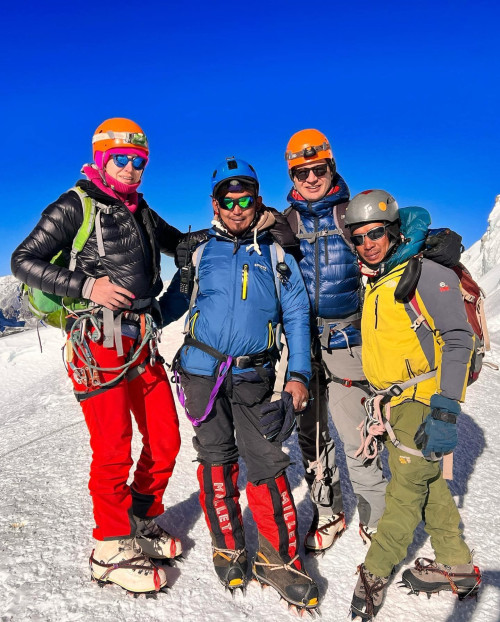
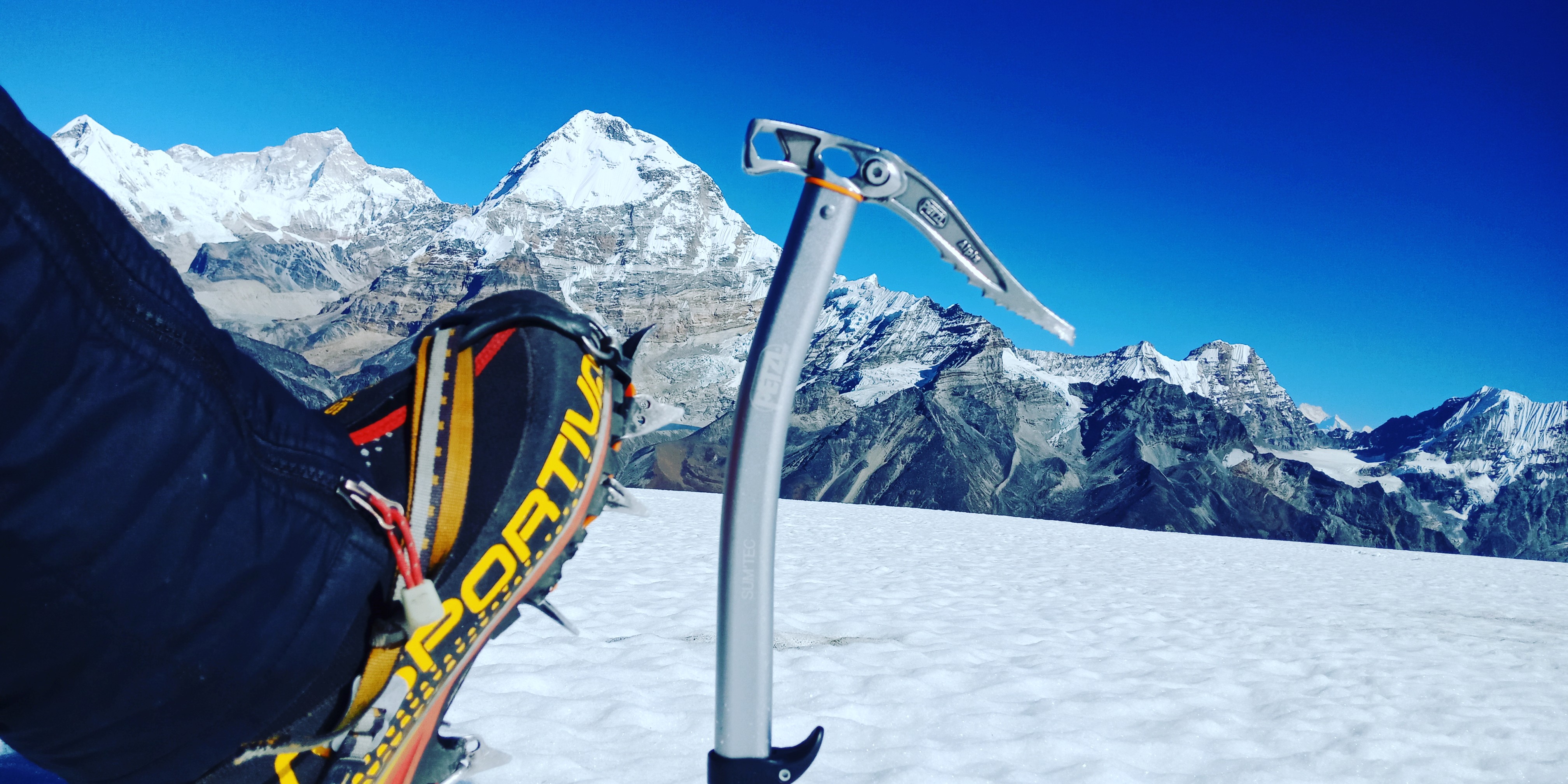
Few places on Earth offer climbers what Nepal does: dozens of summits above 6,000 meters, set among the highest mountains on the planet. For trekkers ready to move beyond trail walking and take their first real step into mountaineering, the Best Easy 6000m Peaks in Nepal are the perfect starting point.
At Actual Adventure, we have guided trekkers and climbers through the Nepal Himalaya since 2010. Our experience has taught us one important truth: “easy” peaks are easier only in technical terms. Every climb above 6,000 meters demands fitness, careful acclimatization, the right equipment, and experienced mountain guides. With that preparation in place, your first Himalayan summit can become one of the proudest moments of your life.
The three peaks we most often recommend for first-time 6,000m climbers are Mera Peak (6,476 m), Island Peak (6,189 m) and Lobuche East Peak (6,119 m). Each offers breathtaking scenery and a realistic route to the top for well-prepared climbers.
Table of contents Show
Why Climb a 6000m Peak in Nepal?
Climbing above 6,000 meters is a completely different experience from trekking. Oxygen levels are much lower, temperatures can fall sharply, and mountain weather can change within hours. Summit days are long, cold and physically demanding.
The rewards are unforgettable. From the top, you look across a skyline of giants: Everest, Lhotse, Makalu, Cho Oyuand countless other Himalayan peaks. Along the way you cross glaciers and snowfields, walk rocky ridgelines, explore remote valleys and stay in traditional mountain villages.
For many of our guests, a 6,000m peak is the bridge between trekking and true mountaineering, and the start of a lifelong passion for the high Himalaya.
1. Mera Peak Climbing – The Highest of the Classic First 6000m Peaks
Mera Peak (6,476 m / 21,247 ft) is one of Nepal’s best-known trekking peaks and the highest of the three classic first-summit objectives. It is a favorite among Actual Adventure climbers who want serious altitude without highly technical terrain.
The route is mostly snow and glacier travel rather than steep, sustained climbing. That makes Mera an excellent fit for strong, fit trekkers. But don’t mistake “less technical” for “easy.” The high altitude and long summit day require excellent endurance, solid acclimatization, and confidence moving on snow and glacier terrain.
The summit view is among the finest in the Himalaya, with Everest, Lhotse, Makalu, Cho Oyu and Kangchenjunga on the horizon on a clear day.
Best for: Fit trekkers seeking a high summit with lower technical difficulty.
2. Island Peak Climbing – The Classic Himalayan Climbing Experience
Island Peak (Imja Tse, 6,189 m) is one of Nepal’s most popular climbing peaks, located in the heart of the Everest region. It pairs beautifully with an Everest Base Camp trek, letting you combine two dream adventures in one journey.
Island Peak is more technical than Mera. Expect glacier crossings, crevasses, fixed ropes and steeper sections where you will use crampons, a harness, ropes and an ascender. Our guides provide hands-on training before the summit push, so you build real mountaineering skills along the way.
The approach through the Khumbu is a highlight in itself: Sherpa villages, Buddhist monasteries, prayer-flag-draped suspension bridges and constant views of Everest.
Best for: Climbers who want their first 6,000m summit to include genuine technical mountaineering.
3. Lobuche East Peak Climbing – A More Technical 6000m Challenge
Lobuche East (6,119 m) is another Everest-region favorite and the most technical of the three. The route includes rocky sections, snow and ice, and an exposed summit ridge.
Although it is lower than Mera, Lobuche East should never be underestimated. Technical terrain and exposure make it a demanding climb that rewards preparation, good equipment and expert guiding. Like Island Peak, it combines naturally with the Everest Base Camp Trek.
Best for: Trekkers with some prior trekking or basic mountaineering experience who want to sharpen their climbing skills.
Mera Peak vs Island Peak vs Lobuche East
| Mera Peak | Island Peak | Lobuche East | |
|---|---|---|---|
| Altitude | 6,476 m | 6,189 m | 6,119 m |
| Technical level | Lowest | Moderate | Highest |
| Main challenge | Altitude & endurance | Glacier, fixed ropes, steep sections | Rock, snow/ice, exposed ridge |
| Region | Makalu-Barun / Hinku Valley | Everest (Khumbu) | Everest (Khumbu) |
| Ideal for | Fit first-timers | Skill-builders | Climbers ready for more |
Our team at Actual Adventure will help you choose the right peak based on your experience, fitness and goals, not simply the highest one.
Prepare First: Why We Recommend the Manaslu Circuit Trek
If you have never trekked above 5,000 meters, we strongly recommend completing a demanding high-altitude trek before attempting a 6,000m peak. Our top suggestion is the Manaslu Circuit Trek.
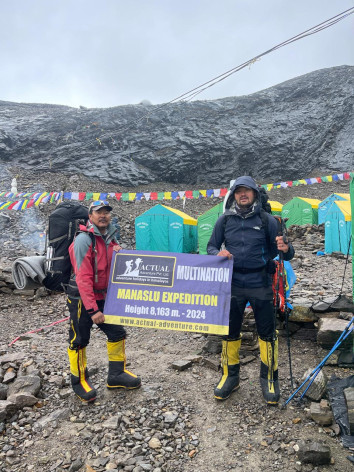
This classic circuit circles Mount Manaslu (8,163 m), the world’s eighth-highest mountain, and crosses the Larkya La Pass (5,106 m), one of the most spectacular high passes in Nepal. Over roughly two weeks, you will:
- Test your body at altitude – crossing a 5,000m+ pass shows how you handle thin air before you commit to a summit climb.
- Build trekking endurance – long days on varied terrain develop exactly the stamina a 6,000m summit day requires.
- Experience remote, authentic Nepal – the trail passes through quiet Gurung and Tibetan-influenced villages, ancient monasteries and the dramatic Budhi Gandaki gorge, with far fewer crowds than Everest or Annapurna.
- Enjoy constant mountain scenery – Manaslu, Himalchuli, Ganesh Himal and the Annapurna range dominate the views.
The Manaslu region is a restricted area, so the trek requires a special permit and a licensed guide. Actual Adventure arranges all permits, guides, porters, transport and teahouse accommodation for you.
Many of our climbers complete the Manaslu Circuit one season and return the next for Mera or Island Peak, stronger, more confident and better prepared for success.
Are 6000m Peaks Really Easy?
The word “easy” can be misleading. A peak may be technically straightforward and still be extremely demanding because of altitude. Above 6,000 meters, your body works with far less oxygen, and you may feel fatigue, headaches, loss of appetite and poor sleep. Weather adds another layer of challenge.
That’s why we never recommend choosing a peak just because it is labelled “easy.” The right objective depends on your fitness, trekking history, technical skills, acclimatization schedule and professional guidance.
Physical Preparation for Peaks Above 6,000m
Start training several weeks to months before you arrive in Nepal. You don’t need years of climbing experience for a suitable first 6,000m peak, but you do need excellent cardiovascular fitness and leg strength.
Effective training includes long hikes with a loaded pack, stair climbing, uphill walking, running, cycling and strength training. Depending on your peak, it also helps to get familiar with crampons, an ice axe, a harness and ascender, fixed-rope technique and glacier travel. Actual Adventure guides run practical training sessions before every summit attempt.
Acclimatization: The Key to Summit Success
A well-designed itinerary gives your body time to adapt gradually. Rushing from low elevation to a 6,000m summit greatly increases the risk of altitude sickness.
Every Actual Adventure climbing itinerary includes rest days and acclimatization hikes. These are not wasted days; they are the foundation of a safe and successful climb. Our guides monitor your health throughout the journey and adjust plans for weather, conditions and individual fitness.
Climbing Equipment for a 6000m Peak
Typical equipment includes mountaineering boots, crampons, ice axe, harness, helmet, ascender, carabiners, ropes, warm insulating layers, waterproof shell clothing, gloves, goggles and a high-altitude sleeping bag.
Actual Adventure provides a detailed equipment checklist before departure, and much of the technical gear can be rented in Kathmandu. Our guides also make sure you know how to use every piece of equipment safely.
Best Seasons for 6000m Peak Climbing in Nepal
The main climbing seasons are:
- Spring (March–May): Favorable conditions on many Himalayan peaks.
- Autumn (September–November): Generally stable weather and crystal-clear mountain views.
Conditions vary by peak and year, so our team will confirm the ideal timing for your chosen climb.
Why Climb with Actual Adventure?
Actual Adventure Pvt. Ltd., established in 2010, is a Kathmandu-based trekking, climbing and tour company registered with the Tourism Industry Division (Ministry of Culture, Tourism and Civil Aviation) and the Department of Industry, Government of Nepal.
When you climb with us, we handle everything:
- Climbing and trekking permits
- Experienced, licensed climbing guides and porters
- Transport, flights and accommodation
- Climbing logistics and equipment support
- Acclimatization-focused itineraries
- Emergency planning and rescue coordination
Our local guides know these mountains, the weather, the trails and the realities of high altitude. Most importantly, we help you choose the peak that matches your ability, so your first summit is safe, achievable and unforgettable.
Other 6000m Peaks in Nepal
Beyond Mera, Island and Lobuche East, Nepal offers many more climbing objectives, including Chulu East, Chulu West, Chulu Far East, Pisang Peak, Singu Chuli, Kusum Kanguru, Kyazo Ri and Pharchamo. Some suit climbers with basic experience, while others require advanced mountaineering skills.
This range makes Nepal ideal for progression: start with an accessible summit, then build toward more technical and higher objectives with Actual Adventure by your side.
Which 6000m Peak Is Right for You?
- High summit, lower technical difficulty → Mera Peak
- Classic climb with technical sections → Island Peak
- Build stronger technical skills → Lobuche East
- Never been above 5,000 m? → Start with the Manaslu Circuit Trek
Begin Your 6000m Himalayan Adventure with Actual Adventure
Standing on top of one of the Best Easy 6000m Peaks in Nepal is an achievement you’ll carry for life. Whether you choose the soaring Mera Peak, the classic Island Peak or the technical Lobuche East, each climb blends adventure, culture and Himalayan beauty.
The journey is about far more than the summit. It’s about remote valleys, mountain communities, new skills and the quiet power of the Himalaya. Choose a peak that suits your ability, prepare well, and trust an experienced local team.
Ready for your first 6,000m summit? Contact Actual Adventure today at www.actual-adventure.com and let our experts plan your Himalayan climb, or your Manaslu Circuit preparation trek.