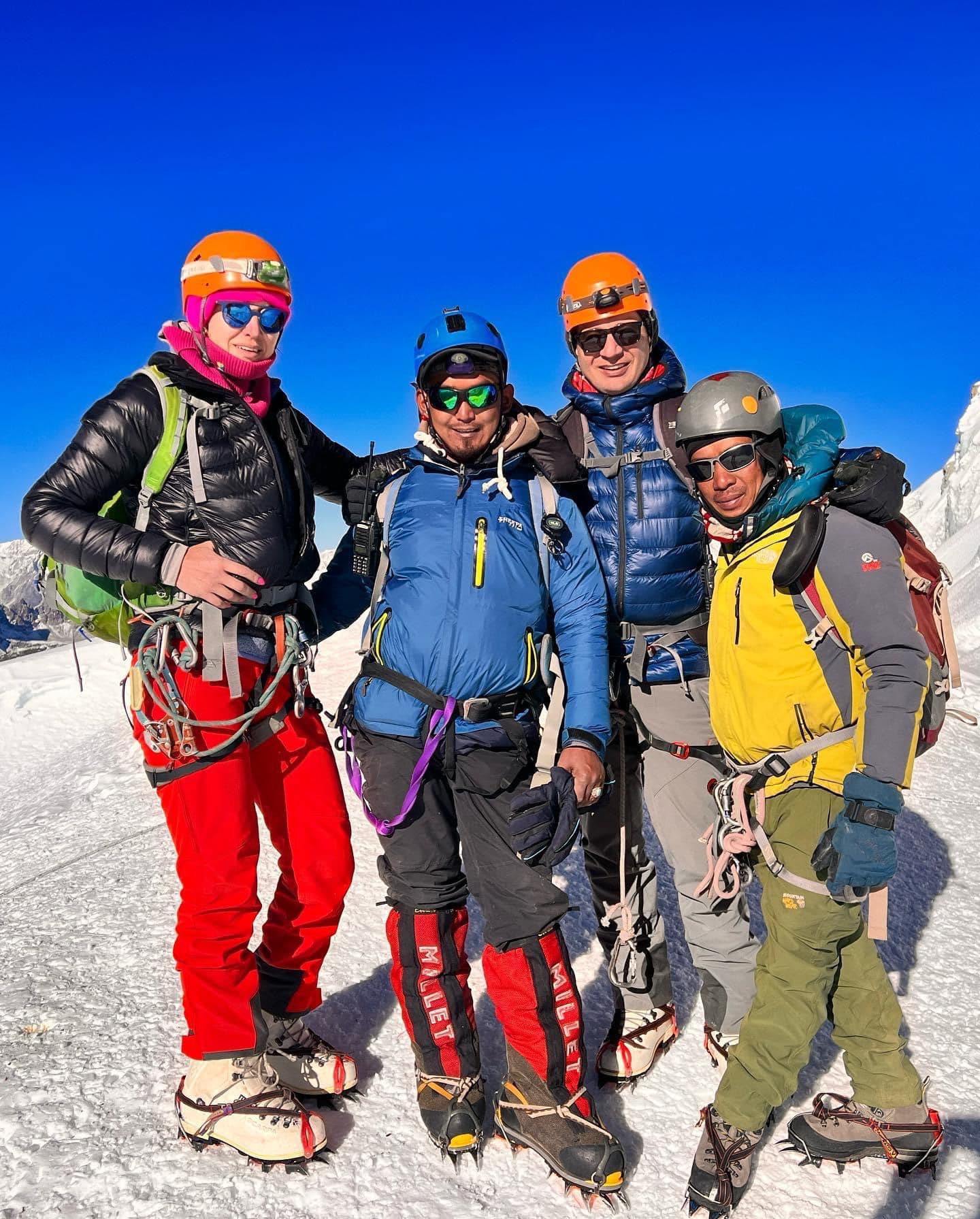
The 7000m rule for Everest is a proposed Nepali law that would allow only climbers who have already summited a 7,000-meter peak inside Nepal to receive an Everest climbing permit. Under the Integrated Tourism Bill, an Everest permit would be issued only after an applicant shows proof of having previously summited at least one mountain higher than 7,000 metres in Nepal. The National Assembly passed the bill on February 9, 2026, but it is not yet law. On 8 July, the lower house referred the bill to the International Relations and Tourism Committee, which had at least 263 proposed amendments to review as of 22 July. Climbers planning Everest in the next few seasons should start building Nepal 7,000m experience now.
Table of contents Show
Key Facts at a Glance
| Topic | Details |
|---|---|
| Rule | Prior summit of a 7,000m+ peak in Nepal before an Everest permit |
| Law | Integrated Tourism Bill, Nepal |
| Upper House status | Passed 9 February 2026 |
| Lower House status | Under committee review (as of October 2026) |
| In force now? | No |
| Qualifying peaks | 72 peaks between 7,000–8,000 m (86 including sub-peaks) |
| Popular qualifying climbs | Himlung Himal, Baruntse, Putha Hiunchuli, Tilicho Peak, Pumori |
| Current Everest permit (spring) | USD 15,000 per foreign climber |
| Applies to EBC trekkers? | No – climbers only |
Highlights
- Everest applicants would need certified proof of a 7,000m+ summit in Nepal, not elsewhere in the world.
- The goal is to reduce inexperienced climbers, summit-day crowding and accidents in the death zone.
- The rule also keeps preparatory expedition business inside Nepal.
- The bill passed the Upper House unanimously but still needs Lower House approval and the President’s signature.
- Everest Base Camp trekkers are not affected.
- Smart climbers are already planning a Nepal 7,000er such as Himlung Himal or Baruntse as their Everest stepping stone.
| Question | Quick Answer |
|---|---|
| What is the 7000m rule for Everest? | A proposed Nepali law under which an Everest climbing permit will be issued only to climbers who have already summited at least one mountain higher than 7,000 meters in Nepal. |
| Which law includes it? | The Integrated Tourism Bill, Nepal |
| Is it law now? | No. As updated 2026, it is still under parliamentary review. |
| When did the Upper House pass it? | Nepal’s National Assembly passed the bill on 9 February 2026. |
| Where is it now? | The House of Representatives has sent the bill to its International Relations and Tourism Committee, which is reviewing more than 260 proposed amendments. |
| When could it take effect? | The government aimed for the spring 2027 season, but it may take until 2028 or later. |
| Do 7,000m peaks outside Nepal count? | No. Under the current wording, only peaks in Nepal qualify. |
| Does it affect EBC trekkers? | No. The rule applies only to Everest climbers, not Everest Base Camp trekkers. |
| What should future Everest climbers do? | Start building Nepal 7,000m experience now, for example on Himlung Himal or Baruntse. |
Key Facts at a Glance highlights
| Topic | Details |
|---|---|
| Rule name | 7000m Rule for Everest |
| Requirement | Prior summit of a 7,000m+ peak in Nepal before an Everest permit |
| Proof required | Verified summit certificate endorsed by Nepal’s Department of Tourism |
| Legislation | Integrated Tourism Bill, Nepal |
| Upper House vote | Passed unanimously, 9 February 2026 |
| Lower House status | Under committee review (as updated 2026) |
| Amendments proposed | 263 amendments registered by 58 lawmakers |
| Final step | Returns to the National Assembly, then to the President for signature |
| In force now? | No |
| Number of qualifying peaks | 72 peaks between 7,000 and 8,000 m (86 including sub-peaks) |
| Popular qualifying climbs | Himlung Himal (7,126 m), Baruntse (7,129 m), Putha Hiunchuli (7,246 m), Tilicho Peak (7,134 m), Pumori (7,161 m) |
| Main purpose | Reduce inexperienced climbers, crowding and accidents; keep expedition business in Nepal |
| Other bill requirements | Recent health certificate, detailed mountaineering plan, all expedition staff to be Nepali citizens |
| Garbage deposit change | Rs 580,000 refundable deposit converted into a non-refundable fee |
| Everest permit (spring) | USD 15,000 per climber |
| Everest permit (autumn) | USD 7,500 per climber |
| Permit validity | 55 days (reduced from 75 days) |
| Guide ratio on 8,000m peaks | One guide for every two climbers |
| Spring 2026 Everest summits | 1,008 (all-time record) |
| Tibet side rule | Prior 7,000m climb already required by Tibetan authorities |
| Applies to EBC trekkers? | No, climbers only |
Nepal’s Department of Tourism, would a climber be allowed to apply for an Everest permit. The rule is designed to make Everest safer, reduce overcrowding near the summit and ensure that every climber arrives at Base Camp with real high-altitude experience. As updated 2026, the bill has passed Nepal’s Upper House but is not yet law, and it does not apply to current Everest seasons.
What the 7000m Rule Means for Climbers
For many years, almost anyone with enough money and a guided package could join an Everest expedition, even with very little climbing background. The 7000m rule would end that open-door approach. In practice, it means that a climber’s Everest journey would no longer begin at Everest Base Camp but on another Nepali giant such as Himlung Himal or Baruntse. The rule is strict about location: experience gained on mountains outside Nepal would not count, so even a climber who has summited a major peak in Pakistan, South America or Central Asia would still need a Nepal 7,000m summit on their record. This “Nepal only” condition is the most debated part of the proposal, and it could still be changed during the parliamentary process.
Why Nepal Is Introducing the Rule
Safety is the main driver behind the 7000m rule. In recent years, Everest has attracted growing numbers of climbers with limited high-altitude experience, leading to long queues in the death zone, where oxygen levels are dangerously low and every extra hour increases the risk of frostbite, exhaustion and altitude illness. Crowding reached a new peak in spring 2026, when Everest recorded an all-time high of 1,008 summits. Inexperienced climbers can also put their Sherpa guides and rescue teams at greater risk. A 7,000m summit teaches climbers how their bodies respond to extreme altitude, how to move efficiently on steep snow and ice, how to use fixed ropes, and how to manage long, exhausting summit days. These are exactly the skills that make an Everest expedition safer for everyone on the mountain.
There is also an economic purpose. By requiring the qualifying climb to take place in Nepal, the government keeps preparatory expeditions, climbing royalties and guiding income within the country. This spreads climbers across more of Nepal’s mountains and creates valuable work for local guides, porters and communities beyond the busy Khumbu region.
Current Status of the Law
As updated 2026, the 7000m rule is still moving through Nepal’s legislative process. The National Assembly, Nepal’s Upper House, passed the Integrated Tourism Bill unanimously on 9 February 2026. The bill then moved to the House of Representatives after Nepal’s general elections in March 2026. The Lower House referred it to its International Relations and Tourism Committee for clause-by-clause review, where lawmakers have registered more than 260 proposed amendments, some of which would make Everest rules even stricter. Once the Lower House approves the bill, it must return to the National Assembly and then receive the President’s signature before becoming law. The government had aimed to apply the new rules from the spring 2027 season, but because of the large number of amendments, many in the mountaineering industry believe implementation may take until 2028 or later.
Which 7,000m Peaks Could Qualify
Nepal offers a wide choice of qualifying mountains, with 72 peaks between 7,000 and 8,000 meters, or 86 when sub-peaks are included. Not all of them are practical for guided expeditions, but several have already become popular stepping stones for future Everest climbers. Himlung Himal (7,126 m), in the remote Nar-Phu region near the Annapurna range, is widely considered one of the most accessible 7,000m peaks in Nepal thanks to its non-technical route and well-supported base camp, making it an excellent first 7,000er. Baruntse (7,129 m), in the Makalu-Barun region, is more technical and gives climbers a true Everest-style experience with high camps, fixed ropes and spectacular views of Everest, Lhotse and Makalu. Putha Hiunchuli (7,246 m) in the Dhaulagiri range offers a remote and less crowded expedition, while Tilicho Peak (7,134 m) and Pumori (7,161 m) suit climbers with stronger technical skills.
Other Everest Rules in the Integrated Tourism Bill
The 7000m requirement is part of a much wider reform of mountaineering in Nepal. The bill would require every climber to submit a recent health certificate and a detailed mountaineering plan describing the intended route and climbing style. Climbers would also need to declare in advance if they plan to attempt a record and provide photographs and other evidence of their summit. All expedition staff and support personnel would have to be Nepali citizens, strengthening local employment in the climbing industry. On the environmental side, the existing Rs 580,000 refundable garbage deposit would become a non-refundable fee, and a new Environment Protection and Mountaineers’ Welfare Fund would support clean-up of Nepal’s high mountains.
Some important Everest rules are already in force today, separate from the bill. The Everest permit now costs USD 15,000 per foreign climber in spring and USD 7,500 in autumn, and permit validity has been reduced from 75 days to 55 days. Nepal also requires one guide for every two climbers on all mountains above 8,000 meters, including Everest.
Has Nepal Tried a Similar Rule Before?
Nepal has considered experience requirements for Everest before. In the 1990s, the government introduced a rule requiring climbers to summit a lower peak of around 6,000 to 6,500 meters before attempting Everest, but it was withdrawn after strong opposition from expedition operators. The key difference today is that the 7000m rule is being written into national law rather than issued as a temporary regulation, which officials believe will make enforcement much stronger. Nepal is also following a direction already taken on the Tibet side of Everest, where climbers are required to have prior 7,000m experience before receiving a permit.
What the Mountaineering Community Thinks
Most climbers and expedition leaders agree that real experience before Everest is a positive step. The main disagreement is over the requirement that the qualifying peak must be in Nepal. Many international operators would prefer the rule to accept 7,000m or 8,000m summits anywhere in the world, or to include well-known training peaks such as Aconcagua, Ama Dablam or Peak Lenin. Supporters of the bill believe the Nepal-only condition raises safety standards while strengthening the country’s own climbing industry and supporting local guides and mountain communities. The final wording will depend on the amendments approved by Parliament.
Does the Rule Affect Everest Base Camp Trekkers?
The 7000m rule applies only to climbers seeking a permit to summit Mount Everest. Trekkers heading to Everest Base Camp, Kala Patthar, Gokyo Lakes or the Three Passes are not affected. For trekkers, the usual trekking permits and the requirement to travel with a licensed guide remain the main rules.
How to Prepare for Everest Under the 7000m Rule
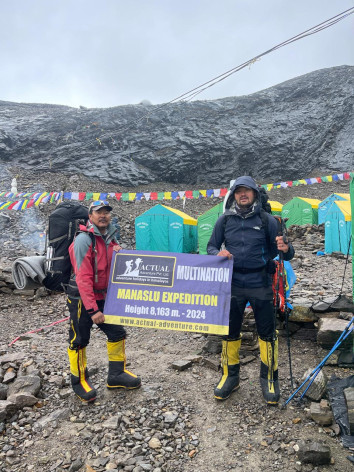
The smartest way to approach the 7000m rule is to see it as a natural part of a safe climbing progression rather than an obstacle. Most successful Everest climbers already follow a similar path. A strong first step is a 6,000m trekking peak such as Mera Peak, Island Peak or Lobuche East, where climbers learn glacier travel, crampon technique and fixed-rope skills. The next step is a Nepal 7,000er such as Himlung Himal or Baruntse, which introduces high camps, longer summit days and genuine extreme altitude. Many climbers then add an 8,000m peak such as Manaslu (8,163 m) to experience the death zone before attempting Everest. This progression not only satisfies the proposed law but also greatly improves a climber’s chances of a safe and successful summit. Starting early gives climbers flexibility, so that when the law takes effect, their qualifying summit and certificate are already in hand.
Climb Your Qualifying 7,000m Peak with Actual Adventure
Actual Adventure Pvt. Ltd., established in 2010 and registered with the Tourism Industry Division of the Ministry of Culture, Tourism and Civil Aviation and the Department of Industry, Government of Nepal, organizes trekking, peak climbing and expeditions throughout the Nepal Himalaya. Our team helps climbers plan a complete Everest pathway, from a first 6,000m trekking peak to Himlung Himal or Baruntse and onward to Everest itself. We arrange climbing permits, experienced licensed Nepali guides and climbing Sherpas, high-altitude logistics, acclimatization-focused itineraries and official summit certification support, so your qualifying climb is properly documented when the time comes to apply for your Everest permit.
If Everest is your dream, now is the right time to begin. Contact Actual Adventure at www.actual-adventure.com and let our experts build your personal Himalayan climbing plan.
Frequently Asked Questions
Is the 7000m rule for Everest in effect now?
No. As updated 2026, the bill has passed Nepal’s Upper House but is still under review in the House of Representatives, so current Everest climbers do not need a 7,000m summit to receive a permit.
Will a 7,000m peak outside Nepal count?
Under the current wording of the bill, only peaks inside Nepal qualify. This could still change through amendments before the bill becomes law.
Which is the easiest 7,000m peak in Nepal?
Himlung Himal (7,126 m) is generally considered one of the most accessible 7,000m peaks in Nepal because of its non-technical route and good expedition support.
Does the rule apply to the Tibet side of Everest?
Nepal’s law covers the Nepal side of Everest only. However, climbers on the Tibet side already need prior 7,000m experience under Tibetan climbing rules.