Nepal's ten most popular treks for the 2027 spring and autumn seasons range from a 4-day teahouse walk to Poon Hill to a 20-day crossing of the Everest Three Passes. This guide gives you each trek's route, altitude, difficulty, best season, permits and a ready-to-book itinerary, all checked against the rules that apply to 2027 bookings.
Whether you want your first Himalayan sunrise or a high-pass challenge above 5,000 m, there is a route here for you.
Table of contents Show
Rules to know before you trek in 2027
Permits and trail rules changed a lot in 2026, and these rules carry into the 2027 seasons. Here is what matters before you book:
- Licensed guide required. Since April 2023, foreign trekkers in national parks, conservation areas and restricted areas must trek with a government-licensed guide arranged through a registered agency. Enforcement is strict in restricted areas and at most checkpoints.
- No TIMS card in the Everest region. The Khumbu Pasang Lhamu Rural Municipality entry permit has replaced the TIMS card in Khumbu. TIMS is still used on routes such as Annapurna, Langtang and Manaslu.
- Online permit system. The Department of Immigration moved restricted-area permit applications online in 2026, with status updates sent by WhatsApp or Viber. Your agency files the application for you.
- Solo restricted-area permits. A March 2026 Department of Immigration notice relaxed the old two-person minimum for restricted areas such as Manaslu and Upper Mustang. A licensed guide and a registered agency are still mandatory.
- Lukla flights. In the busy spring and autumn seasons, most Everest-region flights leave from Ramechhap (Manthali), about 4–5 hours' drive from Kathmandu, rather than from Kathmandu airport. Build in one buffer day for weather delays.
Fees are revised from time to time, usually at the start of Nepal's fiscal year in mid-July. No changes for 2027 had been announced as of October 2026, so the fees in this guide are the latest in force. We confirm the current rate when we issue your permits.
The 10 treks at a glance
# | Trek | Days | Max altitude | Difficulty | Best months | Indicative package (USD per person) |
|---|---|---|---|---|---|---|
1 | Everest Base Camp | 12–14 | 5,545 m (Kala Patthar) | Moderate–strenuous | Mar–May, Oct–Nov | 1,300–1,800 |
2 | Annapurna Base Camp | 7–11 | 4,130 m | Moderate | Mar–May, Oct–Nov | 700–1,100 |
3 | Annapurna Circuit | 12–16 | 5,416 m (Thorong La) | Strenuous | Mar–Apr, Oct–Nov | 1,000–1,500 |
4 | Manaslu Circuit | 13–16 | 5,106 m (Larkya La) | Strenuous | Mar–May, Sep–Nov | 1,300–1,900 |
5 | Langtang Valley | 7–10 | 4,984 m (Tserko Ri) | Moderate | Mar–May, Oct–Dec | 650–950 |
6 | Ghorepani Poon Hill | 4–5 | 3,210 m | Easy | Year-round (best Oct–Apr) | 400–650 |
7 | Gokyo Lakes | 12–13 | 5,357 m (Gokyo Ri) | Moderate–strenuous | Mar–May, Oct–Nov | 1,300–1,800 |
8 | Upper Mustang | 12–15 | 3,840 m (Lo Manthang area) | Moderate | Mar–Nov (incl. monsoon) | 1,900–2,800 |
9 | Mardi Himal | 5–7 | 4,500 m (High Camp viewpoint) | Moderate | Mar–May, Oct–Dec | 450–750 |
10 | Everest Three Passes | 17–20 | 5,535 m (Kongma La) | Very strenuous | Apr–May, Oct–Nov | 1,700–2,400 |
Package ranges are typical 2027 market prices for a guided teahouse trek from Kathmandu or Pokhara, including permits, guide, accommodation and meals on the trail. Final price depends on group size, flights and hotel standard.
1. Everest Base Camp Trek (12–14 days)
The Everest Base Camp trek is Nepal's most famous walk: a flight into Lukla, Sherpa villages, Buddhist monasteries and a sunrise view of Everest from Kala Patthar at 5,545 m. Well-built teahouses line the whole route, so you need no camping gear.
- Start / finish: Lukla (flight from Kathmandu or Ramechhap)
- Max altitude: 5,545 m, Kala Patthar; Base Camp itself is about 5,364 m
- Difficulty: Moderate to strenuous; 5–7 hours' walking a day
- Permits: Sagarmatha National Park entry + Khumbu Pasang Lhamu Rural Municipality permit (no TIMS)
- Highlights: Namche Bazaar, Tengboche Monastery, Khumbu Glacier, Everest sunrise
Sample itinerary
Day | Route and activity | Overnight (altitude) |
|---|---|---|
1 | Arrive in Kathmandu, transfer to hotel | Kathmandu (1,400 m) |
2 | Fly to Lukla (2,860 m), trek to Phakding | Phakding (2,610 m) |
3 | Trek to Namche Bazaar | Namche Bazaar (3,440 m) |
4 | Acclimatisation day; hike to Everest View Hotel | Namche Bazaar (3,440 m) |
5 | Trek to Tengboche | Tengboche (3,860 m) |
6 | Trek to Dingboche | Dingboche (4,410 m) |
7 | Acclimatisation day; hike Nangkartshang viewpoint | Dingboche (4,410 m) |
8 | Trek to Lobuche | Lobuche (4,940 m) |
9 | Trek to Gorak Shep and Everest Base Camp (5,364 m) | Gorak Shep (5,164 m) |
10 | Sunrise on Kala Patthar (5,545 m), descend to Pheriche | Pheriche (4,371 m) |
11 | Trek to Namche Bazaar | Namche Bazaar (3,440 m) |
12 | Trek to Lukla | Lukla (2,860 m) |
13 | Fly to Kathmandu | Kathmandu (1,400 m) |
14 | Departure, or spare day for flight delays | — |
Good to know: Lukla flights are weather-dependent, so keep at least one spare day before your international flight. Helicopter return from Gorak Shep is a popular upgrade if you are short on time.
2. Annapurna Base Camp Trek (7–11 days)
Annapurna Base Camp (ABC) takes you into a natural amphitheatre ringed by Annapurna I, Annapurna South and the fishtail peak of Machhapuchhre. It packs rhododendron forest, Gurung villages, hot springs and glacier views into little more than a week, at a lower altitude than Everest.
- Start / finish: Pokhara (jeep to Nayapul, Ghandruk or Siwai)
- Max altitude: 4,130 m, Annapurna Base Camp
- Difficulty: Moderate; many stone steps up and down
- Permits: ACAP + TIMS card
- Highlights: Poon Hill sunrise (on the longer version), Chhomrong, Machhapuchhre Base Camp, Jhinu hot springs
Sample itinerary (10 days with Poon Hill)
Day | Route and activity | Overnight (altitude) |
|---|---|---|
1 | Arrive in Kathmandu | Kathmandu (1,400 m) |
2 | Drive or fly to Pokhara | Pokhara (820 m) |
3 | Drive to Nayapul, trek to Tikhedhunga | Tikhedhunga (1,540 m) |
4 | Trek to Ghorepani | Ghorepani (2,860 m) |
5 | Sunrise at Poon Hill (3,210 m), trek to Tadapani | Tadapani (2,630 m) |
6 | Trek to Chhomrong | Chhomrong (2,170 m) |
7 | Trek to Deurali | Deurali (3,230 m) |
8 | Trek via Machhapuchhre Base Camp to Annapurna Base Camp | ABC (4,130 m) |
9 | Sunrise at ABC, descend to Bamboo | Bamboo (2,310 m) |
10 | Trek to Jhinu Danda hot springs, drive to Pokhara | Pokhara (820 m) |
Good to know: New road-heads let you cut the trek to 6–7 days by driving to Jhinu Danda or Siwai. Avalanche risk above Deurali rises in late winter and early spring, so your guide may adjust timing.
3. Annapurna Circuit Trek (12–16 days)
The Annapurna Circuit loops around the Annapurna massif and crosses Thorong La at 5,416 m, one of the highest trekking passes in the world. You walk from green subtropical valleys into the dry, Tibetan-style landscape of Manang and Mustang in a single trip.
- Start / finish: Besisahar or Chame (by jeep) → Jomsom or Tatopani
- Max altitude: 5,416 m, Thorong La pass
- Difficulty: Strenuous; one long pass day of 8–10 hours
- Permits: ACAP + TIMS card
- Highlights: Manang, Ice Lake, Thorong La, Muktinath temple, Kali Gandaki gorge
Sample itinerary
Day | Route and activity | Overnight (altitude) |
|---|---|---|
1 | Arrive in Kathmandu | Kathmandu (1,400 m) |
2 | Drive to Besisahar, jeep to Chame | Chame (2,670 m) |
3 | Trek to Upper Pisang | Upper Pisang (3,310 m) |
4 | Trek via Ghyaru and Ngawal to Manang | Manang (3,540 m) |
5 | Acclimatisation day; hike to Ice Lake (4,600 m) or Gangapurna Lake | Manang (3,540 m) |
6 | Trek to Yak Kharka | Yak Kharka (4,050 m) |
7 | Trek to Thorong Phedi or High Camp | Thorong Phedi (4,450 m) / High Camp (4,880 m) |
8 | Cross Thorong La (5,416 m), descend to Muktinath | Muktinath (3,800 m) |
9 | Trek or drive to Jomsom via Kagbeni | Jomsom (2,720 m) |
10 | Fly or drive to Pokhara | Pokhara (820 m) |
11 | Drive or fly to Kathmandu | Kathmandu (1,400 m) |
12 | Departure | — |
Good to know: Roads now reach Manang and Muktinath. Good itineraries use side trails such as the Upper Pisang–Ngawal route to stay off the jeep track. Thorong La can close after heavy snow, so keep a spare day.
4. Manaslu Circuit Trek (13–16 days)
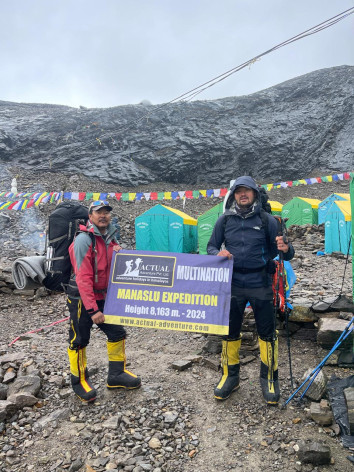
The Manaslu Circuit circles Manaslu (8,163 m), the world's eighth-highest mountain, and crosses Larkya La at 5,106 m. It is quieter and wilder than the Annapurna Circuit, with Tibetan Buddhist villages, long mani walls and dramatic river gorges.
- Start / finish: Machha Khola or Soti Khola → Dharapani / Besisahar
- Max altitude: 5,106 m, Larkya La pass
- Difficulty: Strenuous; remote, with basic teahouses in the upper valley
- Permits: Manaslu Restricted Area Permit + Manaslu Conservation Area Permit (MCAP) + ACAP
- Highlights: Samagaon, Pungyen Gompa, Birendra Lake, Larkya La views, Bhimthang
Sample itinerary
Day | Route and activity | Overnight (altitude) |
|---|---|---|
1 | Arrive in Kathmandu | Kathmandu (1,400 m) |
2 | Drive to Machha Khola | Machha Khola (870 m) |
3 | Trek to Jagat | Jagat (1,340 m) |
4 | Trek to Deng | Deng (1,860 m) |
5 | Trek to Namrung | Namrung (2,630 m) |
6 | Trek to Lho | Lho (3,180 m) |
7 | Trek to Samagaon | Samagaon (3,530 m) |
8 | Acclimatisation day; hike to Manaslu Base Camp or Pungyen Gompa | Samagaon (3,530 m) |
9 | Trek to Samdo | Samdo (3,860 m) |
10 | Trek to Dharmasala / Larkya Phedi | Dharmasala (4,460 m) |
11 | Cross Larkya La (5,106 m), descend to Bhimthang | Bhimthang (3,720 m) |
12 | Trek to Tilije or Dharapani, drive to Besisahar | Besisahar (760 m) |
13 | Drive to Kathmandu | Kathmandu (1,400 m) |
Good to know: Manaslu is a restricted area, so a licensed guide and a registered agency are compulsory. Add 5–7 days to include the Tsum Valley side trip, which needs its own restricted-area permit.
5. Langtang Valley Trek (7–10 days)
Langtang Valley is the closest major trek to Kathmandu, reached by road in a day with no domestic flight. It climbs through forest home to red pandas and langur monkeys to Kyanjin Gompa, a Tamang village surrounded by glaciers and Langtang Lirung (7,227 m).
- Start / finish: Syabrubesi (7–8 hours' drive from Kathmandu)
- Max altitude: 4,984 m, Tserko Ri (optional); Kyanjin Ri is 4,773 m
- Difficulty: Moderate; good for first-time trekkers who want real altitude
- Permits: Langtang National Park entry + TIMS card
- Highlights: Tamang culture, Kyanjin Gompa, yak-cheese factory, Tserko Ri panorama
Sample itinerary
Day | Route and activity | Overnight (altitude) |
|---|---|---|
1 | Arrive in Kathmandu | Kathmandu (1,400 m) |
2 | Drive to Syabrubesi | Syabrubesi (1,460 m) |
3 | Trek to Lama Hotel | Lama Hotel (2,470 m) |
4 | Trek to Langtang village | Langtang (3,430 m) |
5 | Trek to Kyanjin Gompa | Kyanjin Gompa (3,870 m) |
6 | Hike Kyanjin Ri (4,773 m) or Tserko Ri (4,984 m) | Kyanjin Gompa (3,870 m) |
7 | Trek back to Lama Hotel | Lama Hotel (2,470 m) |
8 | Trek to Syabrubesi | Syabrubesi (1,460 m) |
9 | Drive to Kathmandu | Kathmandu (1,400 m) |
Good to know: Combine it with the Gosainkunda lakes or the Helambu trail for a 12–15 day route that ends near Kathmandu. Autumn and spring are best; December is cold but clear and quiet.
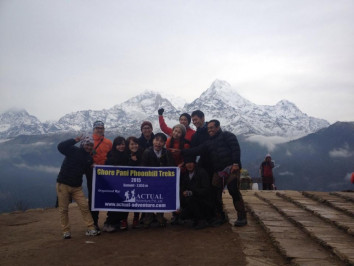
6. Ghorepani Poon Hill Trek (4–5 days)
Poon Hill is Nepal's best short trek: a few days from Pokhara for a sunrise panorama of Dhaulagiri, Annapurna South and Machhapuchhre. It stays below 3,300 m, so altitude sickness is rarely a concern, and it suits families and beginners.
- Start / finish: Pokhara (jeep to Nayapul or Ulleri)
- Max altitude: 3,210 m, Poon Hill
- Difficulty: Easy; the main effort is the stone staircase to Ulleri
- Permits: ACAP + TIMS card
- Highlights: Poon Hill sunrise, rhododendron forest in bloom (March–April), Ghandruk Gurung village
Sample itinerary (from Pokhara)
Day | Route and activity | Overnight (altitude) |
|---|---|---|
1 | Drive to Nayapul or Hile, trek to Ulleri | Ulleri (1,960 m) |
2 | Trek to Ghorepani | Ghorepani (2,860 m) |
3 | Sunrise on Poon Hill (3,210 m), trek to Tadapani | Tadapani (2,630 m) |
4 | Trek to Ghandruk, drive to Pokhara | Pokhara (820 m) |
Good to know: Poon Hill works almost year-round. Add it to the start of the ABC trek, or pair it with a Chitwan safari for a 10-day family holiday.
7. Gokyo Lakes Trek (12–13 days)
The Gokyo Lakes trek is the quieter alternative to Everest Base Camp. It follows a separate valley to a chain of turquoise glacial lakes and Gokyo Ri (5,357 m), whose summit shows four 8,000 m peaks at once: Everest, Lhotse, Makalu and Cho Oyu.
- Start / finish: Lukla
- Max altitude: 5,357 m, Gokyo Ri
- Difficulty: Moderate to strenuous
- Permits: Sagarmatha National Park entry + Khumbu Pasang Lhamu Rural Municipality permit
- Highlights: Gokyo's five lakes, Ngozumpa Glacier (the longest in Nepal), Gokyo Ri panorama
Sample itinerary
Day | Route and activity | Overnight (altitude) |
|---|---|---|
1 | Arrive in Kathmandu | Kathmandu (1,400 m) |
2 | Fly to Lukla, trek to Phakding | Phakding (2,610 m) |
3 | Trek to Namche Bazaar | Namche Bazaar (3,440 m) |
4 | Acclimatisation day in Namche | Namche Bazaar (3,440 m) |
5 | Trek to Dole | Dole (4,110 m) |
6 | Trek to Machhermo | Machhermo (4,470 m) |
7 | Trek to Gokyo | Gokyo (4,790 m) |
8 | Climb Gokyo Ri (5,357 m); optional walk to the fourth and fifth lakes | Gokyo (4,790 m) |
9 | Trek to Dole | Dole (4,110 m) |
10 | Trek to Namche Bazaar | Namche Bazaar (3,440 m) |
11 | Trek to Lukla | Lukla (2,860 m) |
12 | Fly to Kathmandu | Kathmandu (1,400 m) |
Good to know: Fit trekkers can cross Cho La pass (5,420 m) from Gokyo to reach Everest Base Camp, a 15–16 day combined route.
8. Upper Mustang Trek (12–15 days)
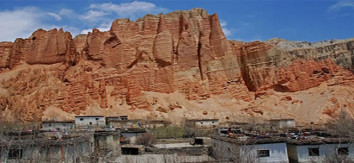
Upper Mustang, the old Kingdom of Lo, is a high desert of red cliffs, cave dwellings and centuries-old monasteries north of the Annapurnas. It sits in a rain shadow, which makes it one of the few great treks you can do during the June–August monsoon.
- Start / finish: Jomsom (flight or drive from Pokhara), via Kagbeni
- Max altitude: about 3,840 m around Lo Manthang; passes up to about 4,200 m
- Difficulty: Moderate; dry, windy and dusty in the afternoons
- Permits: Upper Mustang Restricted Area Permit (USD 500 for 10 days, then USD 50 per day) + ACAP
- Highlights: Walled city of Lo Manthang, Ghar Gompa, Chhoser caves, Tiji Festival (May)
Sample itinerary
Day | Route and activity | Overnight (altitude) |
|---|---|---|
1 | Arrive in Kathmandu | Kathmandu (1,400 m) |
2 | Drive or fly to Pokhara | Pokhara (820 m) |
3 | Fly to Jomsom (2,720 m), trek to Kagbeni | Kagbeni (2,810 m) |
4 | Trek to Chele | Chele (3,050 m) |
5 | Trek to Syangboche | Syangboche (3,800 m) |
6 | Trek to Ghami | Ghami (3,520 m) |
7 | Trek to Charang | Charang (3,560 m) |
8 | Trek to Lo Manthang | Lo Manthang (3,840 m) |
9 | Explore Lo Manthang; day trip to Chhoser caves | Lo Manthang (3,840 m) |
10 | Trek to Drakmar via Ghar Gompa | Drakmar (3,810 m) |
11 | Trek to Syangboche | Syangboche (3,800 m) |
12 | Trek to Chhusang, drive to Jomsom | Jomsom (2,720 m) |
13 | Fly to Pokhara | Pokhara (820 m) |
14 | Return to Kathmandu | Kathmandu (1,400 m) |
Good to know: A dirt road now reaches Lo Manthang, so jeep tours of 7–9 days are possible. The trekking route uses older trails away from the road wherever it can.
9. Mardi Himal Trek (5–7 days)
Mardi Himal is a ridge walk from Pokhara that brings you face to face with Machhapuchhre in under a week. It has grown fast in popularity, but its small lodges and open grassy ridges still feel quieter than the main Annapurna trails.
- Start / finish: Pokhara (jeep to Kande or Phedi)
- Max altitude: about 4,500 m, Mardi Himal Base Camp viewpoint; High Camp is 3,580 m
- Difficulty: Moderate; steep ridge sections near High Camp
- Permits: ACAP + TIMS card
- Highlights: Close-up views of Machhapuchhre, Mardi Himal and Annapurna South; rhododendron forest; sea-of-clouds sunrises
Sample itinerary (from Pokhara)
Day | Route and activity | Overnight (altitude) |
|---|---|---|
1 | Drive to Kande, trek to Forest Camp | Forest Camp (2,520 m) |
2 | Trek to Low Camp | Low Camp (2,970 m) |
3 | Trek to High Camp | High Camp (3,580 m) |
4 | Early hike to Mardi Himal Base Camp viewpoint (about 4,500 m), descend | Low Camp (2,970 m) or Badal Danda |
5 | Trek to Siding village, drive to Pokhara | Pokhara (820 m) |
Good to know: The upper ridge is exposed to wind and can be icy from December to February. Start the High Camp viewpoint hike before dawn for clear views.
10. Everest Three Passes Trek (17–20 days)
The Three Passes trek is the ultimate Khumbu challenge: a full loop over Kongma La (5,535 m), Cho La (5,420 m) and Renjo La (5,360 m). It links Everest Base Camp, Kala Patthar and the Gokyo Lakes in one trip, and suits fit trekkers with some high-altitude experience.
- Start / finish: Lukla
- Max altitude: 5,545 m, Kala Patthar; highest pass is Kongma La at 5,535 m
- Difficulty: Very strenuous; glacier crossings and long pass days
- Permits: Sagarmatha National Park entry + Khumbu Pasang Lhamu Rural Municipality permit
- Highlights: Three high passes, EBC, Kala Patthar, Gokyo Ri, the quiet Thame valley
Sample itinerary
Day | Route and activity | Overnight (altitude) |
|---|---|---|
1 | Arrive in Kathmandu | Kathmandu (1,400 m) |
2 | Fly to Lukla, trek to Phakding | Phakding (2,610 m) |
3 | Trek to Namche Bazaar | Namche Bazaar (3,440 m) |
4 | Acclimatisation day in Namche | Namche Bazaar (3,440 m) |
5 | Trek to Tengboche | Tengboche (3,860 m) |
6 | Trek to Dingboche | Dingboche (4,410 m) |
7 | Acclimatisation day in Dingboche | Dingboche (4,410 m) |
8 | Trek to Chhukung | Chhukung (4,730 m) |
9 | Cross Kongma La (5,535 m), descend to Lobuche | Lobuche (4,940 m) |
10 | Trek to Gorak Shep and Everest Base Camp (5,364 m) | Gorak Shep (5,164 m) |
11 | Kala Patthar sunrise (5,545 m), trek to Dzongla | Dzongla (4,830 m) |
12 | Cross Cho La (5,420 m) to Thagnak | Thagnak (4,700 m) |
13 | Trek to Gokyo | Gokyo (4,790 m) |
14 | Climb Gokyo Ri (5,357 m), rest in Gokyo | Gokyo (4,790 m) |
15 | Cross Renjo La (5,360 m) to Lungden | Lungden (4,380 m) |
16 | Trek via Thame to Namche Bazaar | Namche Bazaar (3,440 m) |
17 | Trek to Lukla | Lukla (2,860 m) |
18 | Fly to Kathmandu | Kathmandu (1,400 m) |
Good to know: Cho La crosses a glacier that can be icy, so carry microspikes in autumn and spring. Good weather windows matter, so a spare day or two is strongly recommended.
Trekking permits and costs for 2027
Most popular treks cost USD 40–60 per person in permits; restricted areas such as Manaslu and Upper Mustang cost far more. Fees below are for foreign (non-SAARC) nationals; SAARC citizens pay reduced rates.
Permit | Fee (foreign nationals) | Needed for |
|---|---|---|
Sagarmatha National Park entry | NPR 3,000 + 13% VAT | Everest Base Camp, Gokyo, Three Passes |
Khumbu Pasang Lhamu Rural Municipality permit | NPR 3,000 (about USD 22) | All Everest-region treks (replaces TIMS) |
Annapurna Conservation Area Permit (ACAP) | NPR 3,000 (double if bought at a checkpoint) | ABC, Annapurna Circuit, Poon Hill, Mardi Himal, Upper Mustang, Manaslu exit |
Manaslu Conservation Area Permit (MCAP) | NPR 3,000 | Manaslu Circuit |
Langtang National Park entry | NPR 3,000 + VAT | Langtang Valley |
TIMS card | NPR 1,000 (group) / NPR 2,000 (independent) | Annapurna, Langtang, Manaslu (not Everest) |
Manaslu Restricted Area Permit | Sep–Nov: USD 100 for 7 days, then USD 15/day; Dec–Aug: USD 75 for 7 days, then USD 10/day | Manaslu Circuit |
Upper Mustang Restricted Area Permit | USD 500 for 10 days, then USD 50/day | Upper Mustang |
Other typical 2027 costs
- Licensed guide: USD 25–40 per day, including the guide's food, lodging and insurance
- Porter: USD 20–25 per day, carrying up to 20–25 kg for two trekkers
- Lukla flight: about USD 220–230 one way
- Teahouse room: USD 5–10 a night in lower villages, more higher up; meals cost more as you climb
How to choose the right trek
Match the trek to your time, fitness and travel season first; scenery comes second, because every route here is spectacular.
If you have… | Choose |
|---|---|
Less than a week | Ghorepani Poon Hill, Mardi Himal |
About 10 days | Annapurna Base Camp, Langtang Valley |
Two weeks | Everest Base Camp, Gokyo Lakes, Annapurna Circuit |
Two weeks and want few crowds | Manaslu Circuit, Upper Mustang |
Three weeks and strong legs | Everest Three Passes |
Only the monsoon (Jun–Aug) free | Upper Mustang |
Best time to trek in Nepal
- Autumn (late September–November): the peak season, with clear skies and stable weather after the monsoon.
- Spring (March–May): warmer days, rhododendrons in bloom, some afternoon haze.
- Winter (December–February): cold but clear; best for lower treks such as Poon Hill, Langtang and Mardi Himal. High passes may close.
- Monsoon (June–August): rain, leeches and flight delays on most routes; rain-shadow areas such as Upper Mustang stay dry.
Preparation tips
- Train for 6–8 weeks: hill walks with a loaded daypack, stairs and cardio, 3–4 times a week.
- Respect the altitude: climb no more than about 500 m in sleeping altitude per day above 3,000 m, and take the acclimatisation days in your itinerary.
- Get the right insurance: your policy must cover trekking up to your trek's maximum altitude and helicopter evacuation.
- Pack in layers: a good down jacket and a sleeping bag rated to about −10 °C are essential above 4,000 m. Both can be hired in Kathmandu or Pokhara.
- Carry cash: permit counters and most teahouses do not take cards, and ATMs above Namche or Chame are unreliable.
- Use refillable bottles: buy purification tablets or a filter rather than bottled water, which is expensive and adds waste on the trail.
Frequently asked questions
Which is the easiest popular trek in Nepal? Ghorepani Poon Hill. It takes 4–5 days from Pokhara, stays below 3,300 m and needs only basic fitness.
Can I trek in Nepal without a guide in 2027? Officially, no. Foreign trekkers in national parks, conservation areas and restricted areas must hire a licensed guide through a registered agency. In restricted areas such as Manaslu and Upper Mustang, the rule is strictly enforced.
Do I still need a TIMS card? Not in the Everest region, where the Khumbu Pasang Lhamu municipality permit replaced it. TIMS is still issued for Annapurna, Langtang and Manaslu treks, and your agency arranges it.
Which trek has the best mountain views? For Everest itself, Kala Patthar on the EBC trek or Gokyo Ri on the Gokyo trek. For the widest panorama of 8,000 m peaks, Gokyo Ri is hard to beat.
Is Everest Base Camp or Annapurna Base Camp better for beginners? Annapurna Base Camp is shorter, lower (4,130 m) and needs no mountain flight, so it is the gentler first trek. Everest Base Camp suits fit beginners with two weeks and a good acclimatisation plan.
How much does a trek in Nepal cost in total? A guided teahouse package typically costs USD 400–650 for Poon Hill and USD 1,300–1,800 for Everest Base Camp. Restricted-area treks such as Upper Mustang cost more because of permit fees. Add international flights, visa, insurance, tips and Kathmandu hotels.
What is the best month to trek in Nepal? October and November give the clearest views on most routes. April is the best spring month, especially for rhododendron forests.
Plan your trek with Nepal Trekking Trail
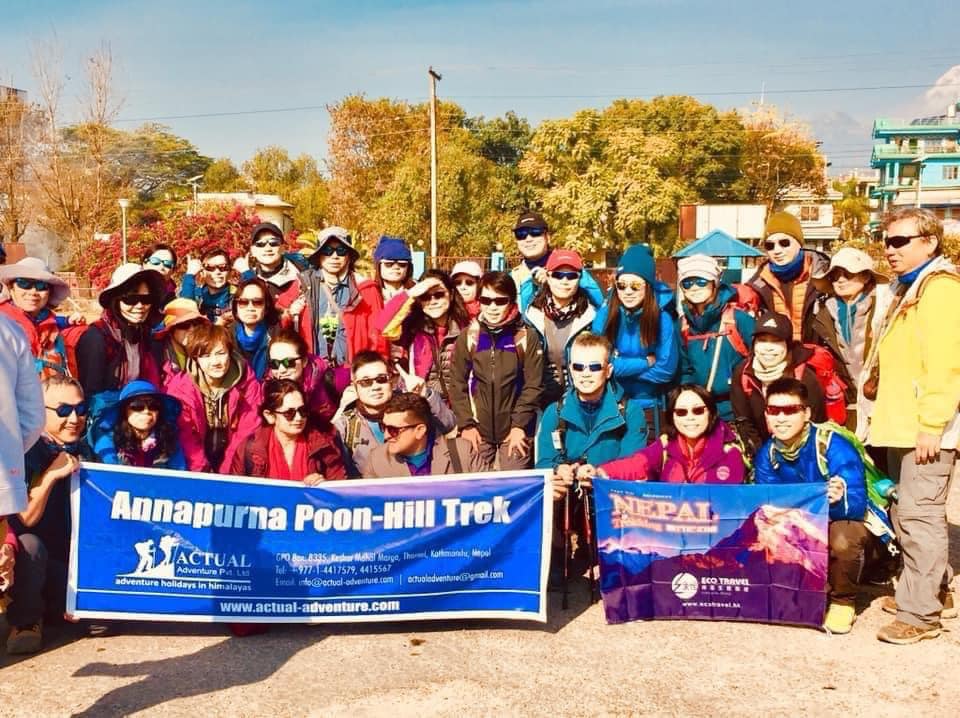
Every itinerary above can be booked as a private or small-group package with Nepal Trekking Trail, a product of Actual Adventure Pvt. Ltd. in Kathmandu. We tailor the days, pace and hotel standard to you.
Each package includes:
- All trekking permits, processed in advance (including restricted-area permits filed online)
- A government-licensed, experienced guide, with porters on request
- Teahouse accommodation and meals on the trail
- Airport transfers and ground transport per itinerary
- A complimentary duffel bag for your trek
- Help hiring a quality sleeping bag and down jacket, if you need them
Tell us your dates, group size and the trek you have in mind, and we will send a detailed itinerary and quote for the 2027 season.
Fees and regulations in this guide were checked in October 2026. Nepal revises permit fees from time to time, so we confirm current rates when we book your trek.