Table of contents Show
Bhutan at a glance
Bhutan is a small Himalayan Buddhist kingdom between Tibet (China) and India, known for its "High Value, Low Volume" tourism policy and Gross National Happiness philosophy. All visitors except Indian nationals need a visa, and most pay a nightly Sustainable Development Fee (SDF).
Item | Detail |
|---|---|
Official name | Kingdom of Bhutan (Druk Yul, "Land of the Thunder Dragon") |
Capital | Thimphu |
Area | approx. 38,400 sq km |
Population | approx. 780,000 |
Government | Democratic constitutional monarchy (since 2008); King Jigme Khesar Namgyel Wangchuck |
Religion | Vajrayana (Mahayana) Buddhism; Hinduism in the south |
Language | Dzongkha (national); English widely used in schools, hotels and signage; Nepali (Lhotshamkha) in the south |
Currency | Ngultrum (BTN/Nu), pegged 1:1 to the Indian rupee |
Time zone | BST, UTC+6 (15 minutes ahead of Nepal) |
Elevation range | approx. 100 m in the southern foothills to 7,570 m (Gangkhar Puensum, the world's highest unclimbed peak) |
International airport | Paro (PBH), the only international airport |
National symbols | Animal: takin · Bird: raven · Flower: blue poppy · Tree: cypress · Sport: archery |
Forest cover | Over 70% of land; constitution requires at least 60% to stay forested; carbon-negative country |
Figures marked approx. are general reference values; confirm before quoting in contracts or marketing.
Entry rules, visa and fees
International adults pay a Sustainable Development Fee of USD 100 per person per night, confirmed at that rate through 31 August 2027, plus a one-time visa fee of USD 40. The SDF funds free healthcare, education and conservation, and is paid on top of hotels, guide and transport.
Traveller | SDF per night | Visa / permit |
|---|---|---|
International adult (12+) | USD 100 | e-Visa, USD 40 one-time |
Child 6–11 | USD 50 | e-Visa, USD 40 |
Child under 6 | Free | e-Visa, USD 40 |
Indian national | Nu./INR 1,200 | No visa; free entry permit (passport or voter ID) |
Bangladesh / Maldives national | Reduced regional rate (sources differ: Nu. 1,200 or USD 15) | Visa on arrival or in advance; confirm fee with operator |
Key rules:
- 5% GST applies from 1 January 2026 to package components (hotels, transport, guiding); the SDF itself is exempt.
- Passport must be valid at least 6 months beyond departure.
- e-Visa is applied online through the Department of Immigration, by the traveller or a licensed Bhutanese operator; processing takes up to about 5 business days. The approved visa clearance letter is shown at the port of entry and the visa is stamped on arrival.
- Guide: a licensed Bhutanese guide is mandatory beyond Thimphu and Paro for international tourists, and for all treks. Only DOT-registered operators can run treks.
- Hotels must be government-certified (3-star and above for international tourists).
- Route permits for travel beyond Paro/Thimphu are processed by the local operator.
- SDF incentives: some lodges and seasonal schemes offer SDF credits; check current promotions before quoting.
For Actual Himalayas clients from Nepal, the operator partner in Bhutan handles visa, SDF payment and route permits; we need a clear passport scan and a passport-size photo per traveller.
Getting there
Kathmandu is the cheapest and most scenic gateway: Kathmandu–Paro runs about USD 200–280 one way in economy, and the flight passes Everest, Lhotse, Makalu and Kanchenjunga. Sit on the left side flying Kathmandu → Paro for the mountain views.
Gateway | Airlines | Notes |
|---|---|---|
Kathmandu (KTM) → Paro | Drukair, Bhutan Airlines | approx. 1 hour; best Nepal + Bhutan combination |
Delhi / Kolkata / Bagdogra / Guwahati → Paro | Drukair, Bhutan Airlines | Good for India combinations |
Bangkok (BKK) → Paro | Drukair, Bhutan Airlines | Main long-haul hub; some flights stop in Kolkata, Guwahati or Gaya |
Singapore → Paro | Drukair | A few flights a week |
Dhaka → Paro | Drukair, Bhutan Airlines | Short regional link |
Land borders (from India):
- Phuentsholing (opposite Jaigaon, West Bengal): about 4 hours' drive from Bagdogra airport; the most common overland entry.
- Gelephu (central south) and Samdrup Jongkhar (east, near Guwahati): useful for routes that enter in the south and exit through Paro, or the other way round.
Paro airport sits in a narrow valley and only specially certified pilots land there. Flights are daylight-only and weather-dependent, so keep a buffer day before international connections.
Destinations and highlights
Most first trips cover the western valleys of Paro, Thimphu and Punakha; Bumthang adds the cultural heartland, and the east suits repeat visitors.
Destination | Altitude (approx.) | Highlights | Suggested stay |
|---|---|---|---|
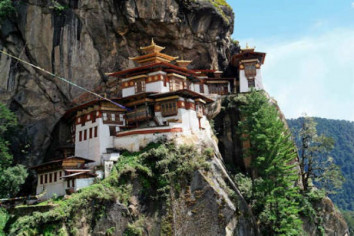
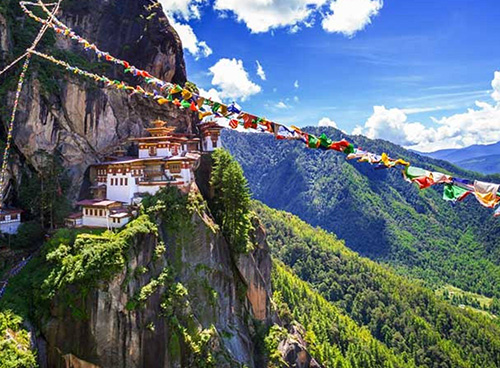
Paro | 2,200 m | Taktsang (Tiger's Nest) monastery hike; Rinpung Dzong; National Museum (Ta Dzong); Kyichu Lhakhang, one of the oldest temples; Drukgyel Dzong ruins; Chele La pass views | 2–3 nights |
Thimphu | 2,300–2,400 m | Buddha Dordenma statue; Tashichho Dzong (seat of government); Memorial Chorten; Motithang Takin Preserve; weekend market; Folk Heritage Museum; Changangkha Lhakhang | 2 nights |
Dochula Pass | 3,100 m | 108 memorial chortens (Druk Wangyal); on a clear day, views of Gangkar Puensum and the Bhutan Himalaya | En route Thimphu–Punakha |
Punakha | 1,200 m | Punakha Dzong at the river confluence; Chimi Lhakhang (fertility temple); Khamsum Yulley Namgyal Chorten; Bhutan's longest suspension bridge; rafting | 1–2 nights |
Phobjikha (Gangtey) | 3,000 m | Glacial valley; black-necked cranes (Nov–Feb); Gangtey Goenpa; nature trail | 1–2 nights |
Trongsa | 2,200 m | Trongsa Dzong, the largest dzong; Ta Dzong watchtower museum | 1 night or en route |
Bumthang | 2,600–4,000 m | Jakar Dzong; Jambay Lhakhang and Kurjey Lhakhang; Tamshing; Burning Lake (Mebar Tsho); cheese, honey and local beer | 2–3 nights |
Haa | 2,700 m | Remote valley via Chele La; homestays; Haa Summer Festival (July) | 1–2 nights |
Eastern Bhutan (Mongar, Trashigang, Trashiyangtse) | Varies | Textiles and weaving villages; Trashigang Dzong; Merak and Sakteng (Brokpa nomads) | 4+ nights; return via Samdrup Jongkhar |
Festivals (tshechus)
The two biggest festivals in 2027 are Paro Tshechu on 18–22 March and Thimphu Tshechu on 10–12 October. Tshechus honour Guru Rinpoche with masked cham dances in dzong courtyards; dates follow the lunar calendar and can shift by weeks year to year (Thimphu Tshechu moves from September in 2026 to October in 2027).
Festival | Venue | 2027 timing |
|---|---|---|
Punakha Drubchen and Tshechu | Punakha Dzong | Feb–Mar |
Tangsibi Mani | Tangsibi, Trongsa | Feb–Mar |
Talo Tshechu | Talo Monastery, Punakha | Mar |
Paro Tshechu | Rinpung Dzong, Paro | 18–22 Mar (giant thongdrel unveiled at dawn on the last day) |
Nimalung Tshechu | Bumthang | Jun–Jul |
Haa Summer Festival | Haa | Jul |
Thimphu Tshechu | Tashichho Dzong, Thimphu | 10–12 Oct (Drubchen 5 Oct) |
Gangtey Tshechu | Gangtey Goenpa, Phobjikha | Oct |
Royal Highland Festival | Laya, Gasa | Oct |
Jambay Lhakhang Drup | Bumthang | Oct–Nov |
Black-Necked Crane Festival | Gangtey, Phobjikha | Nov (usually 11 Nov) |
Druk Wangyel Festival | Dochula Pass | 13 Dec (fixed date) |
Trongsa Tshechu | Trongsa Dzong | Dec–Jan |
Month-only timings are from operator calendars; confirm exact days against the Department of Tourism schedule before booking. Festival weeks fill Paro flights and hotels early, so book 4–6 months ahead. Entry is free; visitors should dress modestly and not walk across the dance ground.
Best time to visit
October–November and March–May are the best months: clear mountain views in autumn, rhododendron blooms in spring, and the biggest festivals in both. Winter is quiet and clear; the June–August monsoon is green but cloudy, with leech-heavy trails and occasional road blocks.
Season | Months | Weather (valleys) | Good for | Watch for |
|---|---|---|---|---|
Autumn | Sep–Nov | Clear, dry; days 15–25°C | Mountain views, Thimphu Tshechu, treks, cranes from late Oct | Peak demand; book early |
Winter | Dec–Feb | Cold, sunny; nights below 0°C in Paro/Thimphu/Bumthang, mild in Punakha | Black-necked cranes, quiet sites, lower-altitude touring | High passes may close with snow; most treks closed |
Spring | Mar–May | Mild, mostly dry; 15–25°C | Paro and Punakha festivals, rhododendrons, Tiger's Nest hike | Some haze in May |
Summer / monsoon | Jun–Aug | Warm, wet; afternoon rain | Lush landscapes, fewer visitors, Haa festival, matsutake mushrooms | Landslides, cloud over peaks, leeches |
Trekking in Bhutan
Bhutan treks are fully supported camping trips (no teahouses), run only by registered operators with a licensed guide, cook and pack animals. The best windows are March–May and late September–November.
Trek | Days (approx.) | Max altitude (approx.) | Grade | Highlights |
|---|---|---|---|---|
Druk Path | 5–6 | 4,200 m | Moderate | Paro to Thimphu over ridges and alpine lakes; best short trek |
Bumdra | 2 | 3,800 m | Easy–moderate | Overnight camp above Tiger's Nest |
Dagala Thousand Lakes | 5–6 | 4,500 m | Moderate | Lakes and views to Everest and Kanchenjunga on clear days |
Jomolhari | 7–9 | 4,900 m | Moderate–strenuous | Base camp below Jomolhari (7,326 m), yak herders |
Laya–Gasa | 12–14 | 5,000 m | Strenuous | Remote Layap villages, Gasa hot springs |
Snowman Trek | 24–30 | 5,300 m+ | Very strenuous | Crosses 11 high passes into Lunana; one of the world's hardest treks; often snowbound |
Merak–Sakteng | 5–6 | 4,100 m | Moderate | Brokpa nomad culture in the far east |
Good day hikes for non-trekkers: Tiger's Nest (about 4–5 hours return), Cheli La ridge, Tango and Cheri monasteries near Thimphu, and the Gangtey nature trail.
Culture, etiquette and food
Bhutanese life centres on Buddhism, the monarchy and national dress; visitors are welcomed warmly and expected to respect sacred sites.
Etiquette at dzongs, temples and festivals
- Wear long sleeves and long trousers or skirts; no shorts, sleeveless tops or caps inside dzongs and temples.
- Walk clockwise around chortens, prayer wheels and temples.
- Photography is not allowed inside temples and shrine rooms; ask before photographing people and monks.
- Remove shoes where asked; do not point feet at altars or touch religious objects.
- Smoking in public is restricted and tobacco is heavily taxed (import duty up to 200%); declare any tobacco on arrival.
Culture notes
- National dress is the gho for men and kira for women; a sash (kabney or rachu) is worn to dzongs and offices.
- Archery is the national sport; tournaments are lively and visitors can watch.
- Gross National Happiness guides policy: conservation, culture and good governance count alongside economic growth.
- Painted phalluses on houses (especially near Chimi Lhakhang) are protective symbols linked to the saint Drukpa Kunley.
Food and drink
- Ema datshi (chillies and cheese), the national dish; also kewa datshi (potato) and shamu datshi (mushroom).
- Red rice, momo, buckwheat pancakes (khuli) and noodles (puta) in Bumthang.
- Suja (butter tea), ara (local spirit), Red Panda wheat beer from Bumthang.
- Hotels serve milder buffets for tourists; ask for less chilli if needed. Tuesdays are traditionally meat-free in many areas, and meat is often not sold during certain holy months.
Practical information
Carry clean, recent US dollar notes and a card as backup; ATMs exist in main towns but are not always reliable for foreign cards.
Topic | What to know |
|---|---|
Money | Ngultrum (Nu.), equal to the Indian rupee; INR notes are widely accepted (check current rules for 500-rupee notes). Cards work in larger hotels and shops. |
Connectivity | Local SIMs from B-Mobile (Bhutan Telecom) or TashiCell with a passport; good 4G in towns, patchy on passes and treks. Hotels usually have Wi-Fi. |
Electricity | 230 V, 50 Hz; Indian-style round-pin sockets (types D, F, G also seen). Bring a universal adapter. |
Health | No compulsory vaccinations for most travellers; routine vaccines up to date. Altitude is mild on the cultural route; treks need acclimatisation. Drink bottled or filtered water. |
Insurance | Travel insurance with medical cover is strongly recommended; trekkers should include helicopter evacuation. |
Roads | Mountain roads are winding: Paro–Thimphu about 1–1.5 hours, Thimphu–Punakha about 3 hours, Punakha–Bumthang about 7–8 hours. |
Tipping | Not compulsory but customary for guide and driver at the end of the trip. |
Shopping | Handwoven textiles, thangkas, masks, incense, Bumthang honey and cheese; antiques cannot be exported. |
Safety | Very low crime. Main risks are road conditions, weather and altitude. |
Packing list
- Layers: warm fleece or down jacket (evenings are cold most of the year), rain jacket.
- Modest clothes for dzongs: long sleeves, long trousers or skirts.
- Comfortable walking shoes or light boots for Tiger's Nest.
- Sunscreen, sunglasses, hat; personal medicines; small torch.
- Printed visa clearance letter, passport copies, travel insurance details.
Sample itineraries
A fully private, well-run trip typically costs about USD 250–450 per person per day all-in, SDF included; the SDF alone is USD 100 of that.
Bhutan Highlights – 5 days / 4 nights (from Kathmandu)
- Fly Kathmandu–Paro; drive to Thimphu. Buddha Dordenma, Memorial Chorten.
- Thimphu sightseeing: Tashichho Dzong, Takin Preserve, Folk Heritage Museum; drive over Dochula to Punakha.
- Punakha Dzong, suspension bridge, Chimi Lhakhang; drive to Paro.
- Hike to Tiger's Nest (Taktsang); evening at Kyichu Lhakhang or a farmhouse hot-stone bath.
- Fly Paro–Kathmandu.
Classic Bhutan – 7 days / 6 nights
- Arrive Paro, drive to Thimphu.
- Thimphu full day.
- Thimphu – Dochula – Punakha.
- Punakha – Phobjikha (Gangtey) valley.
- Phobjikha – Paro.
- Tiger's Nest hike; Rinpung Dzong and National Museum.
- Depart Paro.
Cultural Heartland – 10 days / 9 nights
Adds Trongsa and Bumthang (Jakar Dzong, Jambay and Kurjey Lhakhang, Burning Lake) to the Classic route, with 2–3 nights in Bumthang, then returns west via Phobjikha.
Nepal + Bhutan combination – 10–12 days
Kathmandu sightseeing (3–4 nights), optional Pokhara or Chitwan, then fly to Paro for the Classic Bhutan 5–7 day loop and return to Kathmandu.
Official checks before quoting: Department of Tourism (bhutan.travel) and Department of Immigration (immi.gov.bt).