Table of contents Show
Mount Everest – The Highest Mountain Peak in the World
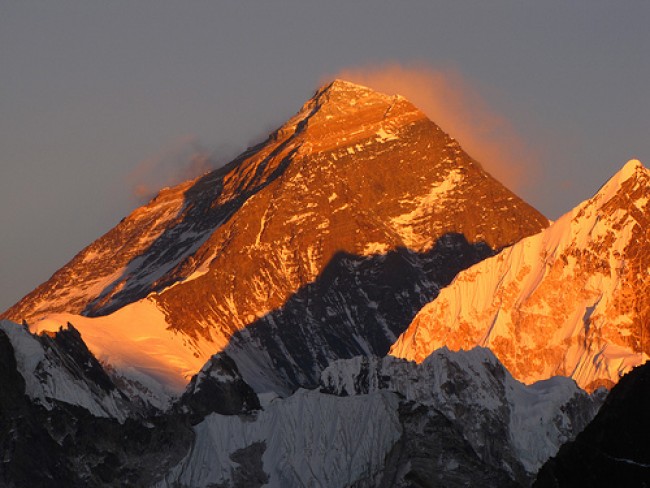
Mount Everest, the crown jewel of the Himalayas, is the highest mountain peak on Earth, soaring majestically to a height of 8,848.86 meters (29,031.7 feet) above sea level. This awe-inspiring peak is not just a geographical landmark; it is a symbol of human aspiration, endurance, and spiritual significance. Located on the border between Nepal and the Tibet Autonomous Region of China, Mount Everest has captivated explorers, climbers, geographers, and spiritual seekers for generations.
1. Geographical Location
Mount Everest is part of the Mahalangur Himal sub-range of the Himalayas, lying in the northeastern region of Nepal and bordering Tibet.
Coordinates: 27.9881° N, 86.9250° E
Region: Solukhumbu District, Province No. 1, Nepal / Tingri County, Tibet
National Parks: Sagarmatha National Park (Nepal) and Qomolangma National Nature Preserve (Tibet)
2. Names and Meaning
Mount Everest is known by various names in different cultures:
Sagarmatha (सागरमाथा) in Nepali, meaning "Forehead of the Sky"
Chomolungma (ཇོ་མོ་གླང་མ) in Tibetan, meaning "Goddess Mother of the World"
Named Mount Everest in 1865 by the Royal Geographical Society, after Sir George Everest, a British surveyor general of India
3. Elevation and Measurement History
First officially measured in 1856 by the Great Trigonometric Survey of India, reporting a height of 29,002 feet
In 2020, a joint Nepal-China survey confirmed the current official height as 8,848.86 meters (29,031.7 feet), accounting for snow cap and plate tectonic shifts caused by earthquakes
4. Formation and Geology
Mount Everest was formed about 60 million years ago due to the collision of the Indian and Eurasian tectonic plates. It is primarily composed of sedimentary and metamorphic rocks, such as limestone, marble, and shale.
Interestingly, marine fossils have been found near the summit, providing evidence that the rocks at the top were once part of the ocean floor millions of years ago.
5. Climbing History
First Successful Ascent
May 29, 1953: Sir Edmund Hillary (New Zealand) and Tenzing Norgay Sherpa (Nepal) became the first confirmed climbers to reach the summit
Key Milestones
1975: Junko Tabei of Japan became the first woman to reach the summit
1996: The tragic Mount Everest disaster took 8 lives and brought global attention to the risks involved
2001: Erik Weihenmayer became the first blind person to summit
2023: Over 600 successful summits, with increasing concerns about traffic congestion and climate change
6. Climbing Routes
There are two main climbing routes to Everest’s summit:
1. South Col Route (Nepal Side)
Most popular and commercialized route
Starts from Lukla, goes through Namche Bazaar, Tengboche, and Everest Base Camp (5,364 m)
2. North Col Route (Tibet Side)
Starts from Tingri, passing through Rongbuk Monastery, North Base Camp, and Advanced Base Camp
Technically more challenging due to harsh winds and colder temperatures
7. Everest Base Camp Treks
For those who don’t wish to climb but want to experience the majesty of Everest, the Everest Base Camp (EBC) trek is an excellent alternative.
Duration: 12–14 days
Altitude: Up to 5,364 meters (17,598 feet)
Highlights: Namche Bazaar, Tengboche Monastery, Khumbu Glacier, Everest View Hotel
Best Season: Spring (March to May) and Autumn (September to November)
8. Spiritual Significance
Mount Everest holds deep spiritual importance in various religions:
Hindus see it as the abode of Lord Shiva
Buddhists consider it sacred and perform rituals in its honor
Tibetan Bon traditions view it as the axis of the world or the center of spiritual power
Pilgrims and trekkers often stop at monasteries such as Tengboche and Rongbuk to offer prayers before proceeding.
9. Challenges and Dangers
Climbing Everest is not without risk. Common challenges include:
Altitude sickness (AMS, HAPE, HACE)
Harsh weather and unpredictable storms
Avalanches and crevasses
Overcrowding on summit days
Waste management and environmental concerns
Despite these risks, improved weather forecasting, oxygen supply, and route fixing have made the journey safer over the years.
10. Interesting Facts
The summit of Everest grows about 4 mm per year due to tectonic activity
Over 11,000 successful ascents have been recorded since 1953
It is not the most difficult mountain to climb—K2 and Annapurna I are considered technically more dangerous
Kami Rita Sherpa holds the record for most summits (28 times as of 2023)
11. Tourism and Economy
Mount Everest plays a vital role in Nepal’s economy, especially through:
Trekking and mountaineering tourism
Employment of Sherpas, porters, and guides
Helicopter tours and Everest View packages
Permit revenues (Nepal charges $11,000 per foreign climber for summit attempts)
Conclusion
Mount Everest stands as a towering icon of Earth's natural beauty and human ambition. Whether you're a mountaineer, trekker, or cultural traveler, experiencing Everest—up close or from afar—is unforgettable. Its spiritual power, geographic supremacy, and human history make it more than just a mountain. It is a symbol of perseverance, respect for nature, and the enduring quest to touch the heavens.